
The Wellington International Leadership Programme (WILP): A highlight of the VUW experience
Nathan’s WILP experience included memorable seminars and conferences, an internship at Manatū Mō Te Taiao, and an inspiring cross-cultural education programme.
Aotearoa New Zealand and Pacific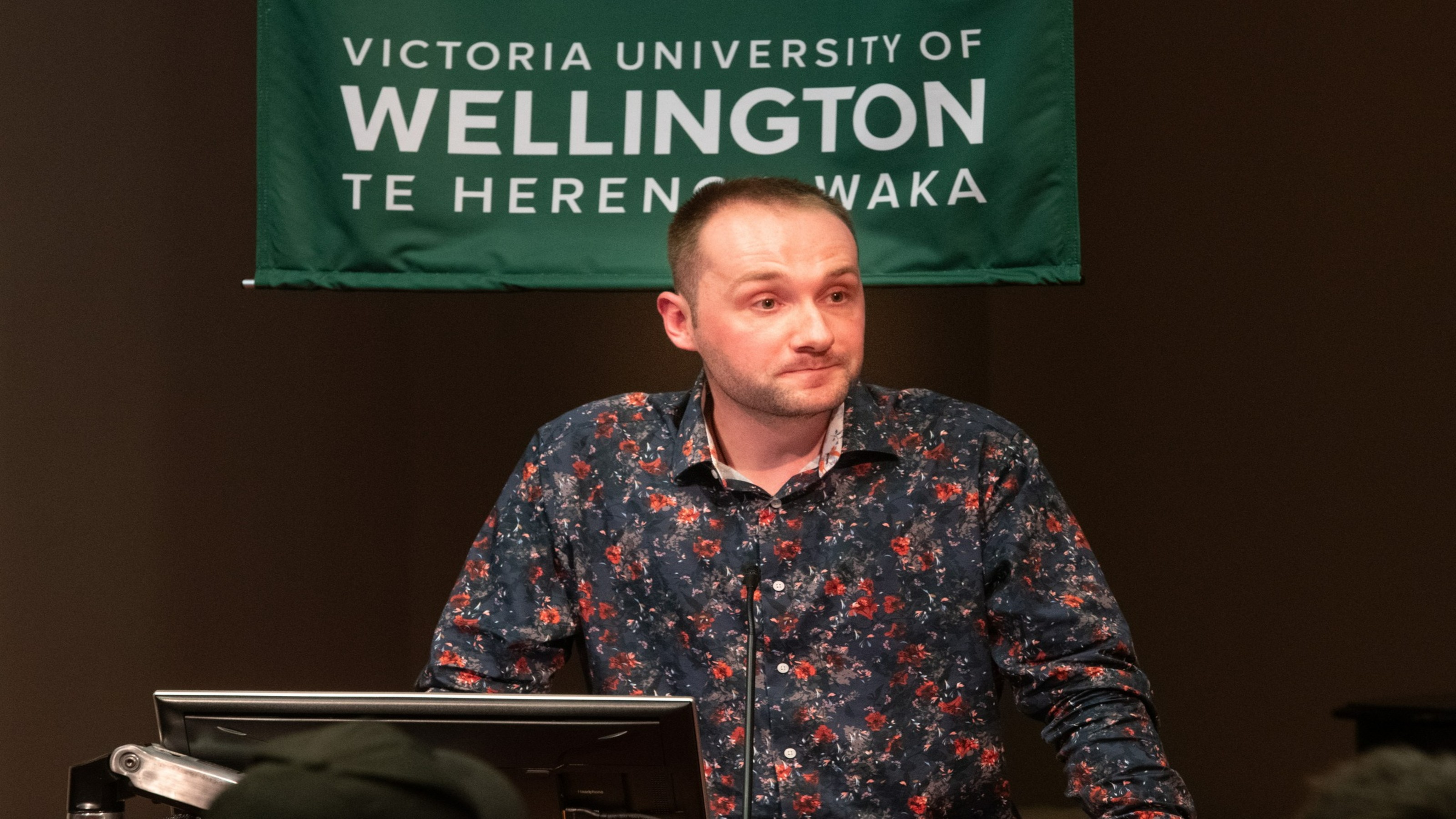
We had the pleasure of inviting Nathan Potter to share his experiences of the Wellington International Leadership Programme (WILP). Nathan, a Master of Climate Change Science and Policy student, outlines what makes WILP so unique and how it contributed to his understanding of global leadership, cross-cultural communication and global interdependence. In this post, Nathan also outlines the highlights of his WILP experience, including a conference on global citizenship education in Auckland and an internship at Manatū Mō Te Taiao-Ministry for the Environment.
Tenā koutou katoa, ko Nathan tōku ingoa. No Tamaki Makaurau oku tupuna.
Dàjiā hǎo, Wǒ shì Nathan.
My name is Nathan and I have introduced myself in Te reo Māori and Mandarin Chinese, because these languages are very special to me. Te reo Māori, the native language of my home country Aotearoa New Zealand. Mandarin Chinese, the official language of China, a country I have lived in for five years, until earlier this year, when I decided to move back and pursue a Master’s degree in Climate Change Science and Policy at Te Herenga Waka.
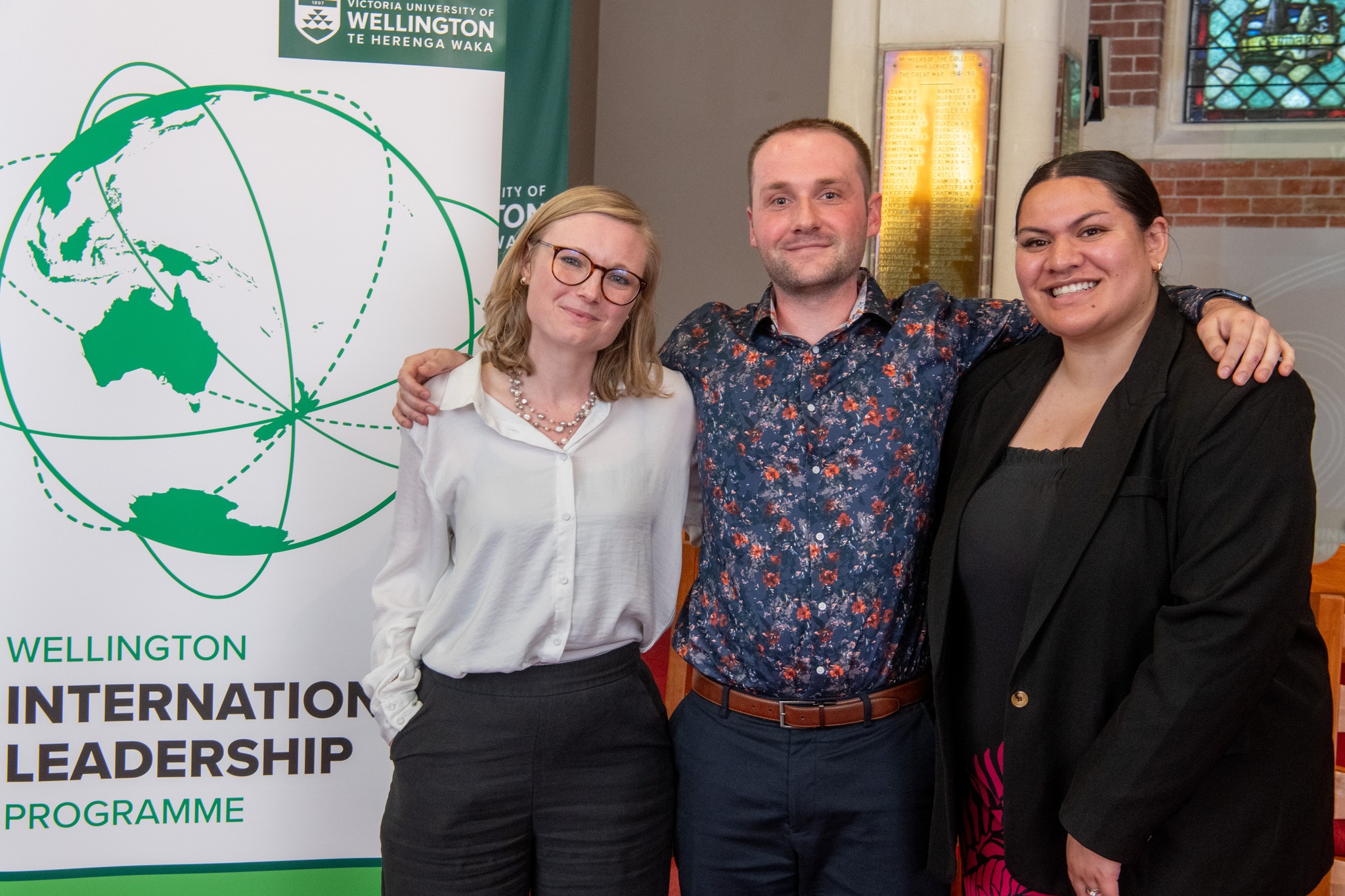
The Wellington International Leadership Programme (WILP) was a real highlight of my experience at VUW last year. Although a lot of time, effort, and dedication was required, the opportunities that came from it and the awards ceremony made this investment more than worth it. It is a unique programme, where you have the freedom of choice to explore topics that may not be covered in your classes, but can be used to enhance your understanding of them. For me, while my master’s degree was giving me a comprehensive understanding of climate change, several WILP seminars helped me to understand the deep complexities of our world and how they influence the global response to climate change which is currently lacking.
Memorable WILP seminars
One of the first seminars I attended was actually one of the most memorable. It was the compulsory seminar on global leadership and I will never forget how passionate Dr. Kala Retna was, something I could sense across most WILP seminars. The message that every culture has a place in the world resonated with me because the Chinese culture that I loved, lived and worked in for five years, is sometimes misunderstood internationally and sadly here in New Zealand. Dr. Retna emphasised that a global mindset is necessary to produce true and genuine global leaders, something also currently lacking.
Another interesting seminar was on global interdependence where Dr Matthew Castle made a good point about how globalisation has led to an interconnected world which has clear economic benefits but we can also recognise the costs of this complexity. While building relationships with other nations can lead to strong trade relationships and economic growth, the complexity of these connections can have serious consequences like the Covid 19 pandemic and more recent and unfortunate geopolitical conflicts. This seminar required us to consider how globalisation can become friendlier. Instead of using global interdependence as a means of competition and reliance, we should be using it as force for good to support each other, particularly those nations who need it most. This kind of behaviour could really benefit issues like climate change and perhaps prevent future geopolitical conflict.
As I attended more seminars, I was able to really articulate how complex the world has become. Seminars on nuclear developments and the Russia-Ukraine war, helped me think critically about global issues in a way that explains their existence without supporting them.
The biggest WILP highlight
If I was to share the biggest WILP highlight for me, it was being accepted into the 2023 winds of change programme which is run by the centres of Asia-Pacific excellence, otherwise known as CAPE. This organization aims to strengthen the intercultural expertise and collaboration in the Asia-Pacific region. This programme places you into groups of China and NZ-based participants where you are tasked to come up with a climate change solution proposal which can benefit both countries.
My group decided to focus on urban flooding events which are getting worse particularly in larger cities like Beijing, Shanghai, and Auckland. My team proposed a sponge city design as a way to make cities more flood-resistant and we presented our proposal in Auckland last year to a variety of private and public stakeholders.
This particular WILP experience led to another exciting opportunity. I completed a summer internship at Manatū Mō Te Taiao, the Ministry for the Environment, working in the emissions insights and reporting team. In my interview, I was specifically asked about WILP and the winds of change programme which shows how this programme is more than something pretty on your academic transcript. It has helped me get into the workforce and actually put my studies into practice.
Reflections and advice
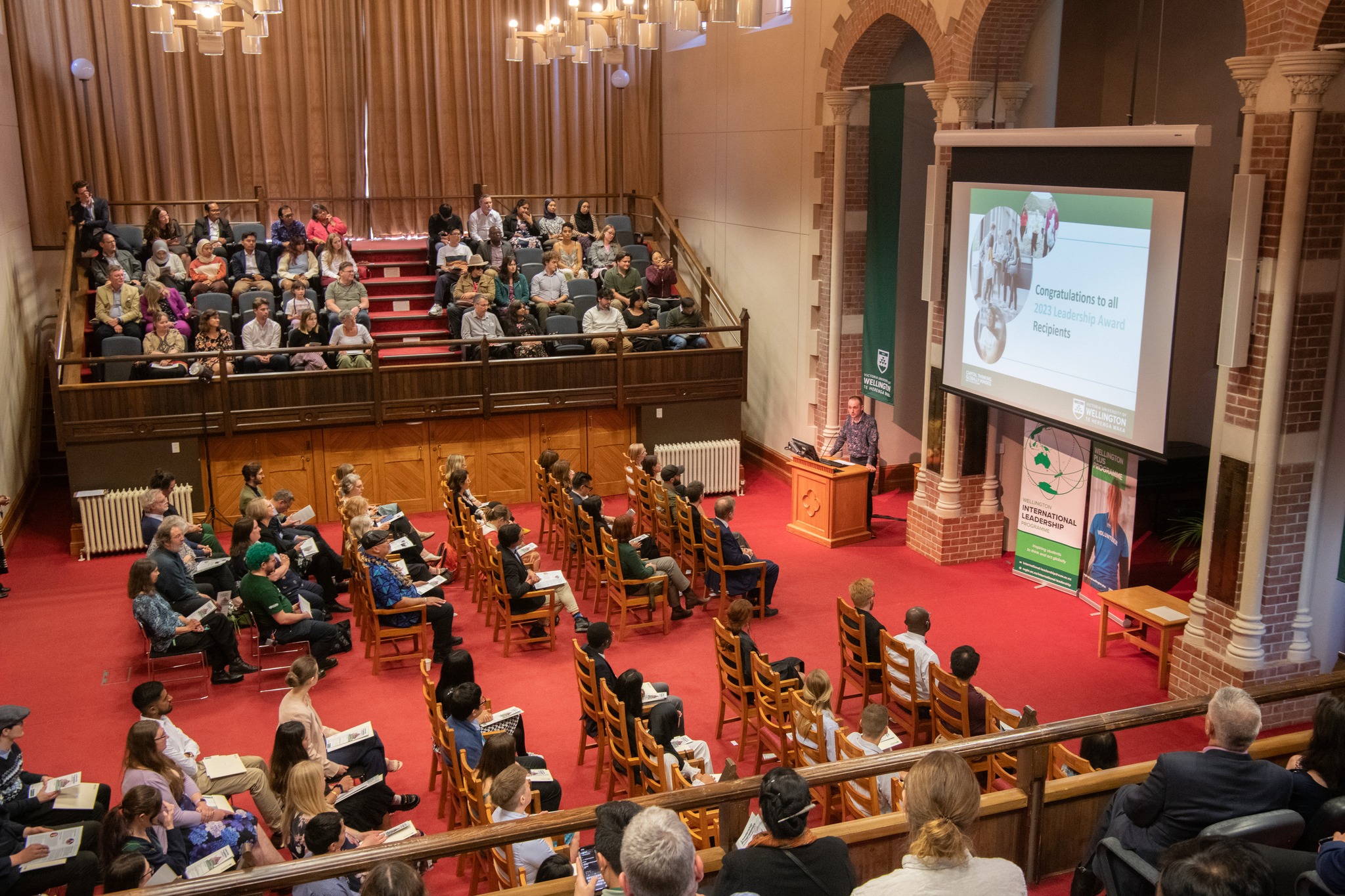
If you haven’t got the message yet, my decision to participate in WILP has been one of the most valuable experiences at Te Herenga Waka. It has enhanced my understanding of the world around me and I am sure everyone who participated, feels the same way. It was a privilege to meet so many talented minds and an honour to speak on behalf of everyone at the WILP awards last year.
We are living in an increasingly turbulent time and we have inherited a series of global challenges and the future of our world is troubling, uncertain and confronting. We need more of the values that WILP represents in modern society. Values of patience, collaboration and connectedness if we are ever going to improve the state of our interconnected world. Put simply, and without sounding like too much of a fanboy, as Dame Jacinda Ardern would say: “we need kindness”. I strongly encourage you all to participate in this programme and take what you learn and spread it far and wide because we can all agree that time really is of the essence.
Xièxiè dàjiā
Ngā mihi me te aroha nui
Tenā koutou, Tenā koutou, Tenā koutou katoa
Nathan
Learn more about our university’s leadership programmes.
Connect with Nathan on LinkedIn to learn more about his experience.