

Build the knowledge and skills to support trauma survivors
While psychologists and psychiatrists are trained in trauma support, many professionals who work with trauma survivors lack the knowledge, skills and tools to recognise trauma, respond effectively, and contribute to meaningful individual and systemic change.
Take your understanding of trauma beyond awareness and trauma-informed care. Develop knowledge and practical skills in trauma-transformative practice, learning how to recognise trauma and its effects, support and empower those affected by it, and help drive systemic change.
Learn about the nature and prevalence of different types of trauma from a range of perspectives as well as the impacts of trauma on individuals, families, communities and society. Develop a better understanding of the experiences of survivors, how they cope and respond and different perspectives on healing. Explore the structural and systemic factors that contribute to revictimisation and how these can be addressed.
Who can study for this qualification
Studying Trauma‑Transformative Support is ideal if you work with trauma survivors or plan to in the future. It suits education professionals, health professionals, social workers, and other community workers.
It's also suitable for graduates looking to deepen their knowledge of trauma and its impacts.
What you’ll learn
You’ll critically explore evidence-based and culturally grounded perspectives and practice.
How you’ll study
Our Trauma-Transformative Support programmes are delivered entirely online, making it easy for you to integrate academic life with work and family.
If you study full time you’ll take two courses worth 60 points in one trimester.
- EPSY 540 Trauma Across the Lifespan (30 pts) (online)
- EPSY 541 Systems and Impacts of Trauma (30 pts) (online)
You’ll learn with:
- weekly online modules with readings, interactive tasks, and self-quizzes. Students are required to complete at least eight of ten online tutorial/lab tasks
- online, pre-recorded lectures with captions and recorded interviews with experts, advocates, and practitioners
- live online tutorials for one-to-one support
- assessment modules with assignment guidelines, resources, and how-to videos to help with assessment tasks
- live seminars on hot topics, perspectives, and practice issues (recorded for viewing later)
- discussion boards to connect with classmates and build community/whanaungatanga
- webinars with guest speakers, experts, advocates, researchers, practitioners, and people with lived experience.
Study while you work
Our Postgraduate Trauma-Transformative Support qualifications are delivered entirely online, allowing you to study in manageable stages while you’re working.
Find out more at our webinars
Join our webinar series and discover how you can move beyond understanding trauma to creating responses that are genuinely transformative.
Degree support and advice
We can help you match your interests and career goals with the right course of study.
If you’re a new student, talk to a Future Student Adviser.
If you’re already studying with us, talk to Tītoko—Student Success.

Entry requirements
Entry requirements for domestic students
- Requirements for students who completed university in:
If you live in New Zealand and are a citizen or permanent resident of New Zealand or Australia, you're considered a domestic student.
Some citizens of the Cook Islands, Niue, and Tokelau may automatically hold New Zealand citizenship.
Diplomatic residents living in New Zealand are also regarded as domestic students.
To be accepted into this qualification, you need:
1. (a) Before enrolment, a candidate for the PGCertTTS shall have:
(i) completed with at least a B average for their 300-level courses, a Bachelor’s degree with a major in Education, Psychology, Teacher Education, Health, health-related disciplines such as Occupational Therapy, Social Work, Counselling, or a related discipline, or a Bachelor’s degree and teaching qualification approved by the Teaching Council of Aotearoa New Zealand; and
(ii) been accepted by the Programme Director as capable of proceeding with the proposed study.
(b) Requirement (a) (i) may be waived by the Associate Dean (Students) for a candidate who has an equivalent qualification or relevant professional experience.
Qualification requirements
Excerpt from the regulations for the PGCertTTS
2. The course of study for the PGCertTTS shall comprise Trauma Across the Lifespan (EPSY 540) and The Systems and Impacts of Trauma (EPSY 541).
3. (a) A candidate for the PGCertTTS shall normally complete the requirements within two years of first enrolling in it. The Associate Dean (Students) may extend this period in special cases.
(b) A candidate who has been awarded the PGCertTTS shall abandon that qualification upon being awarded the PGDipTTS.
Future careers
You’ll be equipped for trauma-transformative practice across different sectors, including health, education, social work, and justice roles.
More career information
Find out more about careers.
The government careers website, Tahatū, offers more information about jobs, salaries, and current opportunities.
Scholarships
You may be able to get a scholarship to help fund your studies.
We have postgraduate and doctoral scholarships available, as well as specialised scholarships for different groups and subject areas. If nothing fits right now, something may suit you later.
We encourage you to apply. It’s a straightforward process, and it could make a real difference.
Scholarships for Psychology
There could be a scholarship for your qualification, subject area, background, or situation.
Scholarships for international students
We are currently offering a NZ$10,000 VUW Postgraduate International Scholarship to all eligible international students enrolling in a Master’s degree, Postgraduate Diploma, or eligible Honours programme.
Your scholarship will be processed automatically when your programme application is accepted, and the amount will be deducted from your tuition fees.
Other scholarships
We also have postgraduate and doctoral scholarships available, as well as specialised scholarships for different groups and subject areas. If nothing fits right now, something may suit you later.
We encourage you to apply. It’s a straightforward process, and it could make a real difference.
Scholarships for Psychology
There could be a scholarship for your qualification, subject area, background, or situation.
Join our postgraduate community
The Postgraduate Students’ Association provides a voice for you on campus and information on studying at Te Herenga Waka—Victoria University of Wellington.
Postgraduate Students’ Association
MAI ki Pōneke
MAI ki Pōneke are part of an international network of Māori and Indigenous postgraduate students. They provide advice, support, and information to Indigenous postgraduate students of all levels, as well as those thinking about enrolling.
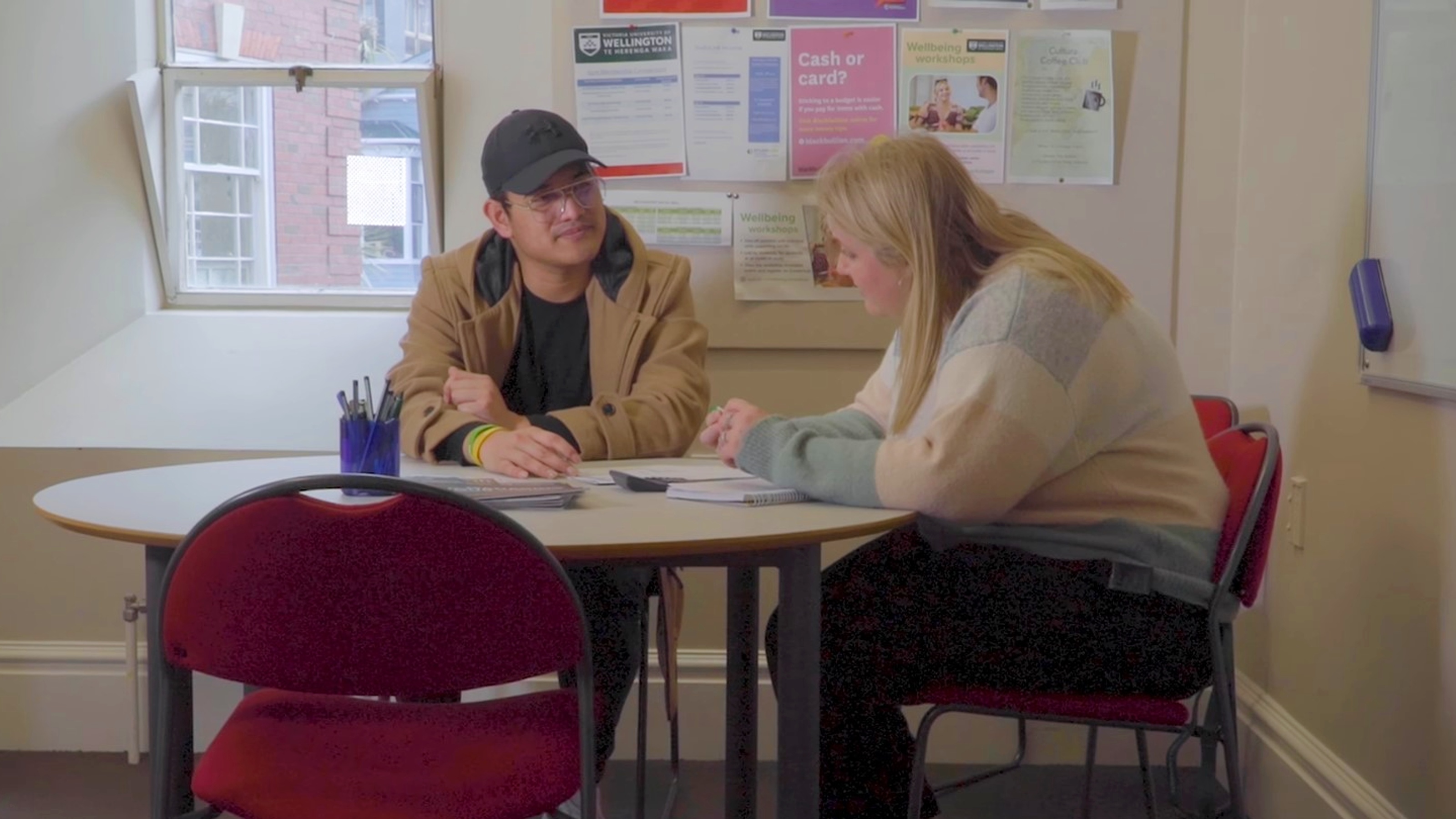
Get help to manage your finances
We can help you:
- budget your money
- manage your student loan or allowance
- work out your accommodation payment schedule.
If you’re facing financial difficulties, we can help you apply for the Hardship Fund.
You may be eligible for government or community support, too.
Apply for a New Zealand study visa
You’ll need to apply for a study visa if you plan to study with us as an international student.
You should apply for your visa after you’ve received your Offer of Place, and before you come to New Zealand.