

Elevate your performance skills and develop your professional craft
Gain the skills you need to become a concert artist of international standard with the Artist Diploma (ArtDip).
Supported by one-to-one supervision, you’ll focus intensively on your performance skills while building a solid musical repertoire suited to your instrument or voice.
Refine your technique, build the confidence to perform professionally, and understand the historical and social context of the music you study.
Who can study for this qualification
You can study for the ArtDip if you have a Master of Music majoring in Performance with Merit or Distinction. You’ll also need to pass an audition.
If you want to enrol in this programme but don’t meet some of the entry requirements, contact Te Kōkī—New Zealand School of Music.
What you’ll learn
You’ll study repertoire under the guidance of a staff member, refining your technique on your instrument and building your confidence as a professional performer.
You’ll also learn how to prepare and deliver a well-structured, informed pre-concert talk.
How you’ll study
The ArtDip is usually studied over two years, and you can start studying in either March or July each year.
You'll give four 70-minute public recitals. One will include a pre-concert talk of about 30 minutes. You can present the talk separately, or combine it with the recital as a 90 to 100-minute lecture-recital.
Part-time study options
You can study part time and complete the ArtDip over a maximum of four years.
Qualification support and advice
We can help you match your interests and career goals with the right course of study.
If you’re a new student, talk to a Future Student Adviser through our enquiry form.
If you’re already studying with us, talk to Tītoko—Student Success.
For the research portion of your study, you’ll need a supervisor to help guide your research. Your programme coordinator will work with you to find the right person.

Entry requirements
Entry requirements for domestic students
- Requirements for students who completed university in:
If you live in New Zealand and are a citizen or permanent resident of New Zealand or Australia, you're considered a domestic student.
Some citizens of the Cook Islands, Niue, and Tokelau may automatically hold New Zealand citizenship.
Diplomatic residents living in New Zealand are also regarded as domestic students.
To be accepted into this qualification, you need:
1. (a) Before enrolment, a candidate for the ArtDip shall have:
(i) completed the MMus degree in Performance with Distinction or Merit at a New Zealand university (or equivalent); and
(ii) passed an audition before a panel comprising senior members of the performance staff and the Head of School of the New Zealand School of Music—Te Kōkī.
(b) Requirement (a)(i) may be waived by the Associate Dean (Students), Faculty of Humanities and Social Sciences, in exceptional circumstances for a candidate who has completed a BMus degree in Performance and has adequate training and ability to follow an advanced course of musical performance study
Qualification requirements
2. The course of study for the Artist Diploma shall consist of Advanced Musical Performance 1 (NZSM 701) and Advanced Performance II (NZSM 702), both of which will be assessed on a pass/fail basis.
3. (a) A candidate shall normally be enrolled full time for two years and shall complete the requirements of the diploma within four years of first enrolling in it. The associate dean may extend the maximum period in special cases.
(b) Each course shall be completed in the year of first enrolment for that course.
Future careers
Artist Diploma graduates use this qualification to hone their skills to become professional soloists or ensemble members.
Employers include:
More career information
Find out more about careers on our ‘What can I do with my degree’ page for Music.
The government careers website, Tahatū, also has information about jobs, salaries, and current opportunities.
Scholarships
You may be able to get a scholarship to help fund your studies.
We have postgraduate and doctoral scholarships available, as well as specialised scholarships for different groups and subject areas.
We encourage you to apply—many scholarships don’t receive enough applications.
Scholarships for music
-
This scholarship is for students undertaking or intending to undertake an Honours or Masters degree at Te Herenga Waka—Victoria University of Wellington in areas related to Peace Building or Peace Studies, Trust Building, Conflict Resolution, addressing Historical Injustice, Restorative Justice, Social Cohesion, Community building and promoting cross-cultural understanding, Change Making or Ethical Leadership.
-
The Fisher Trumpet Scholarship aims to support undergraduate music students at NZSM, Victoria University of Wellington who demonstrate excellence in trumpet performance.
-
The Scholarship exists to attract and support cellists of outstanding ability and potential to study cello performance at NZSM, and to engage each recipient with the life, artistry, and legacy of Greta Ostova.
Scholarships for international students
We're currently offering a NZ$10,000 VUW Postgraduate International Scholarship to all eligible international students enrolling in a Master’s degree or Postgraduate Diploma programme.
Your scholarship will be processed automatically when your programme application is accepted, and the amount will be deducted from your tuition fees.
Other scholarships
We also have postgraduate and doctoral scholarships available, as well as specialised scholarships for different groups and subject areas.
We encourage you to apply—many scholarships don’t receive enough applications.
Scholarships for music
-
The Fisher Trumpet Scholarship aims to support undergraduate music students at NZSM, Victoria University of Wellington who demonstrate excellence in trumpet performance.
-
The Scholarship exists to attract and support cellists of outstanding ability and potential to study cello performance at NZSM, and to engage each recipient with the life, artistry, and legacy of Greta Ostova.
-
Applicants will be current violin, viola or violoncello students, enrolled in the NZSM. A particular of the scholarship is to fund postgraduate study, travel, accommodation and other expenses incurred in the pursuit of such study, both within and outside New Zealand. The scholarship is available to both domestic and international students.
Join our postgraduate community
The Postgraduate Students’ Association provides a voice for you on campus and information on studying at Te Herenga Waka—Victoria University of Wellington.
Postgraduate Students’ Association
MAI ki Pōneke
MAI ki Pōneke are part of an international network of Māori and Indigenous postgraduate students. They provide advice, support, and information to Indigenous postgraduate students of all levels, as well as those thinking about enrolling.
Why Wellington
Make the most of our decades of scholarship and study. Our Department of Music was established in 1946 and became Te Kōkī—New Zealand School of Music in 2006. Our academic staff include top professional musicians and singers, bringing a wealth of experience and expertise.
As the cultural capital, Wellington is home to many of Aotearoa New Zealand's most acclaimed performers, composers, teachers, scholars, and arts organisations.
National Music Centre
Opening in 2027, the National Music Centre will be a vibrant and innovative hub celebrating music, creativity, and connection in the heart of our city.
Bringing together Te Kōkī students, New Zealand Symphony Orchestra musicians, and industry leaders, the Centre will enable some of the best music education and performance experiences in the world.

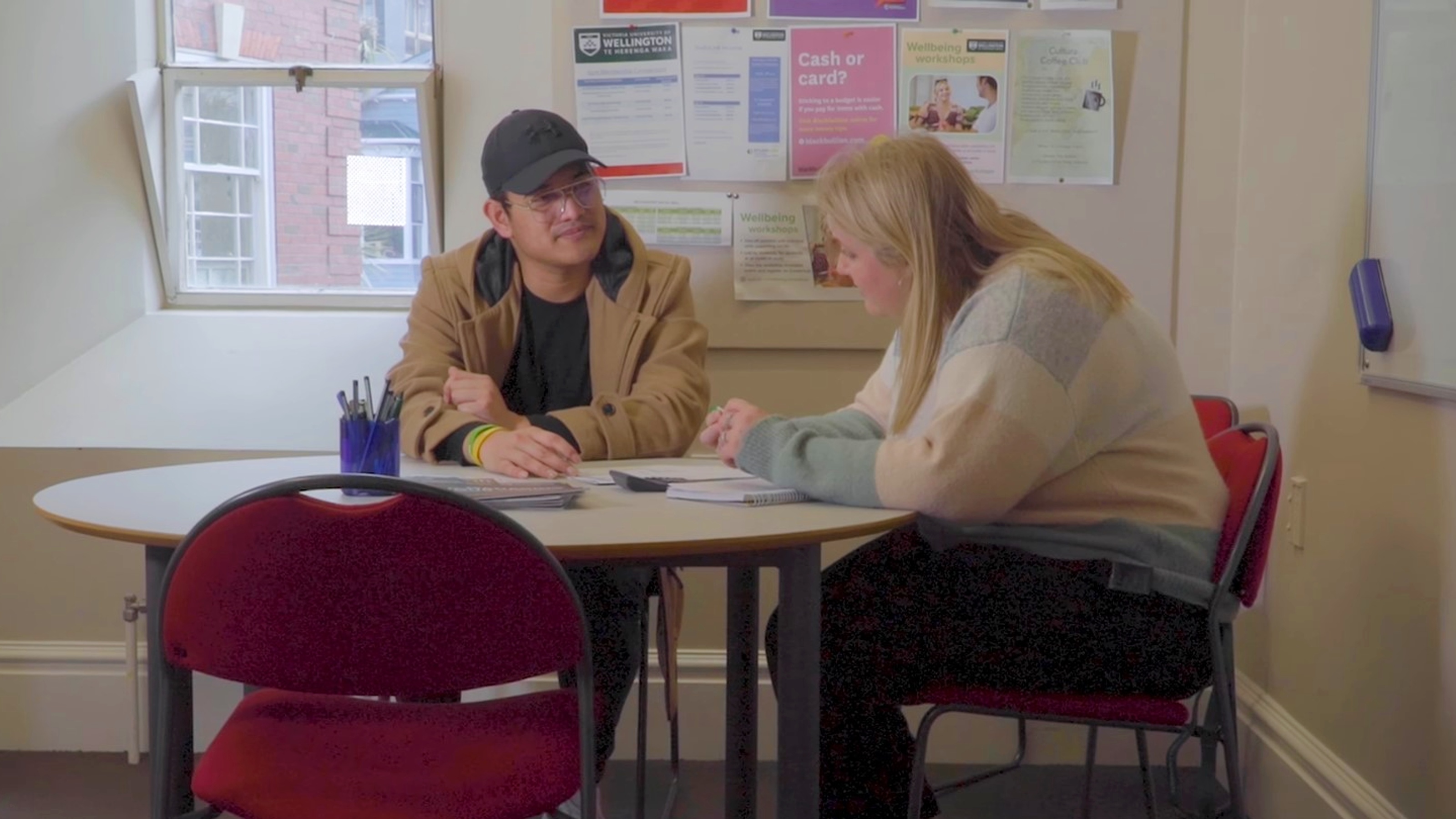
Get help to manage your finances
We can help you:
- budget your money
- manage your student loan or allowance
- work out your accommodation payment schedule.
If you’re facing financial difficulties, we can help you apply for the Hardship Fund.
You may be eligible for government or community support, too.
Apply for a New Zealand study visa
You’ll need to apply for a study visa if you plan to study with us as an international student.
You should apply for your visa after you’ve received your Offer of Place, and before you come to New Zealand.