

The first Master of AI in New Zealand
Artificial intelligence (AI) tackles some of humanity’s deepest questions: what is consciousness, what is intelligence, and what is sentient life?
Our Master of AI is the first of its kind established in Aotearoa New Zealand. Our researchers’ and students’ pioneering work is at the cutting edge of AI knowledge and development.
Examine AI’s effects and implications, and learn to demonstrate advanced AI concepts and techniques. You’ll graduate ready to build AI tools and solve practical problems in areas like education, health, the environment, and business.
Who can study for this qualification
You can study for the MAI if you have a Bachelor’s degree in Computer Science, or a relevant subject, with at least a B average in the relevant final-year courses.
What you’ll learn
You’ll learn about the ethical considerations behind AI, you’ll also take courses from a range of topics including generative AI and big data.
You’ll also study elective courses from postgraduate AI or other disciplines, including:
- Computer Science
- Data Science
- Electrical and Electronic Engineering
- Network Engineering
- Software Engineering
- Statistics.
How you’ll study
The MAI is a two-part qualification that contains both coursework and research. This is different from the 12-month thesis you might do in other Master’s programmes.
You can complete your study over three consecutive trimesters of full-time study (approximately 12 months). Most students start their course of study in Trimester 1, which begins in February. You may be able to start in Trimester 2 (see below)—talk to the programme director to discuss your options.
Part 1: Coursework
You’ll complete 120 points worth of courses:
- one core course covering AI ethics
- three further courses covering other areas of AI
- 30 points of courses from postgraduate AI, Convex Optimisation, or Robotic Intelligence and Design
- 30 further points of elective courses from postgraduate AI or other related disciplines.
Please see the Qualification requirements section below for further information.
Part 2: Research project
You’ll complete a research essay and a project in an advanced area of AI, together worth 60 points.
Option to start in Trimester 2
With the school’s approval, you may also be able to start in Trimester 2.
The sequence depends on course availability and research arrangements. For example, if you start in Trimester 2 you could complete half your coursework, carry out the research component in Trimester 3, and complete the remaining coursework in Trimester 1 of the following year.
Research in Trimester 3 depends on you being ready to begin and for suitable project and supervision arrangements to be available. Discuss your study plan with the programme director.
Part-time study
You can complete your MAI part time by doing two courses per trimester.
This option will take around 20 hours a week. Make sure you take this into account if you are working.
Qualification support and advice
We can help you match your interests and career goals with the right course of study.
If you’re a new student, talk to a Future Student Adviser through our enquiry form.
If you’re already studying with us, talk to Tītoko—Student Success.
For the research portion of your study, you’ll need a supervisor to help guide your research. Your programme coordinator will work with you to find the right person.

Entry requirements
Entry requirements for domestic students
- Requirements for students who completed university in:
If you live in New Zealand and are a citizen or permanent resident of New Zealand or Australia, you're considered a domestic student.
Some citizens of the Cook Islands, Niue, and Tokelau may automatically hold New Zealand citizenship.
Diplomatic residents living in New Zealand are also regarded as domestic students.
To be accepted into this qualification, you need:
1. (a) Before enrolment, a candidate for the MAI degree shall have:
(i) completed a Bachelor’s degree in computer science or a related subject with an average grade of at least B in the relevant final year courses; and
(ii) been accepted by the head of school or nominee as capable of proceeding with the proposed course of study.
(b) Requirement (a)(i) may be waived or varied by the associate dean for a candidate who has had extensive practical, professional, or scholarly experience that provides an equivalent level of preparation.
Qualification requirements
Excerpt from the regulations for the MAI
2. (a) Except as provided in section 4 of this statute, the course of study for the MAI shall consist of:
Part 1: (i) Applications and Implications of Artificial Intelligence (AIML 430);
(ii) 45 further points from AIML 425–440;
(iii) 30 further points from AIML 420–489, Convex Optimisation (EEEN 422), EEEN 430;
(iv) 30 further 400-level points from AIML, COMP, DATA, NWEN, SWEN, Convex Optimisation (EEEN 422), EEEN 430, Computational Statistics (STAT 432), Bayesian Inference (STAT 452)
Part 2: Research Essay in Artificial Intelligence (AIML 501) and 589.
3. A candidate for the MAI shall normally be enrolled for at least three trimesters and shall complete the degree within four years of first enrolling in it. The associate dean may extend the maximum period in special cases.
Globally ranked
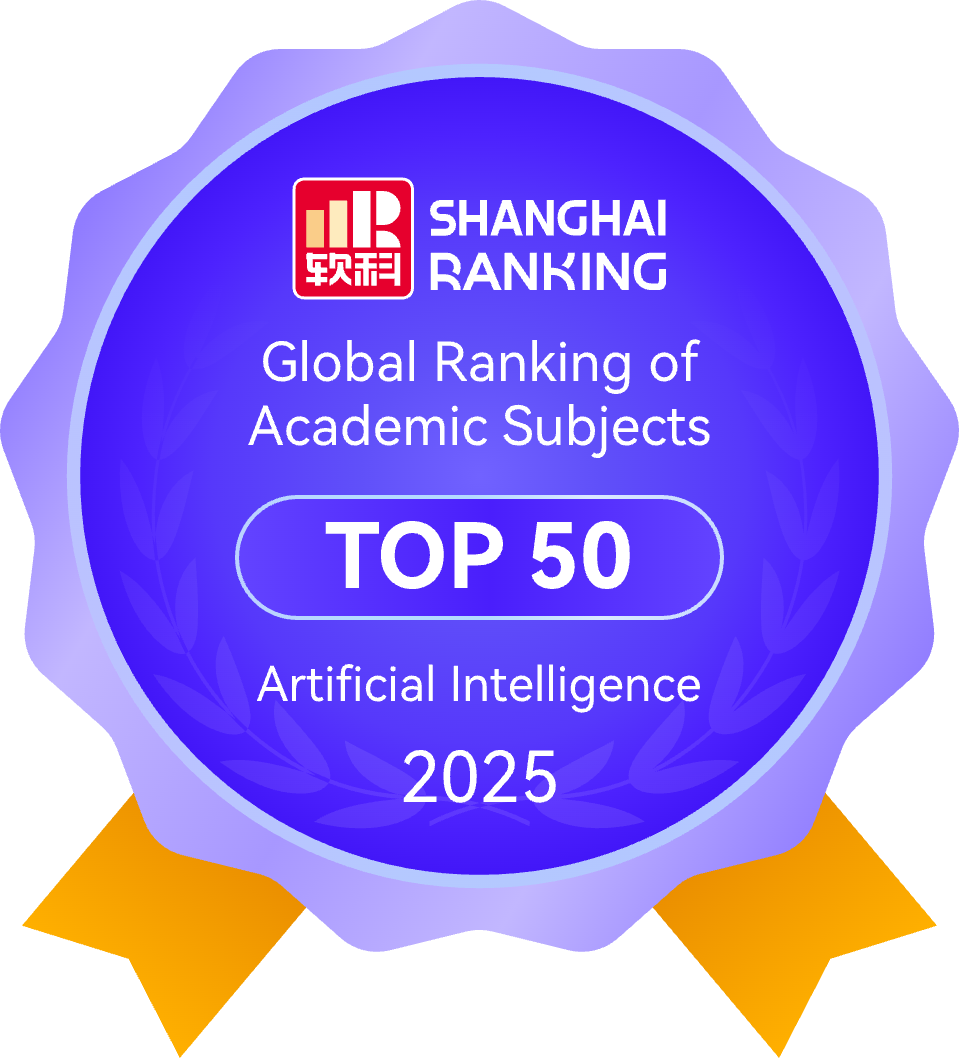
Our Artificial Intelligence programme is ranked in the top 50 worldwide in ShanghaiRanking's Global Ranking of Academic Subjects (GRAS).
GRAS provides subject rankings from about 2,000 universities worldwide.
Future careers
Postgraduate study in AI can lead to unique and rewarding careers. It gives you skills beyond techniques and technologies, and helps you develop the type of thinking that you can apply to future technology.
You may work with tech companies—big or small, local or international. The skills you learn will allow you to apply AI in areas such as health, education, or the environment.
More career information
Find out more about careers in AI.
The government careers website, Tahatū, offers more information about jobs, salaries, and current opportunities.
Scholarships
You may be able to get a scholarship to help fund your studies.
Artificial intelligence scholarships
- Dan F Jones Scholarship in Science
- Te Herenga Waka – Victoria University of Wellington Data Science and Artificial Intelligence Māori PhD Scholarship
- Trimble Karahipi Hangarau Technology Scholarship
- Women in Data Science New Zealand Scholarship
Other scholarships
We have postgraduate and doctoral scholarships available, as well as specialised scholarships for different groups and subject areas. If nothing fits right now, something may suit you later.
We encourage you to apply. It’s a straightforward process, and it could make a real difference.
Scholarships for Science and Engineering
-
This scholarship is designed to support second year students studying English at Te Herenga Waka—Victoria University of Wellington by removing financial barriers to study.
-
These scholarships are open to full-time or transferring students enrolling in a Master’s programme in Chemistry at the School of Chemical and Physical Sciences or in a Master’s programme at the New Zealand School of Music, Victoria University of Wellington.
-
The Brian Murray Fox Scholarship in History offers an opportunity to students who are intending to undertake their second, third or Honours year of their degree at Te Herenga Waka—Victoria University of Wellington in the year following application.
Scholarships for international students
We are currently offering a NZ$10,000 VUW Postgraduate International Scholarship to all eligible international students enrolling in a Master’s degree or Postgraduate Diploma programme.
Your scholarship will be processed automatically when your programme application is accepted, and the amount will be deducted from your tuition fees.
Artificial intelligence scholarships
- Dan F Jones Scholarship in Science
- Trimble Karahipi Hangarau Technology Scholarship
- Women in Data Science New Zealand Scholarship
Other scholarships
We also have postgraduate and doctoral scholarships available, as well as specialised scholarships for different groups and subject areas. If nothing fits right now, something may suit you later.
We encourage you to apply. It’s a straightforward process, and it could make a real difference.
Scholarships for Science and Engineering
-
These scholarships are open to full-time or transferring students enrolling in a Master’s programme in Chemistry at the School of Chemical and Physical Sciences or in a Master’s programme at the New Zealand School of Music, Victoria University of Wellington.
-
The purpose of the award is to assist postgraduate (full-time or part-time) students in the study of a Master’s of Linguistics, Applied Linguistics or TESOL by coursework at Te Herenga Waka–Victoria University of Wellington. Applicant will be assessed on the basis of academic merit. Relevant prior experience may also be taken into account.
-
This scholarship has been established by the School of Linguistics and Applied Language Studies.
Join our postgraduate community
The Postgraduate Students’ Association provides a voice for you on campus and information on studying at Te Herenga Waka—Victoria University of Wellington.
Postgraduate Students’ Association
MAI ki Pōneke
MAI ki Pōneke are part of an international network of Māori and Indigenous postgraduate students. They provide advice, support, and information to Indigenous postgraduate students of all levels, as well as those thinking about enrolling.
Study for a PhD
If you do well in your Master’s degree and show an aptitude for advanced research, you could apply to do a PhD—the highest-level qualification we offer.
You’ll carry out original and sustained research, supervised by our world-class academics.
As a PhD candidate, you’ll also be supported by the Faculty of Graduate Research.
Research areas
The academic staff in our Centre for Data Science and Artificial Intelligence are active across a range of specialist research areas.
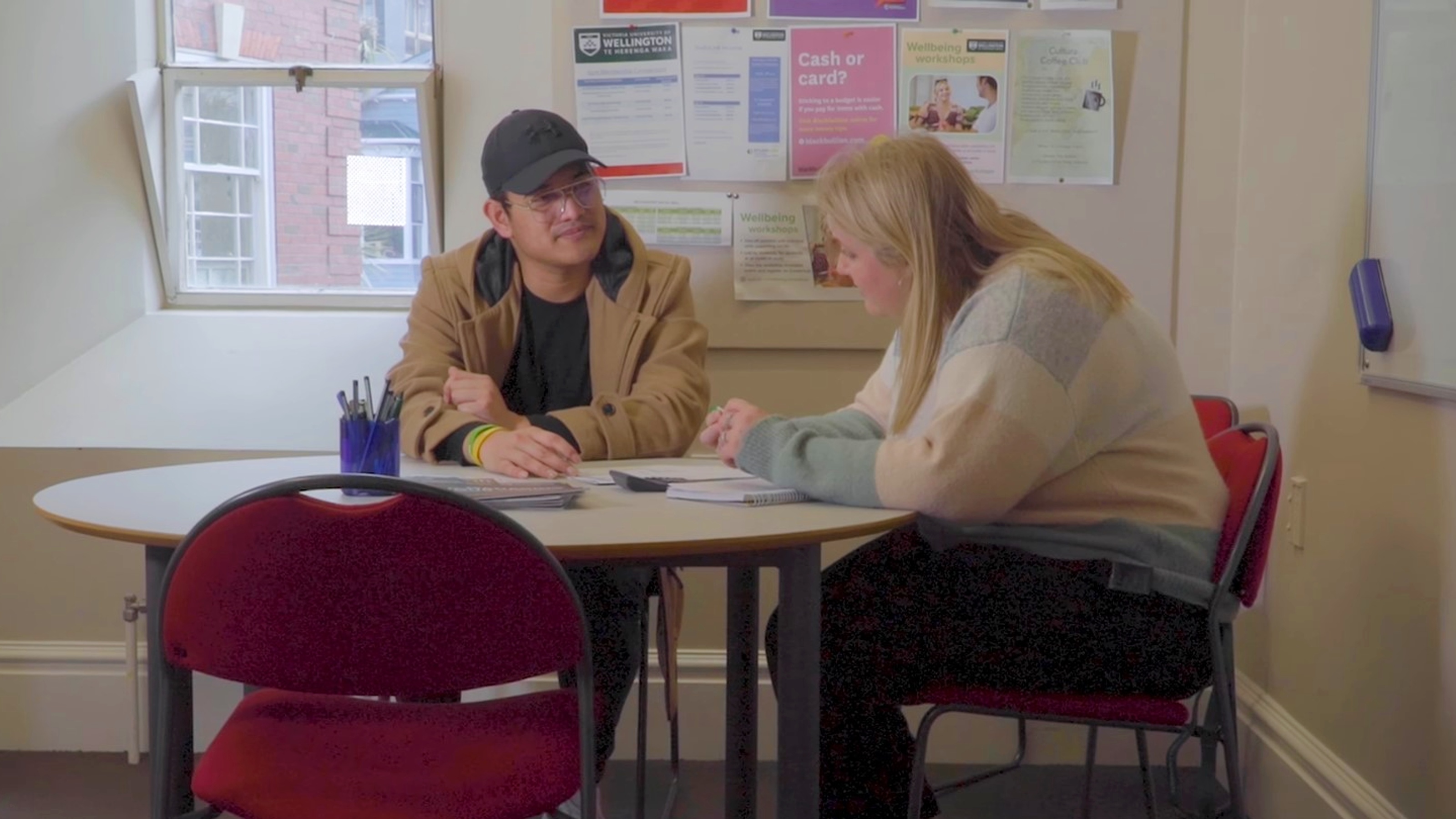
Get help to manage your finances
We can help you:
- budget your money
- manage your student loan or allowance
- work out your accommodation payment schedule.
If you’re facing financial difficulties, we can help you apply for the Hardship Fund.
You may be eligible for government or community support, too.
Apply for a New Zealand study visa
You’ll need to apply for a study visa if you plan to study with us as an international student.
You should apply for your visa after you’ve received your Offer of Place, and before you come to New Zealand.