

Transform the buildings we live in
Explore building construction and performance, project management, and how building materials function. The Master of Building Science combines architectural science research methods and an industry-related project for real-world experience in the field. Learn to manage the development and ongoing performance of the built environment.
Study the MBildSc to learn about key issues in the industry—sustainability, construction law, managing facilities, and the relationship between buildings and their environment. Consider the role of tikanga and mātauranga Māori in architectural design and decision-making.
You’ll also get a practical grounding in how buildings impact on the natural world through their design, construction, operation, and maintenance, with the option to specialise in Project Management or Sustainable Engineering Systems. You’ll prepare for the future of the industry—for digital advances and increased requirements for efficient, sustainable buildings.
Professional recognition
The Master of Building Science is widely recognised in the industry for its excellence and distinction. It’s professionally accredited by Building Institute Aotearoa.
If you’re already working in the construction industry, this qualification will help you deepen your expertise and advance your career.
If you’re a recent graduate, it’s an ideal way to build specialised skills and open up new career opportunities.
Who can study for this qualification
You can study for the Master of Building Science (MBildSc) if you have a relevant Bachelor's degree with at least a B average. This can inlcude:
- Bachelor of Architectural Studies
- Bachelor of Building Sciences
- Bachelor of Construction.
What you'll learn
The 180-point Master of Building Science is a 12-month professional programme that combines coursework in Trimesters 1 and 2 with an industry-related project or practicum in Trimester 3.
You can complete the MBildSc with a specialisation in either Project Management or Sustainable Engineering Systems.
Project Management specialisation
Specialising in Project Management gives you the skills you need to manage a project in the construction industry across all its stages. These include:
- contract management
- design integration
- performance monitoring.
You’ll learn the most advanced techniques and tools to manage projects and built facilities.
Sustainable Engineering Systems specialisation
Specialising in Sustainable Engineering Systems allows you to focus on developing energy- and resource-efficient systems for the built environment.
You’ll learn how to evaluate the sustainability of existing buildings and facilities, with assessment systems used in Aotearoa New Zealand and worldwide. These include:
- building performance
- energy efficiency
- reducing environmental impact from the construction industry.
How you'll study
The 180-point MBildSc includes both coursework and the option of research or an internship. Studying full time, you’ll complete the MBildSc in one year.
It has two parts.
Part 1
You'll complete courses worth 120 points. Thus includes two core courses that cover research methods and either:
- construction economics and project management
- procuremen, risk, and contracts
- code compliance.
You'll also take six elective courses from a range of subjects, including:
- Architecture
- Building Science
- Construction.
The courses you take in Part 1 must meet the requirements to specialise in Project Management or Sustainable Engineering Systems.
Part 2
You'll do independent study worth 60 points. You'll choose from:
- an internship placement with a building science organisation
- a supervised research project.
Master of Construction and Building Science (Research)
The Master of Construction and Building Science (Research) allows you to focus on any area of Building Science that interests you under supervision by an academic staff member.
Qualification support and advice
We can help you match your interests and career goals with the right supervisor.

Entry requirements
Entry requirements for domestic students
- Requirements for students who completed university in:
If you live in New Zealand and are a citizen or permanent resident of New Zealand or Australia, you're considered a domestic student.
Some citizens of the Cook Islands, Niue, and Tokelau may automatically hold New Zealand citizenship.
Diplomatic residents living in New Zealand are also regarded as domestic students.
To be accepted into this qualification, you need:
1. (a) Before enrolment, a candidate for the MBildSc degree shall have:
(i) completed a BBSc, BConst or BAS degree or an equivalent qualification, with an average grade of at least B; and
(ii) been accepted by the head of school as capable of proceeding with the proposed course of study.
(b) Requirement (a)(i) may be waived by the Associate Dean (Students) of the Faculty of Architecture and Design Innovation for a candidate who has practical, professional, or scholarly experience that provides equivalent preparation.
Entry requirements
Your acceptance into this programme is based on your previous qualifications and experience.
Qualification requirements
Excerpt from the regulations for the MBildSc
2. (a) The course of study for the MBildSc shall consist of courses worth at least 180 points, including:
Part 1: Research Methods for Construction and Building Science / Ngā Tikanga Rangahau o te Pūtaiao ā-Hanganga (BILD 491), one of (Construction Economics and Project Management / Ōhanga ā-Waihanga me te Whakahaere Kaupapa (BILD 402), Construction Procurement, Risk and Contract Administration (BILD 403), Building Code Compliance / Ngā Ture Whakaruruhau (SARC 464)); 90 further points from 400-level BILD or CONM courses or, with approval of the programme director, 400-level SARC courses
Part 2: Practicum in Construction and Building Science / Wheako ā-Mahi i te Ao Pūtaiao ā-Hanganga (BILD 581) or 582.
(b) Entry to Part 2 requires completion of Part 1 with at least a B average, or permission of the Head of School.
(c) With the permission of the associate dean, a candidate who has completed a relevant Honours degree, or equivalent qualification at an appropriate standard, may cross credit or transfer credit courses worth up to 60 points of the required courses at 400 level.
3. A candidate shall normally be enrolled for at least three trimesters, and complete the degree within three years of first enrolling. The associate dean may extend the maximum period in special cases.
Note: A student who does not complete the MBildSc may be able to transfer the courses to a Postgraduate Certificate in Construction and Building Science or Postgraduate Diploma in Construction and Building Science. Refer to the PGCertCBSc and PGDipCBSc regulations.
4. A candidate who has been awarded the PGCertCBSc or PGDipCBSc shall abandon that qualification upon being awarded the MBildSc.
Specialisations in the MBildSc
Majors are the subjects you focus your degree on.
Subjects and requirements
Explore your specialisation options below.
MBildSc subjects
Project Management
Sustainable Engineering System
No matching majors found.
Future careers
The Master of Building Science gives you unique skills and knowledge that go beyond Bachelor’s learnings or industry experience.
It will give you the professional recognition you need to pursue a career in the design and development of our built environment.
You might start your own practice, or work as an employee in a firm or government organisation.
You’ll be qualified to take on leadership roles in the construction and building performance and management sectors.
More career information
Find out more about careers in construction and building science.
The government careers website, Tahatū, offers more information about jobs, salaries, and current opportunities.
Scholarships
You may be able to get a scholarship to help fund your studies.
We have postgraduate and doctoral scholarships available, as well as specialised scholarships for different groups and subject areas. If nothing fits right now, something may suit you later.
We encourage you to apply. It's a straightforward process, and it could make a real difference.
Scholarships for Architecture
-
This scholarship is for students undertaking or intending to undertake an Honours or Masters degree at Te Herenga Waka—Victoria University of Wellington in areas related to Peace Building or Peace Studies, Trust Building, Conflict Resolution, addressing Historical Injustice, Restorative Justice, Social Cohesion, Community building and promoting cross-cultural understanding, Change Making or Ethical Leadership.
-
This scholarship is to assist students in the last year of their first Bachelors degree at Victoria University of Wellington. The scholarship fund will be awarded equally between male and female students.
-
Applicants must be female, New Zealand or Canadian citizens studying full time at 300 level BSc (Hons) and Master's by Coursework in any area of Science, including Architecture and Design at Te Herenga Waka—Victoria University of Wellington.
Scholarships for international students
We are currently offering a NZ$10,000 VUW Postgraduate International Scholarship to all eligible international students enrolling in a Master’s degree or Postgraduate Diploma programme.
Your scholarship will be processed automatically when your programme application is accepted, and the amount will be deducted from your tuition fees. If nothing fits right now, something may suit you later.
We encourage you to apply. It's a straightforward process, and it could make a real difference.
Other scholarships
We also have postgraduate and doctoral scholarships available, as well as specialised scholarships for different groups and subject areas.
Scholarships for Architecture
There could be a scholarship for your qualification, subject area, background, or situation.
Join our postgraduate community
The Postgraduate Students’ Association provides a voice for you on campus and information on studying at Te Herenga Waka—Victoria University of Wellington.
Postgraduate Students’ Association
MAI ki Pōneke
MAI ki Pōneke are part of an international network of Māori and Indigenous postgraduate students. They provide advice, support, and information to Indigenous postgraduate students of all levels, as well as those thinking about enrolling.
Further research or study
If you do well in your Master’s degree and show an aptitude for advanced research, you could apply to do a PhD—the highest level of qualification that we offer.
You’ll carry out original and sustained research under supervision from our world-class academics.
As a PhD candidate, you’ll also be supported by the Faculty of Graduate Research.

Research areas
Our School of Architecture academic staff are active across a range of specialist research areas.
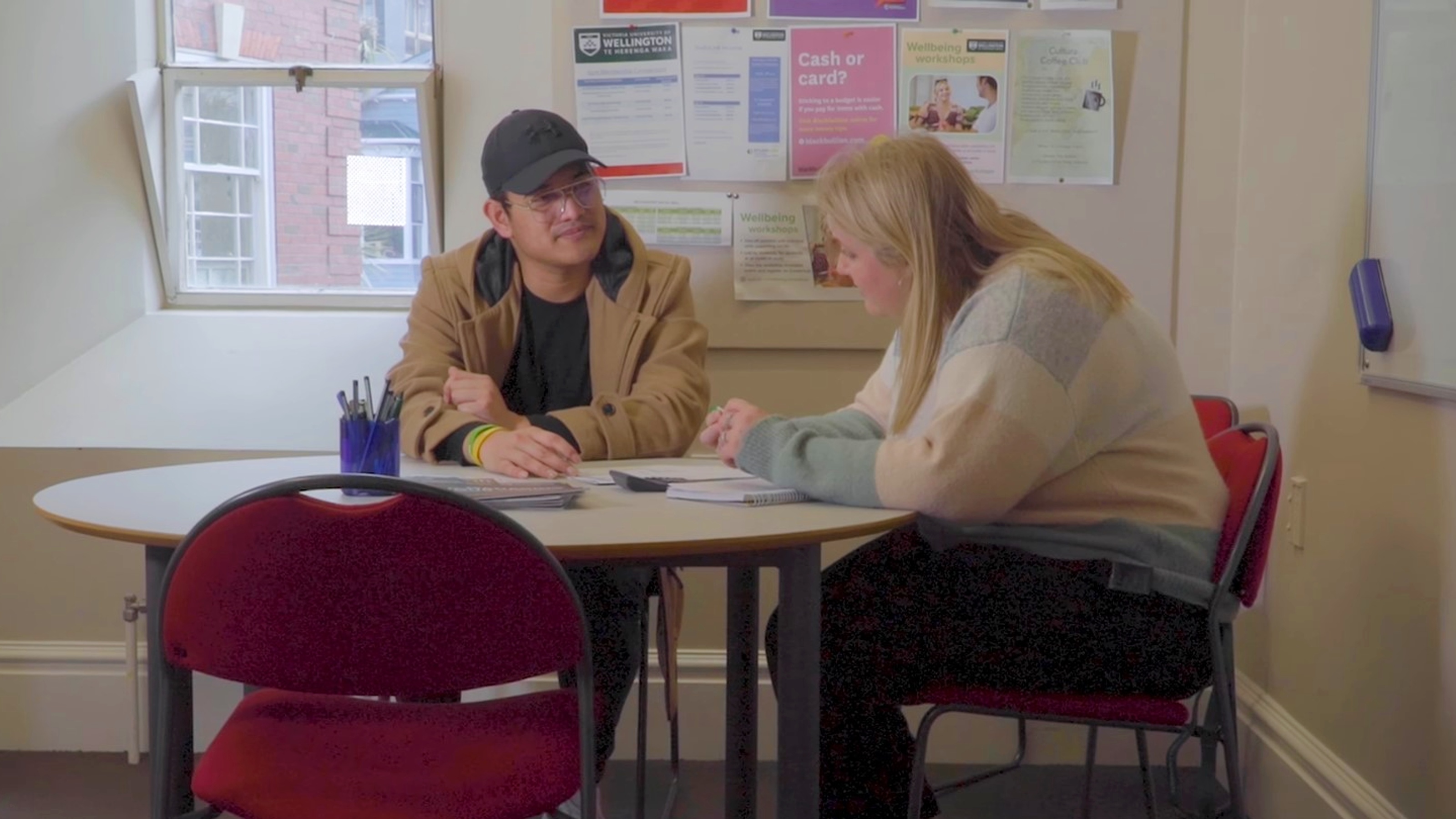
Get help to manage your finances
We can help you:
- budget your money
- manage your student loan or allowance
- work out your accommodation payment schedule.
If you’re facing financial difficulties, we can help you apply for the Hardship Fund.
You may be eligible for government or community support, too.
Apply for a New Zealand study visa
You’ll need to apply for a study visa if you plan to study with us as an international student.
You should apply for your visa after you’ve received your Offer of Place, and before you come to New Zealand.