

Advance your information management skills and knowledge
Connect people with information and help organisations use information productively with the Master of Information Studies (MIS).
This technology-focused and research-based degree teaches you to organise, manage, and preserve digital and print information. You’ll develop practical information-management skills and expand your knowledge of digital curation technologies, knowledge management, and library and archival services.
You’ll graduate with a globally recognised qualification designed to meet the needs of the businesses and organisations that manage information.
Explore the Master of Information Studies
The Master of Information Studies helps you to become an expert in managing information in today’s fast-changing world.
Who can study for this qualification
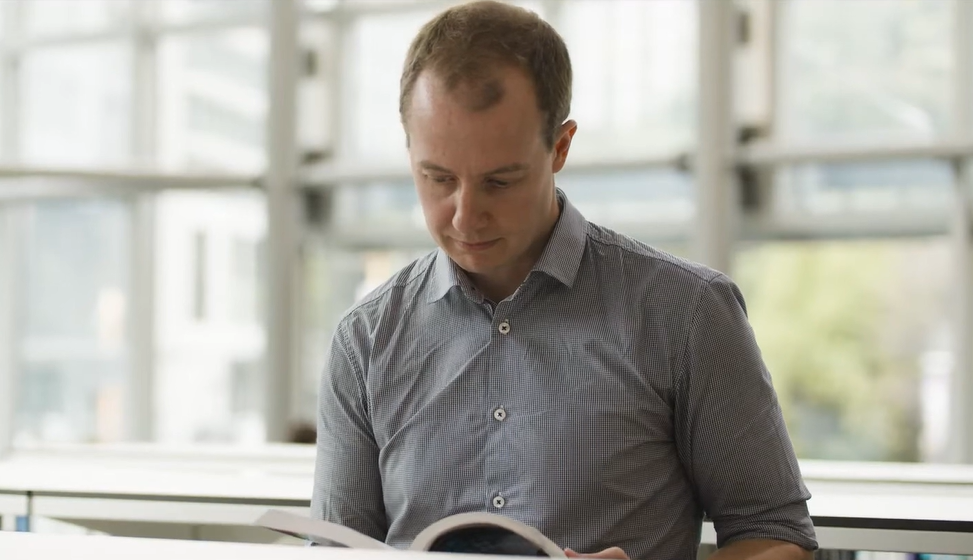
This degree is designed for working professionals who want to move into senior roles in organisations like libraries, government agencies, businesses, and cultural institutions.
The degree gives you broad and deep expertise in Information Studies, and develops the leadership and research skills you need to manage information strategically within organisations. It’s also ideal preparation for further study.
You can enrol in this degree if you have a Bachelor’s degree (or equivalent) in any subject with at least a B average.
Other options
If you aren’t quite ready to commit to the Master’s, you could enrol in the Postgraduate Certificate or Postgraduate Diploma in Information Studies. These are useful qualifications in themselves, and they can serve as a bridge to a Master’s degree if you decide to keep studying.
What you’ll learn
The MIS develops practical, transferable skills for designing information systems, analysing user needs, and leading projects that make knowledge more accessible and useful.
Coursework
In the MIS, you complete a mixture of compulsory core courses and elective courses of your choice.
- In the six core courses, you learn:
- the changing role of information professions in society, including the issues and trends affecting it
- management and organisation theory needed to manage information services
- information policy concepts and issues, such as the role of information professionals in developing information policy, and how information policy and legislation are created in Aotearoa New Zealand
- information-seeking behaviour and information literacy, and the skills to efficiently and effectively access information
- theories, standards, and systems for the storage and retrieval of information
- quantitative, qualitative and mixed-methods research in information management environments.
- The four or six elective courses from a variety of subjects like Mātauranga Māori, managing archives, and digital technologies. We update the selection of courses you can choose from to include fast-developing subjects.
Choose practical work experience or a research project
In place of some of your elective courses, you can choose:
- a practicum course (INFO 538) of about 100 hours of work experience in a professional information-management workplace
- a supervised research project on an information management problem—you’ll use established methodologies to collect and analyse data, and communicate the results in a written report.
Specialisation options
If you want to, you can specialise in either Archives and Records Management or Library Science by taking the relevant courses.
Talk to the School of Information Management for more information on these options.
How you’ll study
Courses are taught online on weekday evenings. Some courses are delivered through live sessions that we also record for you to watch later, and others contain recorded content for you to watch when it’s convenient for you. Most courses combine both, using the live sessions for discussions and activities.
Workload
If you’re studying full time, you can expect a workload of 40 to 45 hours a week for much of the year. Part-time students doing two courses per trimester will need to do around 20 to 23 hours of work a week.
You can estimate your workload by adding up the number of points you'll be doing. One point is about 10 to 12 hours of work.
Flexibility if your needs change
These postgraduate study options are ‘staircased’—that is, you can move between qualifications in some cases, and the courses you study in one qualification can count towards the next one. For example:
- if you’re enrolled in the Diploma or the Certificate, you may be able to convert to the Master’s degree without retaking the courses they share
- if you enrol in the Master's but can't finish it, you may have completed enough courses to graduate with the Certificate or Diploma.
Part- and full-time study options
You can study full time or part time. You’ll complete the MIS in one-and-a-half years of full-time study, or over two to four years part time.
International students study online
The Master's, Postgraduate Diploma, and Postgraduate Certificate in Information Studies are delivered and assessed entirely online. So if you’re an international student, you’ll study by distance.
You won’t need to travel to New Zealand to complete the qualification, and you won’t be eligible for a student visa to enter New Zealand.
Contact the International Office if you have any questions about studying with us.
Qualification support and advice
We can help you match your interests and career goals with the right course of study.
If you’re a new student, talk to a Future Student Adviser through our enquiry form.
If you’re already studying with us, talk to Tītoko—Student Success.
For the research portion of your study, you’ll need a supervisor to help guide your research. Your programme coordinator will work with you to find the right person.

Entry requirements
Entry requirements for domestic students
- Requirements for students who completed university in:
If you live in New Zealand and are a citizen or permanent resident of New Zealand or Australia, you're considered a domestic student.
Some citizens of the Cook Islands, Niue, and Tokelau may automatically hold New Zealand citizenship.
Diplomatic residents living in New Zealand are also regarded as domestic students.
To be accepted into this qualification, you need:
1. (a) Before enrolment, a candidate for the MIS degree shall have:
(i) completed a Bachelor’s degree with at least a B average; and
(ii) been accepted by the Director of Information Studies Programmes as capable of proceeding with the proposed course of study.
(b) Requirement (a)(i) may be waived by the associate dean for a candidate who has had extensive practical, professional, or scholarly experience of an appropriate kind.
Qualification requirements
Excerpt from the regulations for the MIS
2. (a) Except as provided in (b), (c) or (d) or in section 6, the course of study for the MIS shall comprise:
Part 1: The Information Professions (INFO 520), Management in Information Services (INFO 521), Information Policy Concepts, Issues and Processes (INFO 522), Information Access and Use (INFO 523), Creating and Managing Metadata (INFO 527); Research Methods for Information Management Environments (INFO 528) or 529
Part 2: 90 further points from Digital Technologies for Information Professionals (INFO 525), INFO 528–580.
(b) With the permission of the director, a candidate who can demonstrate expertise in one or more Part 1 courses may substitute an equivalent number of electives from the list under Part 2.
(c) A candidate who holds a PGDipArcRec or PGDipIS may be granted credit by the director for up to eight courses in Parts 1 and 2, provided that the candidate abandons the diploma upon being awarded the MIS.
(d) A candidate who holds a PGCertArcRec or PGCertIS may be granted credit by the director for up to four courses in Parts 1 and 2, provided that the candidate abandons the certificate upon being awarded the MIS.
3. A candidate shall normally be enrolled for at least three trimesters and shall complete the degree within four years of first enrolling in it. The director may extend that maximum period in special cases.
4. (a) A candidate who fails any course may be permitted to re-enrol in that course in the following year, or, in special circumstances, at a later time at the discretion of the associate dean.
(b) A candidate who has failed more than one course in any trimester (or, in the case of part-time students, who has failed more than one course in any two consecutive trimesters) may enrol for subsequent courses only with the permission of the head of school.
International recognition
Wellington School of Business and Government is among the top 1% of business schools worldwide that hold the ‘Triple Crown’ of international business education accreditations. By studying here, you can be confident your qualification will be recognised globally for its quality.
Future careers
Your globally recognised MIS gives you the broad skills and knowledge you need to work in information management across industries in New Zealand and overseas.
You’ll be ready to work in roles that connect people with the information they need to learn, make decisions, and preserve the memory of organisations and communities.
More career information
Find out more about careers.
The government careers website, Tahatū, offers more information about jobs, salaries, and current opportunities.
Scholarships
You may be able to get a scholarship to help fund your studies.
We have postgraduate and doctoral scholarships available, as well as specialised scholarships for different groups and subject areas. If nothing fits right now, something may suit you later.
We encourage you to apply. It's a straightforward process, and it could make a real difference.
Scholarships for Information Studies
-
This scholarship is to assist Masters or PhD students undertaking a research degree in Information Studies at Victoria University of Wellington.
Scholarships for international students
We're currently offering a NZ$10,000 VUW Postgraduate International Scholarship to all eligible international students enrolling in a Master’s degree or Postgraduate Diploma programme.
Your scholarship will be processed automatically when your programme application is accepted, and the amount will be deducted from your tuition fees.
Other scholarships
We also have postgraduate and doctoral scholarships available, as well as specialised scholarships for different groups and subject areas. If nothing fits right now, something may suit you later.
We encourage you to apply. It's a straightforward process, and it could make a real difference.
Scholarships for Information Studies
-
This scholarship is to assist Masters or PhD students undertaking a research degree in Information Studies at Victoria University of Wellington.
Join our postgraduate community
The Postgraduate Students’ Association provides a voice for you on campus and information on studying at Te Herenga Waka—Victoria University of Wellington.
Postgraduate Students’ Association
MAI ki Pōneke
MAI ki Pōneke are part of an international network of Māori and Indigenous postgraduate students. They provide advice, support, and information to Indigenous postgraduate students of all levels, as well as those thinking about enrolling.
Study for a PhD
If you do well in your Master’s degree and show an aptitude for advanced research, you could apply to do a PhD—the highest-level qualification we offer.
You’ll carry out original and sustained research, supervised by our world-class academics.
As a PhD candidate, you’ll also be supported by the Faculty of Graduate Research.
Academic staff research areas
Jennifer Campbell-Meier

Senior Lecturer
Anne Goulding
Presenter
Maja Krtalic

Head of School
Chern Li Liew
Associate Professor
Spencer Lilley

Associate Professor
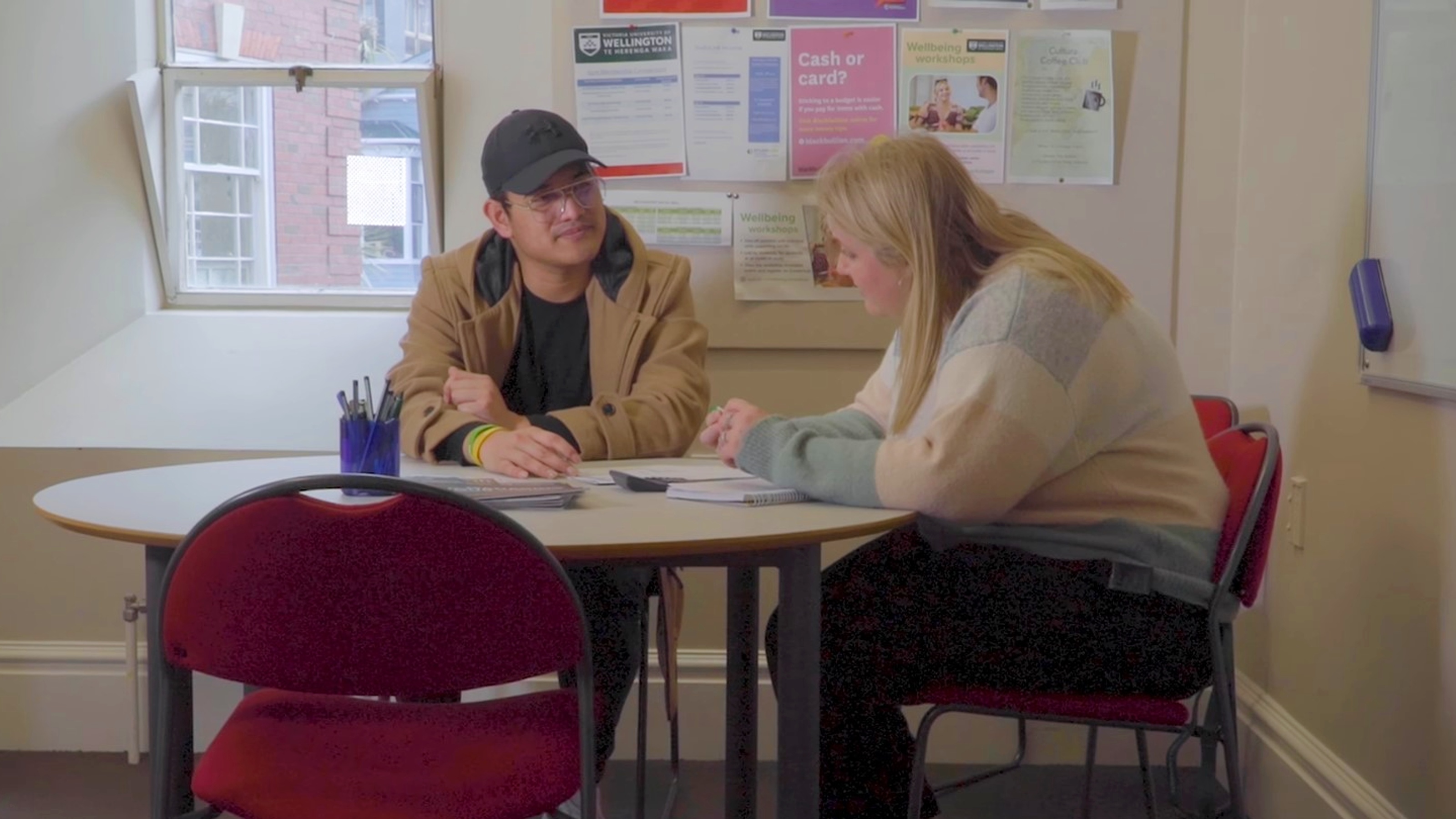
Get help to manage your finances
We can help you:
- budget your money
- manage your student loan or allowance
- work out your accommodation payment schedule.
If you’re facing financial difficulties, we can help you apply for the Hardship Fund.
You may be eligible for government or community support, too.
Apply for a New Zealand study visa
You’ll need to apply for a study visa if you plan to study with us as an international student.
You should apply for your visa after you’ve received your Offer of Place, and before you come to New Zealand.