

Advance your interior design skills
Reimagine the places we live, work, play, eat, shop, exercise, and learn. Take identity, mood, performance, and the physical comfort of a structure into consideration in your design work.
Through this research-based programme, you’ll consider the relationships between materials, people, and space. You’ll explore Interior Architecture in different contexts—considering it through social, cultural, sustainable, psychological, behavioural, and technological lenses.
Study Interior Architecture to design spaces that make a difference to people’s wellbeing and create a better future.
Master of Interior Architecture
Study Interior Architecture at Te Herenga Waka—Victoria University of Wellington. Become a specialist in the architectural design of interior spaces. Examine the relationships between materials, people, and space. Make a difference to people’s wellbeing through the innovative design of interior spaces.
Who can study for this qualification
You can study for the MIA if you have a Bachelor of Architectural Studies in Interior Architecture, or a relevant alternative qualification.
What you’ll learn
You’ll learn about:
- applying advanced design strategies to complex commercial interiors projects
- developing advanced construction documentation drawing skills
- how interiors are described, interpreted, evaluated and culturally considered
- professional practice, including your legal and ethical obligations.
How you’ll study
The MIA is collaborative, interdisciplinary, and studio-based. You’ll focus on professional Interior Architecture design, representation, and implementation.
You’ll complete the 240-point degree in two years of full-time study.
Part One: Coursework
In your first year, you’ll complete seven taught courses. Six are compulsory and one elected.
You’ll:
- learn to successfully apply design strategies through all stages of the design process
- focus on technologies and materials
- examine history, theory, and criticism in interior architecture
- learn about professional practice, including your legal and ethical obligations.
You’ll also complete a research-based, advanced design project. During this, you’ll learn to identify questions and explore processes. You’ll develop effective ways to present and communicate your research findings.
Part Two: Research portfolio
During the second year, you’ll complete a research portfolio or thesis under supervision from academic staff in the School.
The School of Architecture has three main research areas:
- sustainability and wellbeing—resilient and sustainable cities, designing for wellbeing and positive social impact, and design for indigenous people and minorities
- performance and technology—building performance, construction technologies and materials, and simulation methods and virtual spaces
- creative and critical—design research, representation, and history and theory.
You can find out more about the research streams and study options available by talking to Interior Architecture academic staff.
Part-time study options
If you’re a domestic student, you can study the MIA part time over a maximum of four years.
Qualification support and advice
We can help you match your interests and career goals with the right course of study.
If you’re a new student, talk to a Future Student Adviser through our enquiry form.
If you’re already studying with us, talk to Tītoko—Student Success.
For the research portion of your study, you’ll need a supervisor to help guide your research. Your programme coordinator will work with you to find the right person.

Get accepted into this qualification
Entry requirements for domestic students
- Requirements for students who completed university in:
If you live in New Zealand and are a citizen or permanent resident of New Zealand or Australia, you're considered a domestic student.
Some citizens of the Cook Islands, Niue, and Tokelau may automatically hold New Zealand citizenship.
Diplomatic residents living in New Zealand are also regarded as domestic students.
To be accepted into this qualification, you need:
1. (a) Before enrolment, a candidate for the MIA degree shall have:
(i) completed a Te Herenga Waka—Victoria University of Wellington BAS degree in Interior Architecture or Graduate Diploma in Designed Environments in Interior Architecture or, at the discretion of the Associate Dean (Students) of the Faculty of Architecture and Design Innovation, an equivalent qualification; and
(ii) been accepted by the head of school as capable of proceeding with the proposed course of study.
(b) Requirement (a)(i) may be waived by the associate dean for a candidate who:
(i) has extensive professional or scholarly experience of an appropriate kind; or
(ii) initially enrolled in a BDes and has satisfied all but 30 points of the requirements for a BAS degree. The MIA shall not be awarded until the BAS is completed.
Qualification requirements
Excerpt from the regulations for the MIA.
2. (a) Except as provided for in (b) and (c) and in section 5 of these regulations, the course of study for the MIA shall consist of courses worth at least 240 points, as follows:
Part 1: 120 400-level points, including Interior Architecture Research Studio / Te Taupuni Mahi Rangahau Whakaniko ki Rō Whare (INTA 411), Interior Architecture Design Research / Te Mahi Rangahau o te Ao Whakanikoniko (INTA 412), Integrated Technologies / Te Whakakotahitanga o ngā Mahi Whakanikoniko (INTA 421), Theory and Criticism in Interior Architecture / Te Tātari Kōrero o te Ao Whakanikoniko (INTA 451), Professional Practice / Ngā Mahi Ngāio (SARC 461), Research Methodologies / Ngā Momo Tikanga Rangahau (SARC 491);
Part 2: A 120-point research portfolio as listed on the MIA Schedule and approved by the head of school.
Parts 1 and 2 shall include such practical work as may be determined by the head of school.
(b) With the permission of the associate dean, a candidate who has completed an appropriate degree with Honours or other graduate study to an appropriate level may be exempted from Part 1 and admitted directly to Part 2.
(c) A candidate may proceed to Part 2 only with the permission of the head of school.
3. (a) A candidate whose course of study includes both Part 1 and Part 2 shall normally be enrolled for at least four trimesters (extended pro rata up to eight trimesters for students who are not full time), and shall complete the degree within two years and six months of first enrolling in it (extended pro rata up to five years for students who are not full time). The associate dean may extend the maximum period in special cases.
(b) The minimum and maximum periods of enrolment for Part 2 are specified in the Master’s Thesis Regulations.
4. (a) A candidate who passes Part 1 and does not proceed to complete Part 2 may be awarded a Postgraduate Diploma in Designed Environments (PGDipDE) in Interior Architecture.
(b) At the discretion of the head of school, a candidate who holds a PGDipDE in Interior Architecture may credit those courses to the MIA provided the candidate abandons the Postgraduate Diploma upon being awarded the MIA.
Internationally recognised
Our Master of Interior Architecture is internationally recognised through affiliations to the International Federation of Interior Architects/Designers and the Interior Design/Interior Architecture Educators Association.
Future careers
As an MIA graduate, you might work as a professional or specialist within an interior design or architecture firm, or in the interior division of a large, multidisciplinary design company.
You might work in roles such as:
- interior designer
- exhibition, stage or set designer
- retail designer
- lighting designer
- furniture designer
- environmental designer
- workplace strategy consultant
- heritage or cultural design specialist.
You might also make a career in teaching or research.
More career information
Find out more about careers in Architecture.
The government careers website, Tahatū, offers more information about jobs, salaries, and current opportunities.
Scholarships
You may be able to get a scholarship to help fund your studies.
We have postgraduate and doctoral scholarships available, as well as specialised scholarships for different groups and subject areas. If nothing fits right now, something may suit you later.
We encourage you to apply. It’s a straightforward process, and it could make a real difference.
Scholarships for Architecture
-
This scholarship is to assist students in the last year of their first Bachelors degree at Victoria University of Wellington. The scholarship fund will be awarded equally between male and female students.
-
Applicants must be female, New Zealand or Canadian citizens studying full time at 300 level BSc (Hons) and Master's by Coursework in any area of Science, including Architecture and Design at Te Herenga Waka—Victoria University of Wellington.
-
The fund, which was established at the time of the renovation of the C3 lecture theatre, is to assist a second-year student from any faculty in their studies at Te Herenga Waka—Victoria University of Wellington
Scholarships for international students
We’re currently offering a NZ$10,000 VUW Postgraduate International Scholarship to all eligible international students enrolling in a Master’s degree or Postgraduate Diploma programme.
Your scholarship will be processed automatically when your programme application is accepted, and the amount will be deducted from your tuition fees.
Other scholarships
We also have postgraduate and doctoral scholarships available, as well as specialised scholarships for different groups and subject areas. If nothing fits right now, something may suit you later.
We encourage you to apply. It’s a straightforward process, and it could make a real difference.
Scholarships for Architecture
-
This scholarship is to assist students in the last year of their first Bachelors degree at Victoria University of Wellington. The scholarship fund will be awarded equally between male and female students.
-
Applicants must be female, New Zealand or Canadian citizens studying full time at 300 level BSc (Hons) and Master's by Coursework in any area of Science, including Architecture and Design at Te Herenga Waka—Victoria University of Wellington.
Join our postgraduate community
The Postgraduate Students’ Association provides a voice for you on campus and information on studying at Te Herenga Waka—Victoria University of Wellington.
Postgraduate Students’ Association
MAI ki Pōneke
MAI ki Pōneke are part of an international network of Māori and Indigenous postgraduate students. They provide advice, support, and information to Indigenous postgraduate students of all levels, as well as those thinking about enrolling.
Industry connections
We have industry connections and partnerships with a range of national and local organisations:
- Building Research Association of New Zealand
- Designers Institute of New Zealand
- New Zealand Institute of Architects
- New Zealand Institute of Building
- New Zealand Institute of Landscape Architects
- New Zealand Registered Architects Board
- New Zealand Planning Institute
Study for a PhD
If you do well in your Master’s degree and show an aptitude for advanced research, you could apply to do a PhD—the highest-level qualification we offer.
You’ll carry out original and sustained research, supervised by our world-class academics.
As a PhD candidate, you’ll also be supported by the Faculty of Graduate Research.
Academic staff research areas
Daniele Abreu e Lima
Lecturer
Michael Dudding

Senior Lecturer (Teaching)
Christine McCarthy

Senior Lecturer
Warwick McLeod

Senior Lecturer
Joanna Merwood-Salisbury

Associate Dean, Postgraduate Research (PGR)
Natasha Perkins

Senior Lecturer
Mark Southcombe

Associate Professor
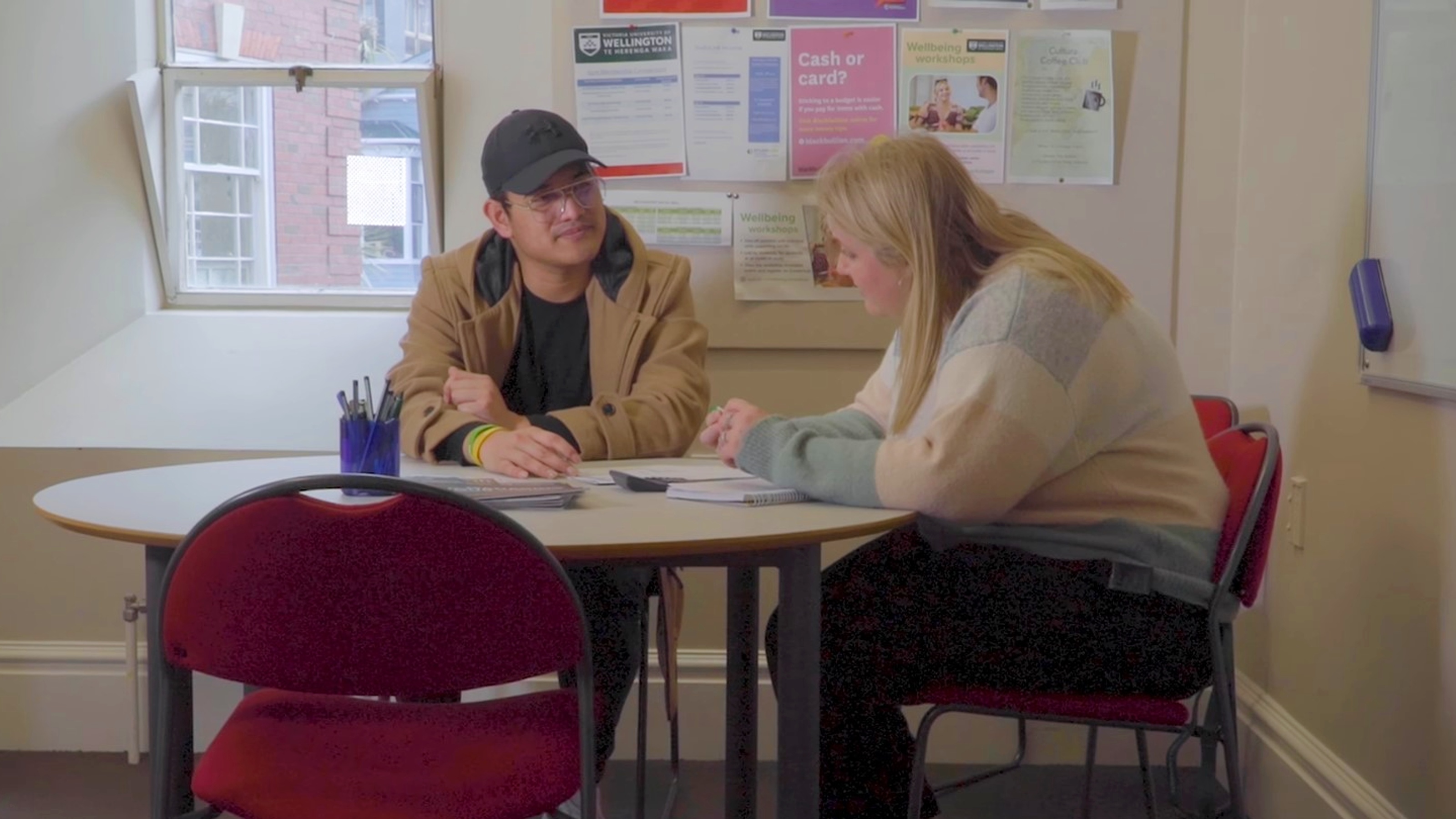
Get help to manage your finances
We can help you:
- budget your money
- manage your student loan or allowance
- work out your accommodation payment schedule.
If you’re facing financial difficulties, we can help you apply for the Hardship Fund.
You may be eligible for government or community support, too.
Apply for a New Zealand study visa
You’ll need to apply for a study visa if you plan to study with us as an international student.
You should apply for your visa after you’ve received your Offer of Place, and before you come to New Zealand.