

Start a career in music therapy
Use music to support the development and wellbeing of people with complex emotional, intellectual, physical, or social needs.
You'll get a comprehensive grounding in music therapy along with practical experience. When you study at the New Zealand School of Music, you'll learn from dedicated staff with many years' experience in music therapy.
This programme was developed in association with Music Therapy New Zealand. You'll graduate ready to register as a music therapist.
Who can study for this qualification
To enrol in the Master of Musical Therapy, you need:
- a Bachelor's degree relevant to Music Therapy
- to pass an audition
- to have completed courses worth 30 points in Psychology or another approved discipline.
You'll also need to have:
- good musical skills in varied instruments and voice
- proficiency with an accompanying instrument, such as piano or guitar, and preferably some experience with both
- capacity for excellent listening, both musical and interpersonal
- experience (voluntary or professional) with people with complex needs or illness
- a compassionate, questioning attitude and sound academic skills
- a mature personality and an ability to empathise with others.
What you’ll learn
You’ll learn a mixture of practical musical therapy skills through professional placements, as well as theory, and research methods.
You'll do courses covering:
- the principles and methods used in music therapy.
- music from cultures other than your own, and how this applies to your practice.
- approaches to music therapy research
- a workplace practicum.
Professional experience
During your placements, you'll learn to:
- use music therapy principles and methods in a practice setting.
- develop creativity and artistic responses to challenges.
- work with participants of varying ages and needs to achieve therapeutic outcomes.
- engage sensitively in professional teams.
- apply insights and new learnings to your music therapy practice and evaluate and reflect upon the process and effects.
- build understanding of and respect for Te Titiri o Waitangi in placement settings.
How you’ll study
This programme is demanding, so you need to be sure you can fit it into your schedule. Studying full time, you can expect a workload of 40 to 45 hours a week for much of the year.
You'll work closely with your tutors in small groups to problem-solve, development creativity and musicality, reflect on theory and practice, and consider questions that can lead to practice-based research.
Choose your study path
Most students do the Master of Music Therapy by coursework and research, which is in two parts. In Part 1, you'll do coursework and in Part 2 you'll do casework and research.
If you're already a music therapist with an appropriate postgraduate qualification you can go straight to Part 2—the Master of Music Therapy by research.
Coursework and research path
You'll do placements both through your Part 1 practicum and your Part 2 casework.
In Part 1, your placement will be clinically supervised by lecturing staff, and in Part 2, by external registered music therapists. You'll also be supported on site by liaison staff who may be music therapists, specialist teachers, or other healthcare professionals.
Placement opportunities may include clinical practice in:
- specialist schools at primary and secondary level, and specialist units of mainstream schools
- central regional health schools for young people with mental health needs
- child development centres and paediatric wards of hospitals
- trauma services in mental health and acquired brain injury
- specialist preschool units for education of children with physical and neurological needs
- rest homes and departments for dementia and stroke in older persons' health
- visual resource centres
- prison services
- music therapy centres and music therapy community services.
Research-only path
Take your experience as a music therapist and research and write a thesis about a topic of your interest. You’ll be required to complete one thesis of up to 40,000 words.
Qualification support and advice
We can help you match your interests and career goals with the right course of study.
If you’re a new student, talk to a Future Student Adviser through our enquiry form.
If you’re already studying with us, talk to Tītoko—Student Success.
For the research portion of your study, you’ll need a supervisor to help guide your research. Your programme coordinator will work with you to find the right person.

Entry requirements
Entry requirements for domestic students
- Requirements for students who completed university in:
If you live in New Zealand and are a citizen or permanent resident of New Zealand or Australia, you're considered a domestic student.
Some citizens of the Cook Islands, Niue, and Tokelau may automatically hold New Zealand citizenship.
Diplomatic residents living in New Zealand are also regarded as domestic students.
To be accepted into this qualification, you need:
1. (a) Before enrolment, a candidate for the MMusTher degree shall have:
(i) completed a degree relevant to Music Therapy; and
(ii) passed at least 30 points in Psychology or another approved social science discipline (candidates may be permitted to complete this requirement concurrently); and
(iii) satisfied the director of the New Zealand School of Music—Te Kōkī through audition and interview that they have the appropriate academic, life experience, and musical ability to proceed with the proposed course of study.
(b) Requirement (a)(i) may be waived by the Associate Dean (Students), Faculty of Humanities and Social Sciences, for a candidate who has adequate training and experience to proceed with the proposed course of study.
Qualification requirements
Excerpt from the regulations for the MMusTher
2. (a) Except as provided in (b), the course of study for the MMusTher shall comprise:
Part 1: Music Therapy Principles (NZSM 520), World Musics and Music Therapy (NZSM 521), Music Therapy Methods (NZSM 522), Music Therapy Practicum (NZSM 523), and Research Approaches in Music Therapy (NZSM 527).
Part 2: Case Work and Research (NZSM 526).
(b) Music therapists holding an appropriate postgraduate qualification may be admitted directly to Part 2.
Graduate ready to register as a music therapist
This programme was developed in association with Music Therapy New Zealand, so you'll graduate ready to become a registered music therapist.
Music Therapy New Zealand governs the ethical and professional standards of practice for registered music therapists in Aotearoa New Zealand.
Future careers
Get the skills and experience to become a registered music therapist.
You'll be encouraged to join Music Therapy New Zealand during your training, so you can start building links with other professionals and the supporting community.
Once you've graduated, you'll be able to apply for accreditation as a Registered Music Therapist through the Music Therapy Registration Board.
More career information
Find out more about careers in Music Therapy.
The government careers website, Tahatū, offers more information about jobs, salaries, and current opportunities.
Scholarships
The Kate Edger Foundation offers a Master of Music Therapy award of $8,000.
Find out more about the MusicHelps Award.
The university also offers Pasifika and Māori Master's by thesis, and Victoria Master's by thesis scholarships.
Scholarships for Music
-
Applicants must be New Zealand citizens or permanent residents who have applied for the Master of Fine Arts in Creative Practice (MFA(CP)) within NZSM, will reside in Wellington during their studies, and have either completed an undergraduate performance degree on an orchestral instrument with a GPA of at least 7.0 at a New Zealand university or demonstrated equivalent professional experience.
-
Applicants will be current violin, viola or violoncello students, enrolled in the NZSM. A particular of the scholarship is to fund postgraduate study, travel, accommodation and other expenses incurred in the pursuit of such study, both within and outside New Zealand. The scholarship is available to both domestic and international students.
-
The Scholarship exists to attract and support cellists of outstanding ability and potential to study cello performance at NZSM, and to engage each recipient with the life, artistry, and legacy of Greta Ostova.
Scholarships for international students
The Kate Edger Foundation offers a Master of Music Therapy award of $8,000.
Find out more about the MusicHelps Award.
The university also offers Pasifika and Māori Master's by thesis, and Victoria Master's by thesis scholarships.
Other scholarships
We're currently offering a NZ$10,000 VUW Postgraduate International Scholarship to all eligible international students enrolling in a Master’s degree or Postgraduate Diploma programme.
Your scholarship will be processed automatically when your programme application is accepted, and the amount will be deducted from your tuition fees.
We also have postgraduate and doctoral scholarships available, as well as specialised scholarships for different groups and subject areas.
We encourage you to apply—many scholarships don’t receive enough applications.
Scholarships for Music
-
Applicants will be current violin, viola or violoncello students, enrolled in the NZSM. A particular of the scholarship is to fund postgraduate study, travel, accommodation and other expenses incurred in the pursuit of such study, both within and outside New Zealand. The scholarship is available to both domestic and international students.
-
The Scholarship exists to attract and support cellists of outstanding ability and potential to study cello performance at NZSM, and to engage each recipient with the life, artistry, and legacy of Greta Ostova.
-
This scholarship is available to students intending to do research at postgraduate level at the New Zealand School of Music – Te Kōkī in the field of Music Education. Master’s or Doctoral research is preferred, though Honours level research and projects may be considered. Research or projects which may lead to qualification or enhanced professional practice of the applicant may...
Join our postgraduate community
The Postgraduate Students’ Association provides a voice for you on campus and information on studying at Te Herenga Waka—Victoria University of Wellington.
Postgraduate Students’ Association
MAI ki Pōneke
MAI ki Pōneke are part of an international network of Māori and Indigenous postgraduate students. They provide advice, support, and information to Indigenous postgraduate students of all levels, as well as those thinking about enrolling.
Why Wellington
Make the most of our decades of scholarship and study. Our Department of Music was established in 1946 and became Te Kōkī—New Zealand School of Music in 2006. Our academic staff include top professional musicians and singers, bringing a wealth of experience and expertise.
As the cultural capital, Wellington is home to many of Aotearoa New Zealand's most acclaimed performers, composers, teachers, scholars, and arts organisations.
National Music Centre
Opening in 2027, the National Music Centre will be a vibrant and innovative hub celebrating music, creativity, and connection in the heart of our city.
Bringing together Te Kōkī students, New Zealand Symphony Orchestra musicians, and industry leaders, the Centre will enable some of the best music education and performance experiences in the world.

Study for a PhD
If you do well in your Master’s degree and show an aptitude for advanced research, you could apply to do a PhD—the highest-level qualification we offer.
You’ll carry out original and sustained research, supervised by our world-class academics.
As a PhD candidate, you’ll also be supported by the Faculty of Graduate Research.
Academic staff research areas
Sarah Hoskyns

Associate Professor
Carolyn Ayson
Lecturer in Music Therapy
Penny Warren
Lecturer in Music Therapy
Daphne Rickson

Supervisor
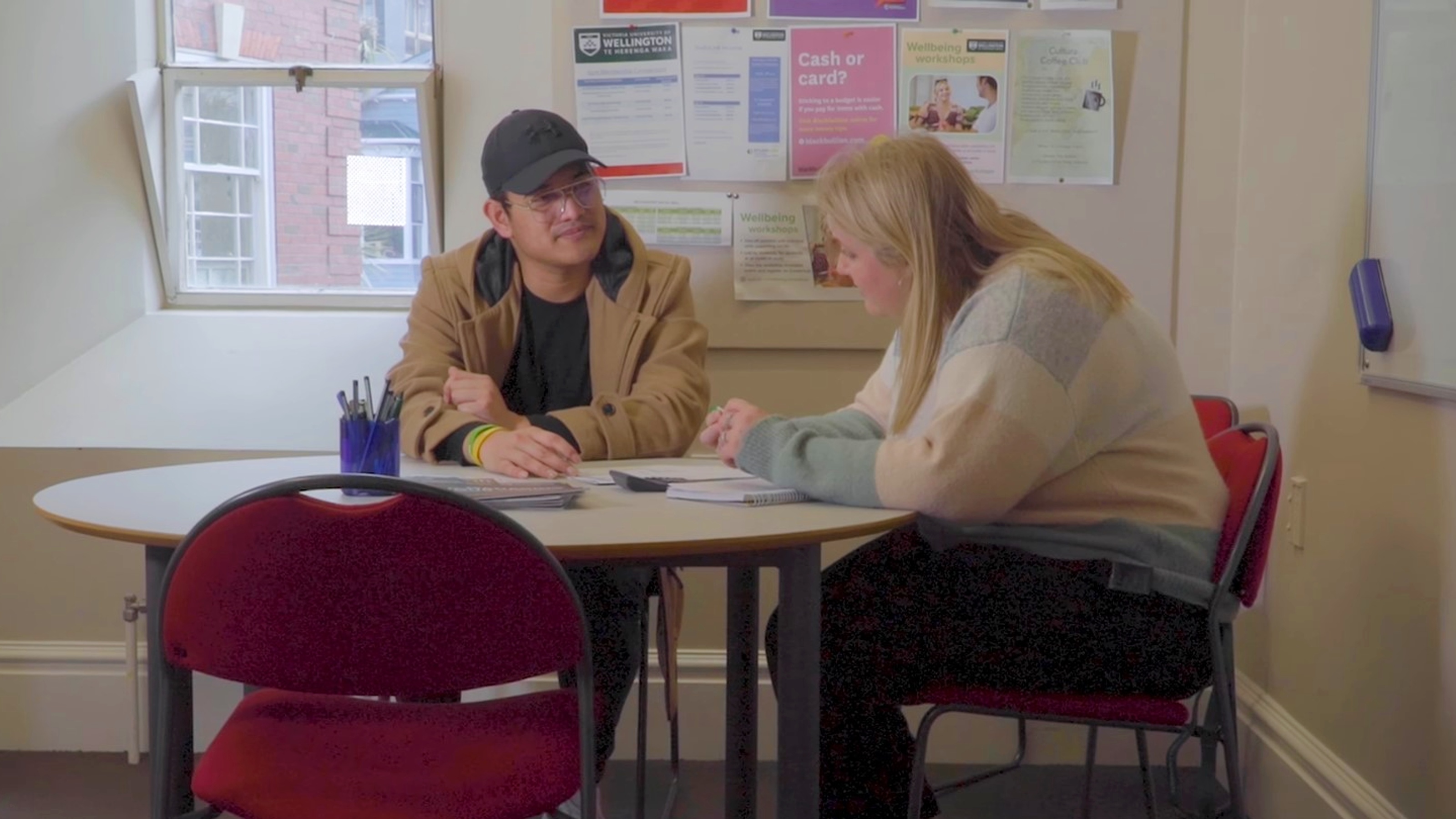
Get help to manage your finances
We can help you:
- budget your money
- manage your student loan or allowance
- work out your accommodation payment schedule.
If you’re facing financial difficulties, we can help you apply for the Hardship Fund.
You may be eligible for government or community support, too.
Apply for a New Zealand study visa
You’ll need to apply for a study visa if you plan to study with us as an international student.
You should apply for your visa after you’ve received your Offer of Place, and before you come to New Zealand.