

Try environmental studies at postgraduate level
The Postgraduate Certificate in Environmental Studies is our shortest postgraduate qualification in Environmental Studies and a great way to get into this subject.
You'll take four advanced courses exploring the social dimensions of environmental issues. Choose from a range of courses that draw on psychology, law, political ecology, environmental ethics, and mātauranga Māori—with case studies from around the world.
You can finish this qualification in one trimester full time, or two trimesters part time. The Certificate is part of a family of related qualifications. If you want to go further, you can continue into the Postgraduate Diploma, and then a Master's degree.
Who can study for this qualification
You need a Bachelor’s degree with at a B average to enrol in the PGCertEnvStud. Your degree can be in a relevant science, commerce, or humanities subject. Environmental Studies pairs well with:
- Geography and Development Studies
- Māori Studies
- Public Policy
- Law
- Management.
The PGCertEnvStud suits you if you want to:
- take postgraduate courses to specialise in a subject area relevant to your past study
- build on your industry knowledge with study at a postgraduate level
- prepare for a postgraduate diploma or master’s degree.
What you’ll learn
Choose from a range of courses in Environmental Studies. You could study research methods or explore environmental decision-making and engagement.
Courses cover topics like:
- research design
- data collection and analysis
- working with communities
- how to communicate research findings.
How you’ll study
The PGCertEnvStud is made up of taught courses that you can complete in one trimester of full-time study or around one year if you're a domestic student studying part time.
Studying full time, you can expect a workload of around 40 hours a week. If you study part time, you’ll do around 20 hours of study a week.
Flexible study options
You can study postgraduate Environmental Studies through one of three qualifications:
- Master of Environmental Studies (240 points)
- Postgraduate Diploma in Environmental Studies (120 points)
- Postgraduate Certificate in Environmental Studies (60 points).
These qualifications are ‘staircased’. If you start with the Diploma or Certificate and want to continue studying after you finish, your completed courses can count towards a higher qualification.
Or if you enrol in the Master’s but choose not to finish it, you may have completed enough courses to be awarded the Postgraduate Diploma or Certificate.
Choose the qualification that suits your career goals, time constraints, and financial situation.
Degree support and advice
We can help you match your interests and career goals with the right course of study.
If you’re a new student, talk to a Future Student Adviser.
If you’re already studying with us, talk to Tītoko—Student Success.

Entry requirements
Entry requirements for domestic students
- Requirements for students who completed university in:
If you live in New Zealand and are a citizen or permanent resident of New Zealand or Australia, you're considered a domestic student.
Some citizens of the Cook Islands, Niue, and Tokelau may automatically hold New Zealand citizenship.
Diplomatic residents living in New Zealand are also regarded as domestic students.
To be accepted into this qualification, you need:
1. (a) Before enrolment, a candidate for the PGCertEnvStud shall have:
(i) completed a degree of a tertiary institution in New Zealand in a relevant subject; and
(ii) been accepted by the convenor of the Board of Environmental Studies as capable of proceeding with the proposed course of study.
(b) Requirement (a)(i) may be waived by the Associate Dean, Academic (Postgraduate) of the Faculty of Science for a candidate who has had extensive practical, professional, or scholarly experience of an appropriate kind
Qualification requirements
Excerpt from the regulations for the PGCertEnvStud
2. (a) The course of study for the PGCertEnvStud shall comprise:
(i) Environmental Management (ENVI 520) or 521; and
(ii) 45 further points from ENVI 501–511, ENVI 513–579; up to 30 of these points may be replaced by approved 400- or 500-level courses.
3. (a) A candidate for the PGCertEnvStud shall normally complete the certificate within 1 year of first enrolling.
(b) The associate dean in consultation with the programme director may extend these maximum periods in special cases.
4. With the permission of the Associate Dean, a candidate who holds a PGCertEnvStud may subsequently be admitted to the PGDipEnvStud or MEnvStud provided the candidate abandons the certificate upon being awarded the PGDipEnvStud or MEnvStud.
Future careers
Once you graduate, you’ll be able to contribute to environmental practice in Aotearoa New Zealand and around the world.
The skills you'll develop are relevant to many careers, including:
- environmental policy
- planning
- management
- environmental business consultant
- social entrepreneur.
More career information
Find out more about careers in environmental studies.
The government careers website, Tahatū, offers more information about jobs, salaries, and current opportunities.
Scholarships
You may be able to get a scholarship to help fund your studies.
We have postgraduate and doctoral scholarships available, as well as specialised scholarships for different groups and subject areas. If nothing fits right now, something may suit you later.
We encourage you to apply. It’s a straightforward process, and it could make a real difference.
Scholarships for Postgraduate Environmental Studies
-
Applicants must be of Pacific descent, be enrolled, or intending to enrol, in undergraduate or postgraduate studies, majoring in one or more of the following areas: Climate Change Science and Policy, Conservation Biology, Ecological Restoration, Ecology and Biodiversity, Environmental Science, Environmental Studies, Marine Biology, or Marine Conservation, and have a minimum GPA of GPA of 6.5. Applicants may be studying...
-
The fund, which was established at the time of the renovation of the C3 lecture theatre, is to assist a second-year student from any faculty in their studies at Te Herenga Waka—Victoria University of Wellington
-
Applicants must be female, New Zealand or Canadian citizens studying full time at 300 level BSc (Hons) and Master's by Coursework in any area of Science, including Architecture and Design at Te Herenga Waka—Victoria University of Wellington.
Scholarships for international students
We're currently offering a NZ$10,000 VUW Postgraduate International Scholarship to all eligible international students enrolling in a Master’s degree or Postgraduate Diploma programme.
Your scholarship will be processed automatically when your programme application is accepted, and the amount will be deducted from your tuition fees.
Other scholarships
We also have postgraduate and doctoral scholarships available, as well as specialised scholarships for different groups and subject areas. If nothing fits right now, something may suit you later.
We encourage you to apply. It’s a straightforward process, and it could make a real difference.
Scholarships for Postgraduate Environmental Studies
-
Applicants must be of Pacific descent, be enrolled, or intending to enrol, in undergraduate or postgraduate studies, majoring in one or more of the following areas: Climate Change Science and Policy, Conservation Biology, Ecological Restoration, Ecology and Biodiversity, Environmental Science, Environmental Studies, Marine Biology, or Marine Conservation, and have a minimum GPA of GPA of 6.5. Applicants may be studying...
-
Applicants must be female, New Zealand or Canadian citizens studying full time at 300 level BSc (Hons) and Master's by Coursework in any area of Science, including Architecture and Design at Te Herenga Waka—Victoria University of Wellington.
-
The scholarship was established through the Victoria University of Wellington Foundation in 1998 by a bequest from Dan Fletcher Jones, who retained an active and enquiring interest in science and mathematics.
Join our postgraduate community
The Postgraduate Students’ Association provides a voice for you on campus and information on studying at Te Herenga Waka—Victoria University of Wellington.
Postgraduate Students’ Association
MAI ki Pōneke
MAI ki Pōneke are part of an international network of Māori and Indigenous postgraduate students. They provide advice, support, and information to Indigenous postgraduate students of all levels, as well as those thinking about enrolling.
Make industry connections
Make connections with the organisations that form the policy, conduct the research, and create the spaces we live in.
Take advantage of the University's relationships with policy makers in central government, and with major research institutes like the National Institute of Water and Atmospheric Research and the New Zealand Climate Change Research Institute.
You’ll also hear from guest lecturers who are experienced professionals in:
- environmental planning
- economics
- policy
- law
- politics
- ethics
- indigenous development.
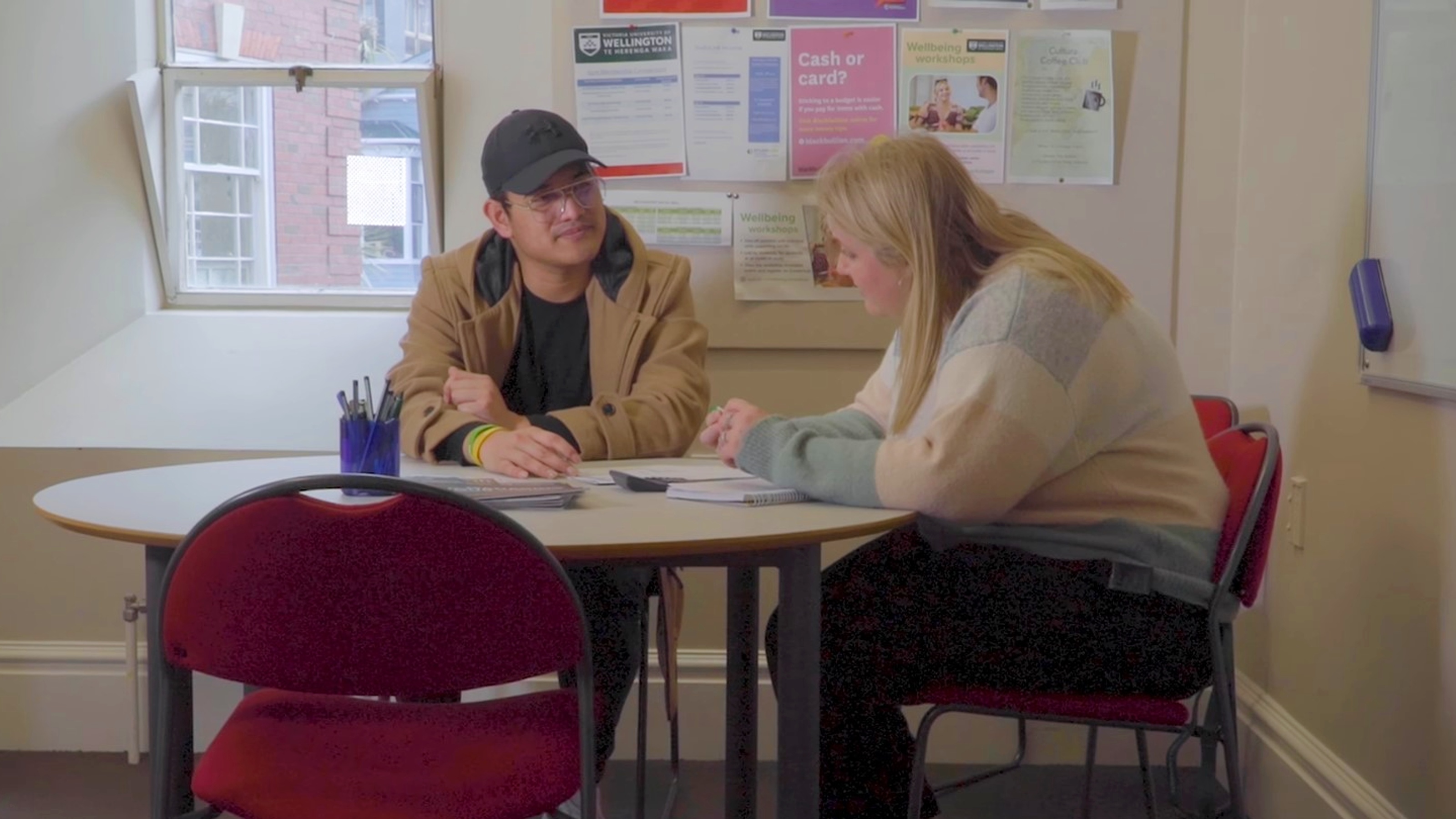
Get help to manage your finances
We can help you:
- budget your money
- manage your student loan or allowance
- work out your accommodation payment schedule.
If you’re facing financial difficulties, we can help you apply for the Hardship Fund.
You may be eligible for government or community support, too.
Apply for a New Zealand study visa
You’ll need to apply for a study visa if you plan to study with us as an international student.
You should apply for your visa after you’ve received your Offer of Place, and before you come to New Zealand.