

Strengthen your practical understanding of language learning
Take four courses of specialised study in teaching English to speakers of other languages. The Postgraduate Certificate in TESOL (PGCertTESOL) is built around real classroom teaching practice, making it ideal for professional development or as a first step towards Master’s-level study.
The 60-point PGCertTESOL pairs core courses in teaching methodology with elective courses on language awareness and how people learn languages. This broadens your understanding of the common challenges faced by both teachers and learners.
Through your studies, you’ll also have the opportunity to reflect on your own learning and teaching experiences.
Why Wellington
Benefit from more than six decades of expertise in language teaching and research. Our English Language Institute, established in 1961, marked the start of our longstanding leadership in Linguistics, Applied Linguistics, and TESOL.
Today, our Linguistics programme is consistently ranked among the world's best. It's recognised as the leading programme in Aotearoa New Zealand and among the strongest in Australasia.
Our School of Linguistics and Applied Language Studies also maintains strong industry connections, including partnerships with:

Who can study for this qualification
You can study for the PGCertTESOL if you have a Bachelor’s degree in a relevant subject. Many students have degrees in Education, English, Language Sciences, or Modern Languages.
You may also be able to enrol if you have a lot of practical and professional experience, or if you have qualifications in a different field of study.
International students
The PGCertTESOL is taught part time, with courses spread over at least two trimesters. This doesn’t meet the full-time study load required for a New Zealand student visa, so it isn’t suitable if you’re planning to study here on campus.
If you’re studying from outside New Zealand, you may still be able to complete the PGCertTESOL online.
Not sure if this applies to you? Contact us before you apply.
Email: lals@vuw.ac.nz
What you’ll learn
In the PGCertTESOL you’ll study four courses—worth 15 points each—which cover:
- language teaching practice
- assessment and testing
- linguistics and analysis
- language acquisition and learning.
The core language teaching practice course—LALS 560—isn’t required if you have at least two years of professional experience in language teaching or a relevant field.
How you’ll study
You can study for the 60-point PGCertTESOL part time, over at least two trimesters.
- You can start the degree in any trimester—February, July, or November.
- Classes are taught either:
- in-person on campus
- online, for students studying by distance.
- Courses are interactive and taught through lectures, case studies, and in-class presentations.
A family of qualifications
We offer a family of related postgraduate TESOL qualifications. These are ‘staircased’, so that courses completed for a smaller qualification can count towards a larger one.
Postgraduate Certificate in TESOL (60 points)—professional development over four courses, focused on classroom teaching practice.
Postgraduate Diploma in TESOL (120 points)—more in-depth study over eight courses.
Master of TESOL (180 points)—the most comprehensive option. Includes the most coursework, along with optional research, over 12 courses.
Choose the qualification that matches your study goals and other commitments.
Degree support and advice
We can help you match your interests and career goals with the right course of study.
If you’re a new student, talk to a Future Student Adviser.
If you’re already studying with us, talk to Tītoko—Student Success.

Entry requirements
Entry requirements for domestic students
- Requirements for students who completed university in:
If you live in New Zealand and are a citizen or permanent resident of New Zealand or Australia, you're considered a domestic student.
Some citizens of the Cook Islands, Niue, and Tokelau may automatically hold New Zealand citizenship.
Diplomatic residents living in New Zealand are also regarded as domestic students.
To be accepted into this qualification, you need:
1. (a) Before enrolment, a candidate for the PGCertTESOL shall have:
(i) completed a Bachelor’s degree (or equivalent qualification) with a B grade average or better in Language Sciences, Linguistics, Teaching English as a Second Language (TESOL), English Language, Education, or a language other than English (or another relevant degree); and
(ii) been accepted by the programme director as capable of proceeding with the proposed course of study.
(b) Requirement (a)(i) may be waived by the Associate Dean (Students) in the Faculty of Humanities and Social Sciences for a candidate who has had extensive practical, professional, or scholarly experience that provides an equivalent level of preparation.
Qualification requirements
Excerpt from the regulations for the PGCertTESOL
2. (a) The course of study for the PGCertTESOL (60 points) shall consist of an approved course of study as follows:
(i) LALS 560
Note: LALS 560 will not be required for students who have completed at least two years of professional experience in language education or a related field.
(ii) Two courses from LALS 510, 511, 515, 521–524, 529, 531
(iii) One course from LALS 512, 513, 530, 544, 563
(iv) One course from LALS 520, 525, 542.
(b) The head of school may approve special topics, LALS 516–519 as meeting one or more of the requirements in (a) (ii)–(iv).
3. A candidate who has been awarded the PGCertTESOL shall abandon that qualification on being awarded the the PGDipTESOL or MTESOL.
Globally ranked
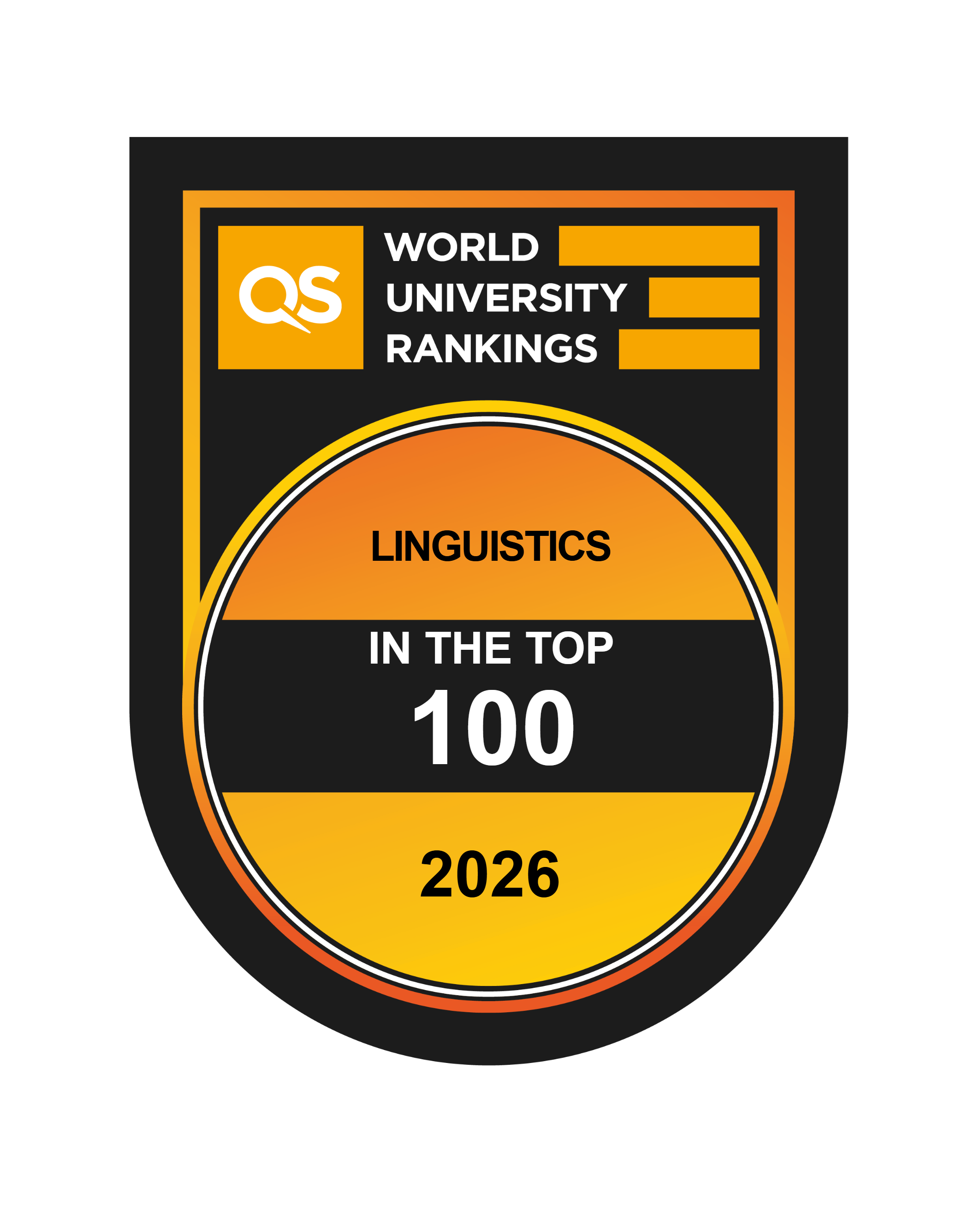
Our Linguistics subjects are ranked in the top 100 worldwide in the QS World University Rankings 2026.
The QS World University Rankings is an annual global publication that gives overall rankings and subject rankings for more than 1,500 universities worldwide.
Future careers
Through the PGDipTESOL, you’ll develop skills in research and project management. You’ll also develop:
- intercultural communication and competency
- interpersonal and observation skills
- active listening skills
- the ability to maintain objectivity.
This qualification can lead to a range of career pathways in Aotearoa New Zealand and abroad, such as:
- language teaching
- literacy support
- curriculum and assessment development
- community and refugee support.
More career information
Find out more about careers in TESOL.
The government careers website, Tahatū, offers more information about jobs, salaries, and current opportunities.
Scholarships
You may be able to get a scholarship to help fund your studies.
We have postgraduate and doctoral scholarships available, as well as specialised scholarships for different groups and subject areas.
We encourage you to apply—many scholarships don’t receive enough applications.
Scholarships for Postgraduate TESOL
-
The purpose of the award is to assist postgraduate (full-time or part-time) students in the study of a Master’s of Linguistics, Applied Linguistics or TESOL by coursework at Te Herenga Waka–Victoria University of Wellington. Applicant will be assessed on the basis of academic merit. Relevant prior experience may also be taken into account.
-
This scholarship has been established by the School of Linguistics and Applied Language Studies.
-
The fund, which was established at the time of the renovation of the C3 lecture theatre, is to assist a second-year student from any faculty in their studies at Te Herenga Waka—Victoria University of Wellington
Scholarships for international students
We're currently offering a NZ$10,000 VUW Postgraduate International Scholarship to all eligible international students enrolling in a Master’s degree or Postgraduate Diploma programme.
Your scholarship will be processed automatically when your programme application is accepted, and the amount will be deducted from your tuition fees.
Other scholarships
We also have postgraduate and doctoral scholarships available, as well as specialised scholarships for different groups and subject areas.
We encourage you to apply—many scholarships don’t receive enough applications.
Scholarships for Postgraduate TESOL
-
The purpose of the award is to assist postgraduate (full-time or part-time) students in the study of a Master’s of Linguistics, Applied Linguistics or TESOL by coursework at Te Herenga Waka–Victoria University of Wellington. Applicant will be assessed on the basis of academic merit. Relevant prior experience may also be taken into account.
-
This scholarship has been established by the School of Linguistics and Applied Language Studies.
Join our postgraduate community
The Postgraduate Students’ Association provides a voice for you on campus and information on studying at Te Herenga Waka—Victoria University of Wellington.
Postgraduate Students’ Association
MAI ki Pōneke
MAI ki Pōneke are part of an international network of Māori and Indigenous postgraduate students. They provide advice, support, and information to Indigenous postgraduate students of all levels, as well as those thinking about enrolling.
Why Wellington
Benefit from more than six decades of expertise in language teaching and research. Our English Language Institute, established in 1961, marked the start of our longstanding leadership in Linguistics, Applied Linguistics, and TESOL.
Today, our Linguistics programme is consistently ranked among the world's best. It's recognised as the leading programme in Aotearoa New Zealand and among the strongest in Australasia.
Our School of Linguistics and Applied Language Studies also maintains strong industry connections, including partnerships with:
Further research or study
If you do well in your coursework, you may be able to convert to a Postgraduate Diploma in TESOL or a Master of TESOL.
You wouldn’t need to repeat the coursework you’ve already taken for the Certificate.
Get help to manage your finances
We can help you:
- budget your money
- manage your student loan or allowance
- work out your accommodation payment schedule.
If you’re facing financial difficulties, we can help you apply for the Hardship Fund.
You may be eligible for government or community support, too.

Apply for a New Zealand study visa
You’ll need to apply for a study visa if you plan to study with us as an international student.
You should apply for your visa after you’ve received your Offer of Place, and before you come to New Zealand.