

Gain expertise in how communication shapes our world
Through the Postgraduate Diploma in Communication (PGDipC), you'll analyse how communication operates in different contexts and learn to apply communication theory creatively in your work.
You'll explore areas like political communication, media studies, intercultural communication, and science communication—a specialisation unique to Te Herenga Waka.
This qualification prepares you for roles in public relations, policy development, government communications, media relations, and strategic communications. You'll develop critical skills to analyse communication processes and constructively debate complex issues.
Who can study for this qualification
The PGDipC gives you practical skills you can apply in your role, or that you can use to move into senior roles. It’s also useful if you want to move into communications from a related field. Its scope and flexibility makes it ideal if you’re searching for a career in a particular area of communications.
For example, it suits you if you want the theoretical background and the practical skills you need for senior communications roles. The PGDipC is also good preparation for further study at postgraduate level.
To enrol, you need a Bachelor’s degree with at least a B average, or equivalent, in a relevant subject. Depending on your background, we may waive this requirement.
What you’ll learn
The PGDipC deepens your knowledge of communications theory and practice—in general and within your specialised area. Compared with the Postgraduate Certificate in Communication (PGCertC), you’ll gain a broader theoretical grounding and have more specialities to choose from.
Learn communications theory
You’ll take courses that:
- develop your skills to analyse and navigate the digital communication landscape
- advance your critical media literacy
- help you understand different approaches to communication—and their limits.
Specialise in an area of communications
As well as the core courses above, you can choose to focus on particular areas of communications, such as Media Studies, Film, or Science Communication.
For the Science Communication specialisation, you need to take specific courses that fulfil its requirements.
Science Communication
You can only specialise in Science Communication if you begin your PGDipC in Trimester 1. The courses required are taught only at the beginning of the academic year.
How you’ll study
This is a 120 point, two-trimester qualification. You’ll complete the PGDipC solely through coursework—there is no research component.
The coursework is delivered through lectures and workshops that you need to attend on campus.
Over two trimesters, you’ll complete a mixture of core courses and electives worth 60 points:
- two mandatory core course in communication paradigms and communication research methods
- a choice of electives.
Workload
The average workload for each course is about 10 to 12 hours per week, including lectures, workshops, and self-directed study.
- If you are studying full time, you can expect a workload of 40–45 hours a week for much of the year.
- Part-time students will need to do around 20–23 hours of work a week. Make sure you take this into account if you are working.
Part-time study options
If you’re studying full time, you'll complete this degree in about 12 months, which is around three trimesters. If you’re a domestic student, you can study part time over a longer period.
A family of qualifications
The Master of Communication, Postgraduate Diploma in Communication, and Postgraduate Certificate in Communication form a family of qualifications. They're 'staircased'—courses completed for one can count towards the next step up.
Postgraduate Certificate in Communication (60 points)—professional development over two courses.
Postgraduate Diploma in Communication (120 points)—in-depth study through coursework, with no research component.
Master of Communication (180 points)—the most comprehensive option, combining coursework with your choice of a research project or internship.
Degree support and advice
We can help you match your interests and career goals with the right course of study.
If you’re a new student, talk to a Future Student Adviser.
If you’re already studying with us, talk to Tītoko—Student Success.

Entry requirements
Entry requirements for domestic students
- Requirements for students who completed university in:
If you live in New Zealand and are a citizen or permanent resident of New Zealand or Australia, you're considered a domestic student.
Some citizens of the Cook Islands, Niue, and Tokelau may automatically hold New Zealand citizenship.
Diplomatic residents living in New Zealand are also regarded as domestic students.
To be accepted into this qualification, you need:
1. (a) Before enrolment, a candidate for the PGDipC degree shall have:
(i) completed a relevant Bachelor’s degree, with a B grade average or better; and
(ii) been accepted by the programme director as capable of completing the proposed course of study.
(b) Requirement (a)(i) may be waived by the Associate Dean (Students) in the Faculty of Humanities and Social Sciences for a candidate who has had extensive practical, professional, or scholarly experience that provides an equivalent level of preparation.
Qualification requirements
Excerpt from the regulations for the PGDipC
2. The personal course of study for the PGDipC degree shall consist of a coherent programme of study approved by the programme director.
3. The course of study for the PGDipC shall consist of:
(a) Communication Paradigms (COMS 501), Communication Research Methods (COMS 502); and
(b) 60 further points of elective courses from the MC Schedule
4. A candidate who has been awarded the PGDipC shall abandon that qualification on being awarded the MC.
Globally ranked
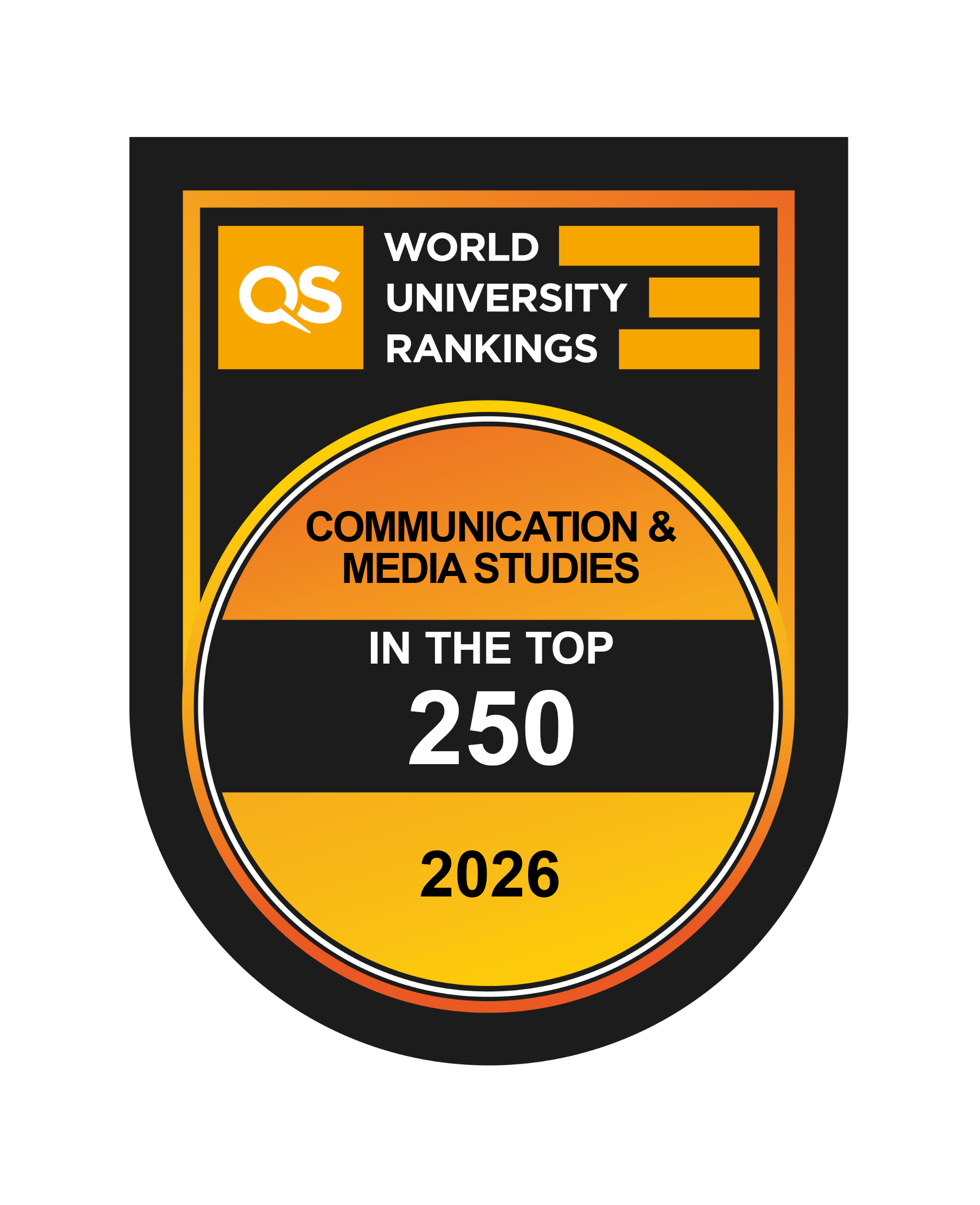
Our Communications and Media Studies subjects are ranked in the top 250 worldwide in the QS World University Rankings 2026.
The QS World University Rankings is an annual global publication that gives overall rankings and subject rankings for more than 1,500 universities worldwide.
Future careers
Depending on your background, the Diploma can give you access to career opportunities like:
- communications manager
- senior media relations officer
- strategic communications consultant
- policy communications specialist.
More career information
Find out more about careers in communication.
The government careers website, Tahatū, offers more information about jobs, salaries, and current opportunities.
Scholarships
You may be able to get a scholarship to help fund your studies.
We have postgraduate and doctoral scholarships available, as well as specialised scholarships for different groups and subject areas.
We encourage you to apply—many scholarships don’t receive enough applications.
Scholarships for Humanities and Social Sciences
-
The Brian Murray Fox Scholarship in History offers an opportunity to students who are intending to undertake their second, third or Honours year of their degree at Te Herenga Waka—Victoria University of Wellington in the year following application.
-
The Brian Murray Fox Scholarship in English Literature offers an opportunity to students who are intending to undertake their second, third or Honours year of their degree at Te Herenga Waka Victoria—University of Wellington in the year following application.
-
This scholarship has been established by the School of Linguistics and Applied Language Studies.
Scholarships for international students
We're currently offering a NZ$10,000 VUW Postgraduate International Scholarship to all eligible international students enrolling in a Master’s degree or Postgraduate Diploma programme.
Your scholarship will be processed automatically when your programme application is accepted, and the amount will be deducted from your tuition fees.
Other scholarships
We also have postgraduate and doctoral scholarships available, as well as specialised scholarships for different groups and subject areas.
We encourage you to apply—many scholarships don’t receive enough applications.
Scholarships for Humanities and Social Sciences
-
This scholarship was established in 1980 by the former Prime Minister of New Zealand, the Rt. Hon. Sir John Marshall, GBE, CH, BA, LLM, Hon. LLD, to encourage the study of Political Science at Te Herenga Waka - Victoria University of Wellington. The Scholarship was extended to include International Relations.
-
This scholarship was established to encourage students to complete a major in Language Sciences at Te Herenga Waka - Victoria University of Wellington, and continue to further study or careers in this field.
-
This scholarship is to assist students in the last year of their first Bachelors degree at Victoria University of Wellington. The scholarship fund will be awarded equally between male and female students.
Join our postgraduate community
The Postgraduate Students’ Association provides a voice for you on campus and information on studying at Te Herenga Waka—Victoria University of Wellington.
Postgraduate Students’ Association
MAI ki Pōneke
MAI ki Pōneke are part of an international network of Māori and Indigenous postgraduate students. They provide advice, support, and information to Indigenous postgraduate students of all levels, as well as those thinking about enrolling.
Why Wellington
By studying Communication in Wellington, you’ll be learning at the home of New Zealand's communications industry. The programme’s links with local public sector agencies and private communications organisations give you opportunities for networking, on-the-job learning, and guest lectures from Wellington-based communications professionals.
The concentration of communication professionals and decision-makers here could also lead to valuable internship placements and career connections unavailable elsewhere in New Zealand.
Further research or study
If you do well in your PGDipC and have an aptitude for research, you’ll be able to apply to do a Master’s degree. The Master’s deepens your theoretical and practical knowledge and skills, and is useful if you’re aiming for senior roles.

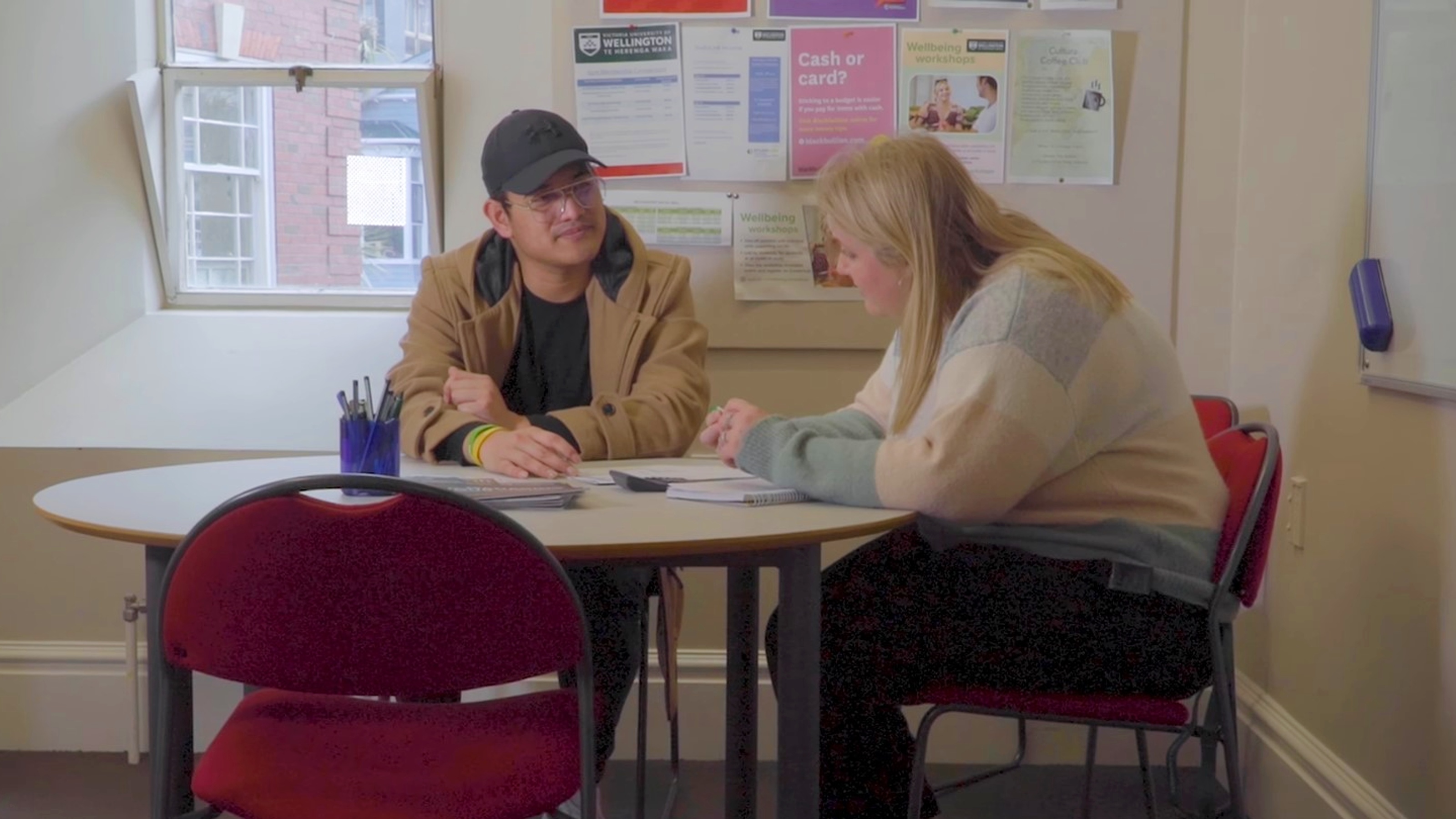
Get help to manage your finances
We can help you:
- budget your money
- manage your student loan or allowance
- work out your accommodation payment schedule.
If you’re facing financial difficulties, we can help you apply for the Hardship Fund.
You may be eligible for government or community support, too.
Apply for a New Zealand study visa
You’ll need to apply for a study visa if you plan to study with us as an international student.
You should apply for your visa after you’ve received your Offer of Place, and before you come to New Zealand.