

Introduction
Gain the skills to lead and influence change within education. Examine how people learn and the challenges to the ways we teach and learn.
This postgraduate diploma is a flexible, thorough qualification for education professionals who want more career options. You’ll gain expertise in core educational research, theory, and practice. Major in curriculum development, inclusive education, leadership, or educational psychology.
You’ll graduate with a recognised qualification and the skills and practical experience you need to make progress in your education career.
Study Education at Victoria University of Wellington

Who can study for this qualification
The Postgraduate Diploma in Education is a good fit for you if you’re already working in the education field and you need a flexible qualification you can fit around your commitments.
It works well if you’re a teacher and want to add theoretical knowledge to your teaching practice, or if you’re working elsewhere in the education field and want to upskill in a particular education discipline.
The Postgraduate Diploma is also a way to explore a new area of the education field—for example, if you’re thinking of studying at Master’s level later on.
What you'll learn
Your Postgraduate Diploma coursework teaches education theory and practice by drawing on social science disciplines like psychology, sociology, and cultural anthropology.
This multidisciplinary approach helps you:
- understand how people learn, their cognitive development in the context of education, and how psychological factors interact with education systems
- analyse the social factors that affect education, like inequality, culture, ethnicity, class, and gender
- understand the role of culture in education—for example, how beliefs, practices, identity, and indigenous knowledge shape learning, the curriculum, and community expectations
- appreciate how education shapes society—and vice versa.
The qualification also develops your research, writing, critical thinking, and problem-solving skills.
Benefit from the University’s research strengths
The School of Education has a strong focus on research that enhances educational policy and practice from early childhood through to tertiary education. Postgraduate courses, including the postgraduate diploma, are informed by research-led teaching, and you will benefit from collaboration across education disciplines.
How you'll study
The Postgraduate Diploma in Education is a coursework-based programme worth 120 points. There is no research component. If research in Education is important to you, consider the Master of Education (MEd) instead.
The programme is flexible – you can take the required courses in a single year full time, or, if you’re a domestic student, complete it over a longer period.
You're generally expected to complete the qualification within 4 years of first enrolling in it. The associate dean can extend this in some cases.
Entry requirements
Entry requirements for domestic students
- Requirements for students who completed university in:
If you live in New Zealand and are a citizen or permanent resident of New Zealand or Australia, you're considered a domestic student.
Some citizens of the Cook Islands, Niue, and Tokelau may automatically hold New Zealand citizenship.
Diplomatic residents living in New Zealand are also regarded as domestic students.
To be accepted into this qualification, you need:
1. (a) Before enrolment, a candidate for the PGDipEd qualification shall have:
(i) completed at an appropriate level (normally the equivalent of a B average) a Bachelor’s degree with a major in Education, Psychology, or a related discipline, or an approved teacher education degree, or a Bachelor’s degree and Diploma of Teaching from an approved institute for teacher education or, at the discretion of the Associate Dean (Academic) of the Wellington Faculty of Education, an equivalent qualification; and
(ii) been accepted by the associate dean.
(b) Requirement (a)(i) may be waived by the associate dean for a candidate who has:
(i) completed a Bachelor’s degree and has produced evidence of sufficient educational training and experience to proceed with the proposed course of study; or
(ii) completed an Advanced Diploma of Teaching or Postgraduate Diploma of Teaching; or (iii) had extensive practical, professional, or scholarly experience of an appropriate kind
Qualification requirements
Excerpt from the requirements for the PGDipEd
2. (a) The course of study for the PGDipEd shall comprise 120 points from the Schedule to the MEd, excluding Dissertation (EDUC 585), Thesis (EDUC 590).
(b) A candidate for the diploma shall normally complete the requirements within four years of first enrolling in it. The associate dean may extend this period in special cases.
Globally ranked
This programme is ranked in the top 200 universities worldwide in the QS World University Rankings 2025.
The QS World University Rankings is an annual global publication that gives overall rankings and subject rankings for more than 1,500 universities worldwide.

Future careers
The Postgraduate Diploma is a recognised qualification that will enhance your existing career.
- If you’re a teacher, the PGDipEd gives you expertise in education theory and practice that will enhance your teaching practice.
- If you’re already working in the education field, the PGDipEd broadens your expertise—good preparation for a move into senior or leadership roles.
- You can also use PGDipEd to change careers—it can lead to work in research or policy analysis within a government organisation, or to work in counselling, social services, or human resources.
It’s also good preparation for independent research in education at Master’s level.
More career information
Find out more about careers in education.
The government careers website, Tahatū, offers more information about jobs, salaries, and current opportunities.
Scholarships
You may be able to get a scholarship to help fund your studies.
We have postgraduate and doctoral scholarships available, as well as specialised scholarships for different groups and subject areas. If nothing fits right now, something may suit you later.
We encourage you to apply. It's a straightforward process, and it could make a real difference.
Summer Scholars Scheme
Summer Research Scholarships are a chance for students to gain research experience over the summer trimester. Students work with established researchers on a specified project and gain insights into what it's like to study for a research degree.
Scholarships for Education
-
This scholarship has been established by a gift from Autism New Zealand to further its mission to empower the autistic and wider autism communities. The scholarship is designed to support Education and Educational Psychology Master’s by thesis students to undertake research evaluating early support for Autistic children.
-
The fund, which was established at the time of the renovation of the C3 lecture theatre, is to assist a second-year student from any faculty in their studies at Te Herenga Waka—Victoria University of Wellington
-
This scholarship is open to any undergraduate or postgraduate student who is currently enrolled full-time in a degree majoring in Education. The scholarship will be awarded on the basis of academic merit, but where more than one top applicant consideration will be given to applicants experiencing financial hardship.
Scholarships for international students
We're currently offering a NZ$10,000 VUW Postgraduate International Scholarship to all eligible international students enrolling in a Master’s degree or Postgraduate Diploma programme.
Your scholarship will be processed automatically when your programme application is accepted, and the amount will be deducted from your tuition fees.
Other scholarships
We also have postgraduate and doctoral scholarships available, as well as specialised scholarships for different groups and subject areas. If nothing fits right now, something may suit you later.
We encourage you to apply. It's a straightforward process, and it could make a real difference.
Scholarships for Education
-
This scholarship has been established by a gift from Autism New Zealand to further its mission to empower the autistic and wider autism communities. The scholarship is designed to support Education and Educational Psychology Master’s by thesis students to undertake research evaluating early support for Autistic children.
-
This scholarship is open to any undergraduate or postgraduate student who is currently enrolled full-time in a degree majoring in Education. The scholarship will be awarded on the basis of academic merit, but where more than one top applicant consideration will be given to applicants experiencing financial hardship.
Join our postgraduate community
The Postgraduate Students’ Association provides a voice for you on campus and information on studying at Te Herenga Waka—Victoria University of Wellington.
Postgraduate Students’ Association
MAI ki Pōneke
MAI ki Pōneke are part of an international network of Māori and Indigenous postgraduate students. They provide advice, support, and information to Indigenous postgraduate students of all levels, as well as those thinking about enrolling.
Further research or study
If you do well in your Postgraduate Diploma and show an aptitude for advanced research, consider continuing your Education study at Master’s level.
Study for a Master of Education
Take your degree and experience to the next level and become an expert in your area of interest in education.
This programme is a great opportunity for educators, policy makers and those in related fields to complete a postgraduate qualification that can be designed to suit a specific field of interest, and fitted around work commitments.
Why Wellington
New Zealand’s capital city hosts most of New Zealand’s public sector education institutions and government departments, including the Ministry of Education. The University’s links with these Wellington-based national agencies mean you’ll have networking opportunities, access to research, and career opportunities once you graduate.
Wellington’s compact and accessible education community creates strong connections between universities, schools, and policy-makers. You'll have the chance to build relationships with education leaders and decision-makers shaping New Zealand's education system.
Academic staff research interests
Chris Bowden

Director, Educational Psychology
Sue Cherrington
Professor
Cherie Chu-Fuluifaga

Associate Professor
Carmen Dalli

Head of School
Linda Hogg

Senior Lecturer
Joanna Kidman
Professor of Maori Education
Judith Loveridge

Deputy Head of School, Education
Sandi McCutcheon

Senior Lecturer
Hiria McRae

Associate Dean, Maori
Anita Mortlock

Senior Lecturer
Fuapepe Rimoni

Senior Lecturer
Jenny Ritchie

Professor
Kabini Sanga

Associate Professor
Jeff Sigafoos

Professor
Kate Thornton

Associate Professor
Hannah Waddington

Associate Professor
Bronwyn Wood

Associate Professor
Anne Yates

Senior Lecturer
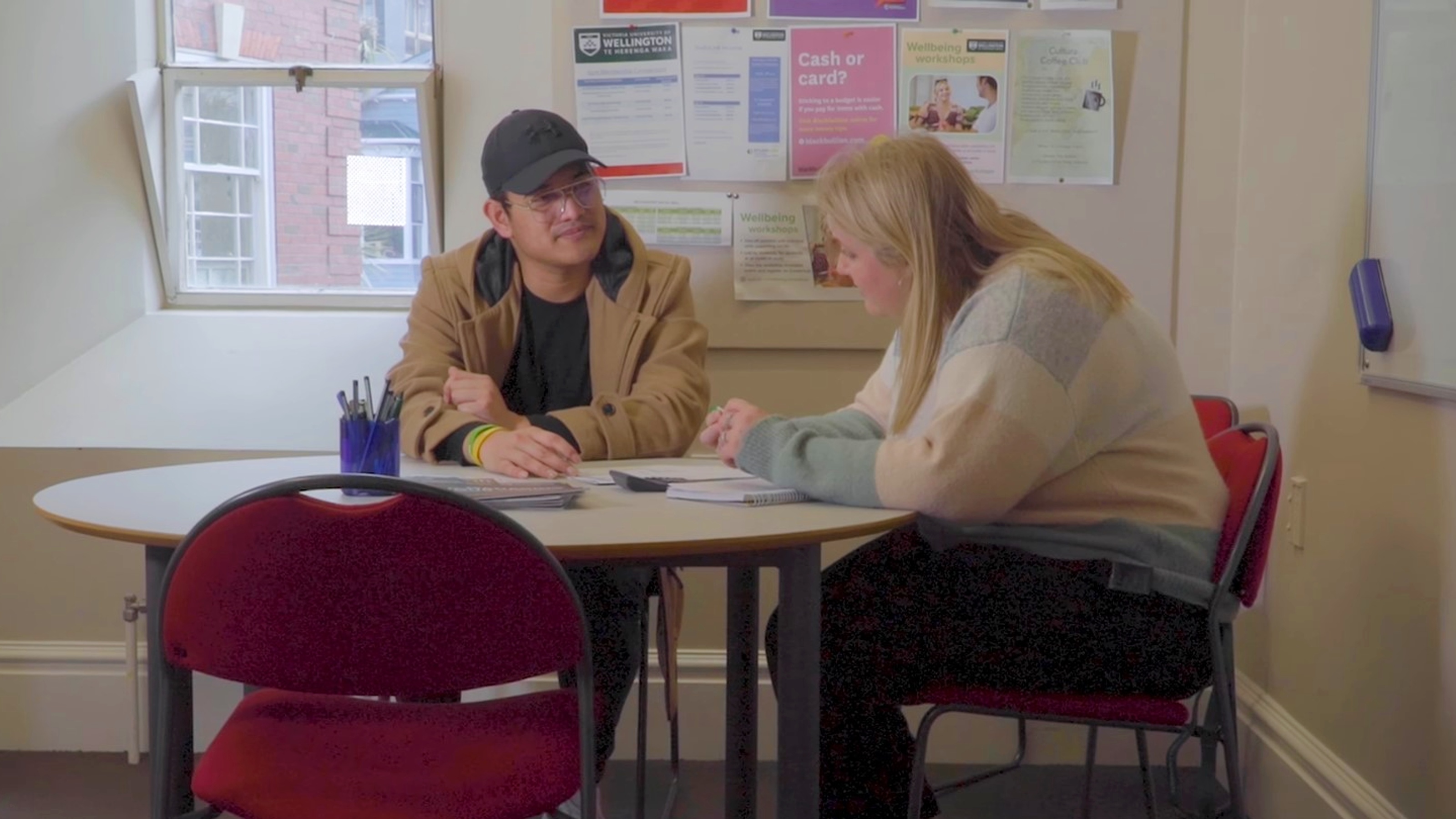
Get help to manage your finances
We can help you:
- budget your money
- manage your student loan or allowance
- work out your accommodation payment schedule.
If you’re facing financial difficulties, we can help you apply for the Hardship Fund.
You may be eligible for government or community support, too.
Apply for a New Zealand study visa
You’ll need to apply for a study visa if you plan to study with us as an international student.
You should apply for your visa after you’ve received your Offer of Place, and before you come to New Zealand.