

Get the skills to become an educational psychologist
Get prepared to apply for registration as an educational psychologist.
Gain practical experience and apply your understanding of how psychology can be used to help learners succeed.
Build on your experience working with children or young people. Put your knowledge from Master’s study to use.
Who can study for this qualification
The Postgraduate Diploma in Educational Psychology Practice (PGDipEPP) is designed for people who want to build a career as a registered educational psychologist. Before starting the PGDipEPP, you need to have completed:
- the Master of Educational Psychology, or an approved equivalent
- at least 45 approved points in psychology at 200 or 300 level
- have at least one year of relevant experience working with children or young people.
You can apply while completing your Master's, provided you expect to meet the requirements before the PGDipEPP begins.
Your work experience must involve active responsibility and support, and show how educational psychology ideas were or could be used. Your experience can be from education, health, social care, or community settings in New Zealand or overseas. New Zealand experience is preferred.
Selection process
Applicants who meet the entry requirements are considered for selection to the PGDipEPP. Shortlisting for interview is based on academic background, relevant experience, references and statement of interest.
If you're shortlisted, you’ll be invited to a selection interview with a panel of educational psychologists and academics.
Successful applicants receive a conditional offer and must also have an approved paid practicum placement in place before they can begin the programme. Placement opportunities depend on the availability of suitable organisations and supervisors across New Zealand and cannot be guaranteed. The programme works with applicants and placement organisations where possible, including through established placement partnerships.
Supporting documents
To support your application, you need to provide the following:
- A CV showing details of your educational experiences, qualifications, accomplishments, and work experience.
- An official academic transcript if you’re not a Te Herenga Waka—Victoria University of Wellington graduate.
- A certified copy of your full current driver's licence.
- The names and email addresses of one academic and one professional referee who can talk about you in relation to this qualification and your suitability for the profession.
- A 500–750 word statement of interest that includes:
- motivations—describe one or more experiences that have led you to pursue a career in educational psychology
- cultural competency—provide concrete examples that demonstrate your sensitivity to diverse backgrounds and perspectives, how you advocate for inclusive practices working with tamariki in educational or other related settings, and your ongoing commitment to seek out opportunities to deepen your cultural competency
- professional goals—explain how the PGDipEPP will equip you with the knowledge, skills, and experiences that will help you make a positive impact in your future career.
If you're shortlisted, you'll be invited to a selection interview in early September with a panel of educational psychologists and academics.
Further steps
You’ll also need to:
- secure a practicum placement—which may be outside of Wellington
- apply to the New Zealand Psychologists Board for registration as an Intern Psychologist—after you’ve been accepted into the programme.
New Zealand Psychologists Board registration
When to apply and enrol
Applications for entry in 2027 are now closed. Applications for 2028 will close on Friday 20 August 2027.
Shortlisted applicants will be invited to an interview. Following the selection process, successful applicants may receive a conditional offer and will need to secure an approved practicum placement before beginning the programme.
Once you’re accepted to the programme and receive an offer of place, you need to enrol online.
What you’ll learn
You'll take four integrated courses alongside your practicum placement, exploring psychological assessment and intervention, professional identity, and educational psychology practice across education and community contexts.
Learn to apply psychology to complex situations affecting learning, development and wellbeing, working collaboratively with others to develop shared understandings and create possibilities for positive change.
Develop psychological practice that is culturally responsive and grounded in the bicultural context of Aotearoa New Zealand.
How you’ll study
The PGDipEPP is a 1-year, full-time programme. You’ll complete four 30-point courses alongside an approved paid practicum placement.
During the programme, you’ll complete 1,500 hours of supervised psychological practice in an approved organisation, developing and applying your skills in real-world contexts.
Practicum placements are available across New Zealand and depend on the availability of suitable organisations and supervisors. The programme works with applicants and placement organisations where possible, but placements cannot be guaranteed and you may need to move to another location.
Qualification support and advice
We can help you match your interests and career goals with the right course of study.
If you’re a new student, talk to a Future Student Adviser through our enquiry form.
If you’re already studying with us, talk to Tītoko—Student Success.
For the research portion of your study, you’ll need a supervisor to help guide your research. Your programme coordinator will work with you to find the right person.

Entry requirements
Entry requirements for domestic students
- Requirements for students who completed university in:
If you live in New Zealand and are a citizen or permanent resident of New Zealand or Australia, you're considered a domestic student.
Some citizens of the Cook Islands, Niue, and Tokelau may automatically hold New Zealand citizenship.
Diplomatic residents living in New Zealand are also regarded as domestic students.
To be accepted into this qualification, you need:
1. (a) Before enrolment, a candidate for the PGDipEPP shall have:
(i) completed a Master of Educational Psychology at this university, or a similar qualification elsewhere with an average grade of B+ or above for all coursework; and
(ii) passed at least 45 approved points from courses in psychology at the 200 or 300 level with an average grade of B or above for all coursework; and
(iii) been accepted by the Associate Dean (Academic) of the Faculty of Education as capable of proceeding with the proposed course of study.
(b) Requirement 1(a)(i) may be waived by the associate dean for a candidate who has had extensive practical, professional and scholarly experience of an appropriate kind and has completed a Master’s level degree.
Qualification requirements
Excerpt from the regulations for the PGDipEPP
2. The course of study for the PGDipEPP shall comprise:
(a) supervised full-time practical work in two approved institutions to be carried out over a period of one academic year; and
(b) completion of courses Specialist Assessment and Intervention (EPSY 517), Professional Identity (EPSY 518), Professional Practice (Part 1) (EPSY 519), and 520.
3. A candidate shall normally be enrolled for at least two trimesters and shall complete the requirements of the diploma within two years of first enrolling. The associate dean may extend this maximum period in special cases. A candidate who wishes to take a leave of absence from the programme requires the approval of the associate dean.
4. Courses from the PGDipEPP regulations are excepted from the aegrotat pass provisions in the Assessment Handbook. In the event that a candidate is prevented from completing such a course by one of the circumstances specified in the relevant section of the Assessment Handbook, the candidate may apply to the associate dean for an extension to complete the assessment.
Future careers
Completing the PGDipEPP prepares you to apply for registration as an educational psychologist. Educational psychologists apply psychology to support learning, development, wellbeing and participation, working collaboratively with tamariki and rangatahi, whānau, educators, organisations and communities.
Registered educational psychologists may work in:
- the Ministry of Education and other government services
- schools and other education settings
- non-government and community organisations
- specialist services
- research, policy and programme development
- private practice.
More career information
Find out more about careers.
The government careers website, Tahatū, offers more information about jobs, salaries, and current opportunities.
Scholarships
You may be able to get a scholarship to help fund your studies.
We have postgraduate and doctoral scholarships available, as well as specialised scholarships for different groups and subject areas.
Scholarships for Psychology
-
The VSPS constitution states "The Psychology Society offers a range of events that enrich the study of psychology, bring together students at all levels of study, and foster a relationship between students and academic staff outside the classrooms".
Scholarships for international students
We are currently offering a NZ$10,000 VUW Postgraduate International Scholarship to all eligible international students enrolling in a Master’s degree or Postgraduate Diploma programme.
Your scholarship will be processed automatically when your programme application is accepted, and the amount will be deducted from your tuition fees.
Other scholarships
We also have postgraduate and doctoral scholarships available, as well as specialised scholarships for different groups and subject areas.
Scholarships for Psychology
-
The VSPS constitution states "The Psychology Society offers a range of events that enrich the study of psychology, bring together students at all levels of study, and foster a relationship between students and academic staff outside the classrooms".
Join our postgraduate community
The Postgraduate Students’ Association provides a voice for you on campus and information on studying at Te Herenga Waka—Victoria University of Wellington.
Postgraduate Students’ Association
MAI ki Pōneke
MAI ki Pōneke are part of an international network of Māori and Indigenous postgraduate students. They provide advice, support, and information to Indigenous postgraduate students of all levels, as well as those thinking about enrolling.
Academic staff research areas
Chris Bowden

Director, Educational Psychology
Vanessa Green

Professor of Education
Burt Hatch
Lecturer
Flaviu Hodis

Associate Professor
Jonathan Moore

Lecturer in Educational Psychology
Jeff Sigafoos

Professor
Jessica Tupou
Senior Lecturer in EduPsych
Hannah Waddington

Associate Professor
Kate Witt

Lecturer in Educational Psychology
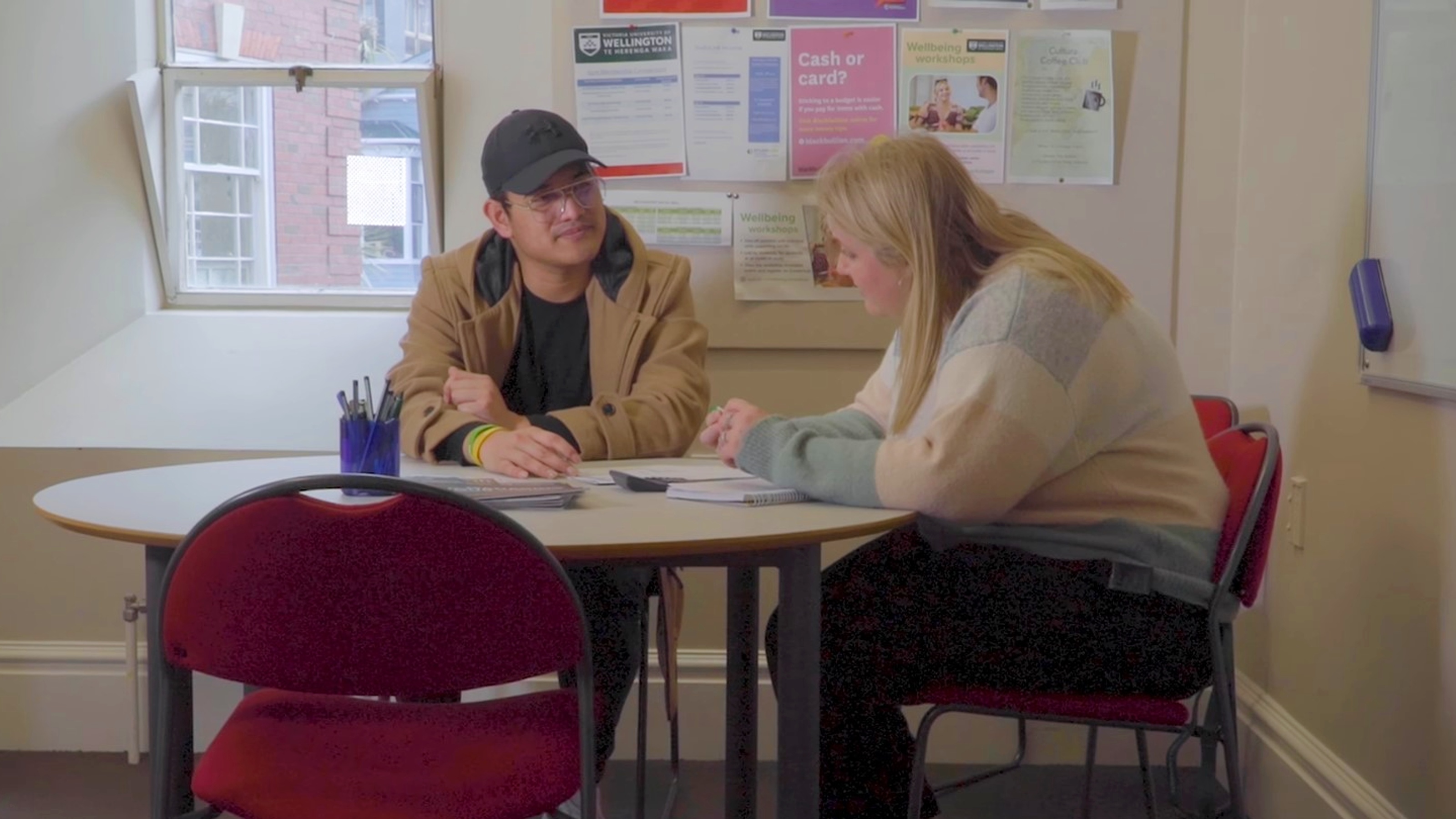
Get help to manage your finances
We can help you:
- budget your money
- manage your student loan or allowance
- work out your accommodation payment schedule.
If you’re facing financial difficulties, we can help you apply for the Hardship Fund.
You may be eligible for government or community support, too.
Apply for a New Zealand study visa
You’ll need to apply for a study visa if you plan to study with us as an international student.
You should apply for your visa after you’ve received your Offer of Place, and before you come to New Zealand.