

He mihi
Tēnei ka noho i te roro o tōku whare o Te Tumu Herenga Waka
‘Te pātaka kai iringa o te kupu o te kōrero’
Ka titiro whakawaho
Ki te pae tukutuku o te ao hurihuri
E rāhiri mai nei i a koutou e te tī, e te tā, o wīwī, o wāwā
Nau mai, haere mai, whakatau mai ki tēnei whārangi ipurangi
Tākina te kawa, ko te kawa o tūārangi
Tākina te kawa, ko te kawa o mohoa noa nei
Tākina te kawa, ko Te Kawa a Māui e!
Become skilled in Māori and Indigenous worldviews
The Postgraduate Diploma in Indigenous Studies (PGDipIndS) positions Māori and Pacific cultures and histories in the global context of Indigenous colonial and post-colonial experiences, cultural rights, and self-determination.
This Diploma combines core study in Indigenous theory with courses from a range of subjects, including history, politics, anthropology, and the arts.
The MGBus focuses on global strategy, leadership, and innovation to prepare you for the complexities of cross-border business. It’s ideal if you want to move into roles in international trade, business development, consulting, or global operations.
Who can study for this qualification
You can study for this Diploma if you have a Bachelor’s degree with at least a B average or equivalent in a relevant subject. Many students have Bachelor’s degrees in Education, Māori Studies, Pacific Studies, or Science.
You can also study for this Diploma if you have professional experience, or if you have qualifications in a different field of study.
Our Postgraduate Indigenous Studies qualifications
We offer three Postgraduate Indigenous Studies qualifications. These are staircased so that courses completed for each qualification can count towards the next step.
The Master of Indigenous Studies provides the most comprehensive study as it includes four courses and a research dissertation.
The Postgraduate Diploma in Indigenous Studies has in-depth study over four courses, but no research dissertation.
The Postgraduate Certificate in Indigenous Studies is an opportunity for professional development over two courses.
What you’ll learn
This Diploma builds on your undergraduate degree by broadening your understanding of forces which relate to, influence, and affect Indigenous peoples. It includes:
- learning about local and international issues—gain a broad understanding of Māori, Pacific, and international Indigenous issues
- indigenous politics independent from the state—learn how Indigenous peoples engage with non-states, as well as how they maintain and develop their own forms of politics
- access—you’ll get to connect to a wide range of organisations such as iwi and hapū, government agencies, and diplomatic missions
- experience—we offer opportunities to our students such as internships with organisations that focus on Indigenous issues.
How you’ll study
This degree is 120 points and can be studied full time or—if you’re a domestic student—part time.
If you study full time, you'll complete the 120-point Diploma in about 10 months, which is two trimesters.
- The degree starts in February—Trimester 1 of the University year.
- The degree is delivered over two trimesters and you’ll take two courses each trimester.
- Classes are taught in person, on campus, so you can’t study for this degree online or by distance.
- Your courses are based on lectures held on weekdays, which are between two to three hours long.
- One of your core courses is taught in two weekend blocks from Friday to Sunday.
- You’ll take core courses for your first trimester and elective courses for your second trimester.
- Courses are interactive and taught through lectures, case studies, and in-class presentations.
Degree content
This degree mixes core courses and electives. You can use your electives to broaden your qualification to specialise in a field like Education, History, or Resource Management.
To complete the degree, you’ll need to complete 120 points across two trimesters.
- In your first trimester, you’ll study two courses which cover:
- theories and worldviews—Indigenous peoples’ political and cultural relationships, international contexts, resource management, policy, and governance
- research theory and methods—how to do research in ways led by Indigenous knowledge and practice.
- In your second trimester, you’ll study two courses of your choice from a range of subjects including:
- Anthropology
- Education
- Environment Studies
- Health
- Māori Studies
- Pacific Studies
- Political Science
- Psychology
- Science
- Sociology.
In your second trimester you have the option of doing an internship at an organisation or a project which focuses on Indigenous issues.
Part-time study options
If you’re a domestic student, you can study part time—which is one course each trimester—and complete your Diploma in up to two years.
Qualification support and advice
We can help you match your interests and career goals with the right course of study.
If you’re a new student, talk to a Future Student Adviser through our enquiry form.
If you’re already studying with us, talk to Tītoko—Student Success.
For the research portion of your study, you’ll need a supervisor to help guide your research. Your programme coordinator will work with you to find the right person.

Entry requirements
Entry requirements for domestic students
- Requirements for students who completed university in:
If you live in New Zealand and are a citizen or permanent resident of New Zealand or Australia, you're considered a domestic student.
Some citizens of the Cook Islands, Niue, and Tokelau may automatically hold New Zealand citizenship.
Diplomatic residents living in New Zealand are also regarded as domestic students.
To be accepted into this qualification, you need:
1. (a) Before enrolment, a candidate for the PGDipIndS shall have:
(i) completed a Bachelor’s degree in a relevant learning area with a B grade average or better; and
(ii) been accepted by the MIndS programme director as capable of completing the proposed course of study.
(b) Requirement (a)(i) may be waived by the Associate Dean (Students) of the Wellington Faculty of Humanities and Social Sciences for a candidate who has had extensive practical, professional, or scholarly experience that provides an equivalent level of preparation.
Qualification requirements
Excerpt from the regulations for the PGDipIndS
2. Except as provided in section 4, the course of study for the PGDipIndS degree shall consist of 120 points including:
(a) Aro Taketake / Indigenous Theories (MAOR 501); one of Tā Te Māori Rangahau / Methodology of Māori Research (MAOR 408), Theory and Methods in Pacific Studies (PASI 401), Research as Praxis: Indigenous Perspectives (EDUC 440); and
(b) 60 further points from the MIndS Schedule.
3. A candidate who has been awarded the PGDipIndS shall abandon that qualification on being awarded the MIndS.
Future careers
The PGDipIndS enhances your undergraduate degree to give you career pathways in Aotearoa New Zealand and abroad.
More career information
Find out more about careers.
The government careers website, Tahatū, offers more information about jobs, salaries, and current opportunities.
Scholarships
You may be able to get a scholarship to help fund your studies.
We have postgraduate and doctoral scholarships available, as well as specialised scholarships for different groups and subject areas.
We encourage you to apply—many scholarships don’t receive enough applications.
Scholarships for Postgraduate Indigenous Studies
-
The fund, which was established at the time of the renovation of the C3 lecture theatre, is to assist a second-year student from any faculty in their studies at Te Herenga Waka—Victoria University of Wellington
Scholarships for international students
We're currently offering a NZ$10,000 VUW Postgraduate International Scholarship to all eligible international students enrolling in a Master’s degree or Postgraduate Diploma programme.
Your scholarship will be processed automatically when your programme application is accepted, and the amount will be deducted from your tuition fees.
Other scholarships
We also have postgraduate and doctoral scholarships available, as well as specialised scholarships for different groups and subject areas.
We encourage you to apply—many scholarships don’t receive enough applications.
Scholarships for Postgraduate Indigenous Studies
There could be a scholarship for your qualification, subject area, background, or situation.
Join our postgraduate community
The Postgraduate Students’ Association provides a voice for you on campus and information on studying at Te Herenga Waka—Victoria University of Wellington.
Postgraduate Students’ Association
MAI ki Pōneke
MAI ki Pōneke are part of an international network of Māori and Indigenous postgraduate students. They provide advice, support, and information to Indigenous postgraduate students of all levels, as well as those thinking about enrolling.
Be immersed in kaupapa Māori while you study
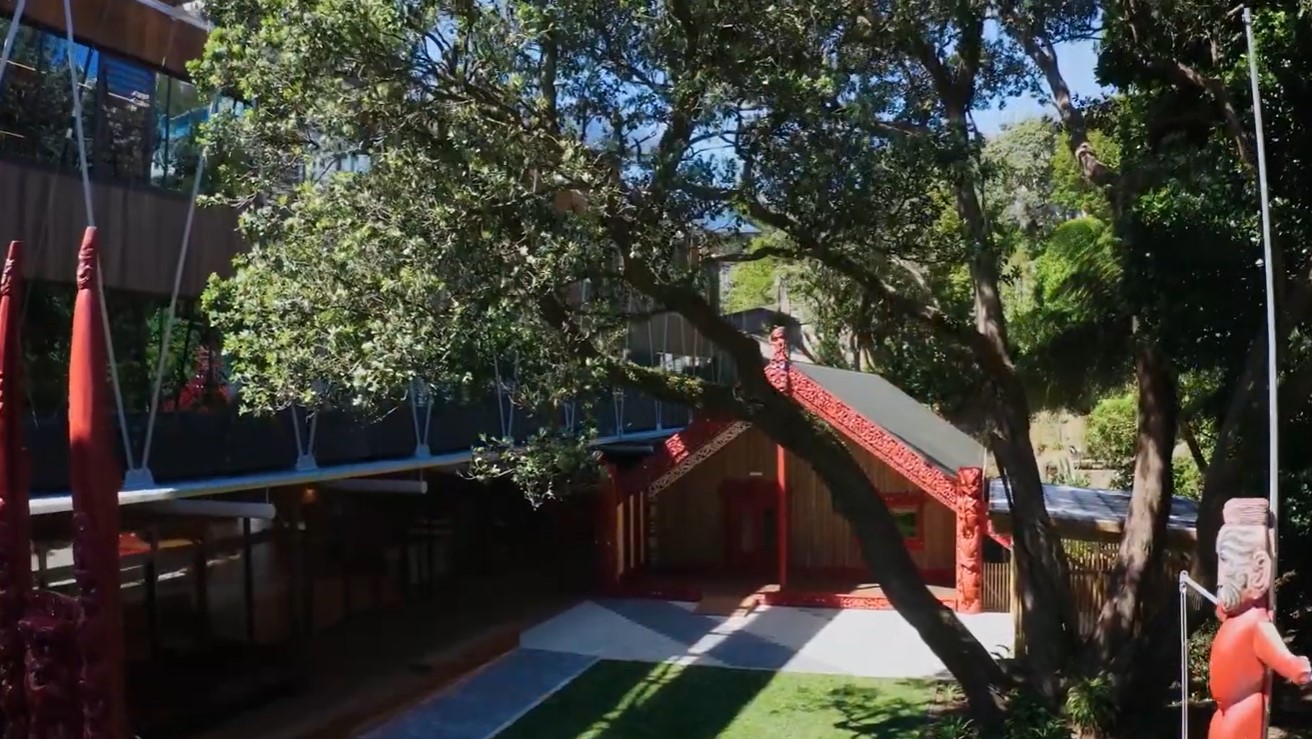
Our facilities are based on sustainability practice, tikanga Māori, and Maori teaching styles, all integrated with our marae wharenui at our back door.
Ngā Mokopuna is our purpose-built teaching and learning space. It brings together mātauranga Māori and Western science innovations, including renewable energy and climate change transition technologies. It incorporates our offices, student study areas, and teaching spaces. The first floor features the marae kitchen and dining area.
We’ve been a pioneer in Māori study and scholarship for decades. We first offered Te Reo Māori and Māori Studies in the 1960s, and in 1980 we became the first university in Aotearoa to establish a marae on campus. Our wharenui—Te Tumu Herenga Waka—opened in December 1986.
Ngā mokopuna in action
Get help to manage your finances
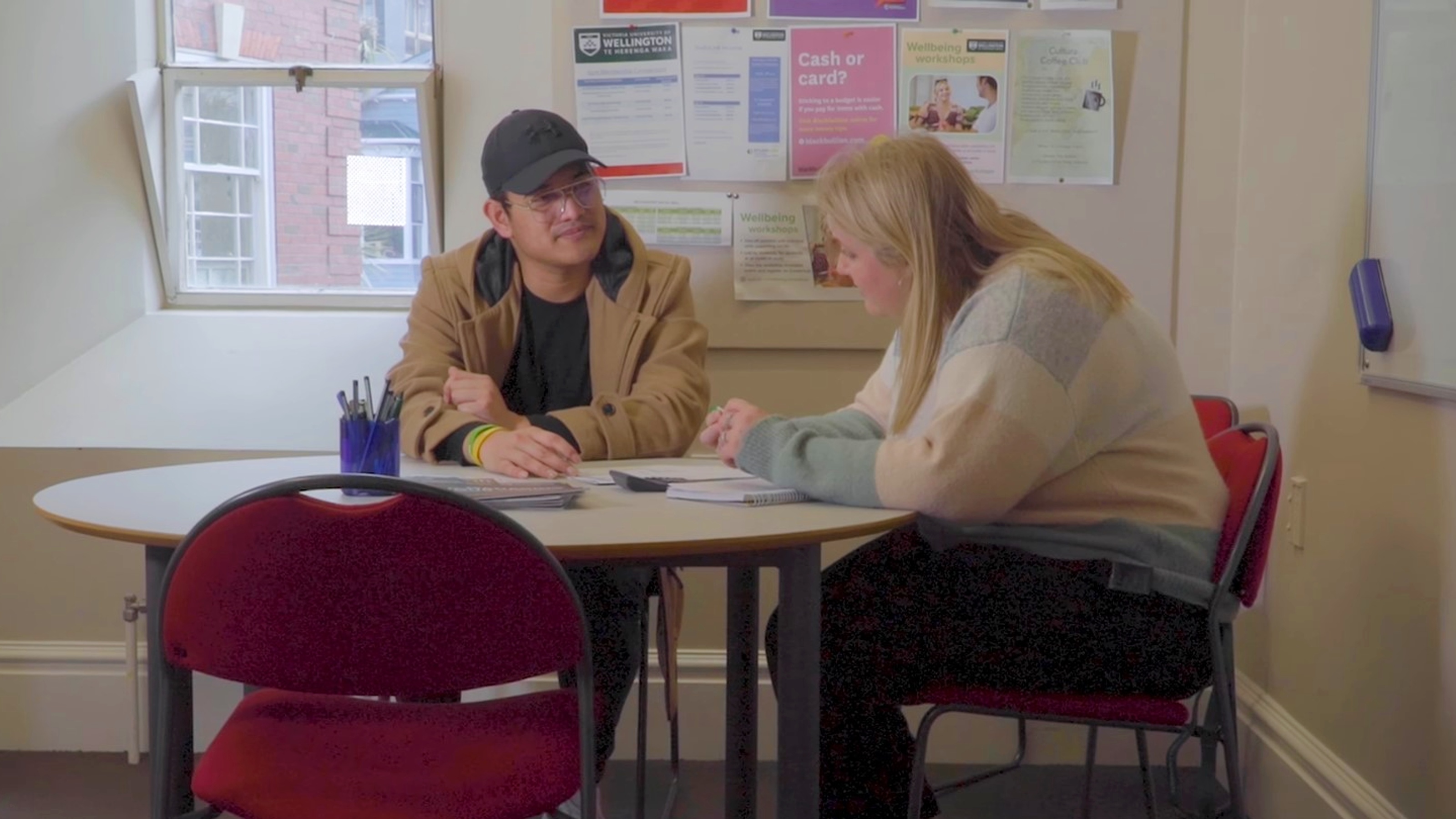
We can help you:
- budget your money
- manage your student loan or allowance
- work out your accommodation payment schedule.
If you’re facing financial difficulties, we can help you apply for the Hardship Fund.
You may be eligible for government or community support, too.
Apply for a New Zealand study visa
You’ll need to apply for a study visa if you plan to study with us as an international student.
You should apply for your visa after you’ve received your Offer of Place, and before you come to New Zealand.