

Give your career an international dimension
Bring an international perspective to your career by studying International Relations at postgraduate level.
This Postgraduate Diploma teaches the foundational theories essential for understanding the forces behind global events. You’ll analyse complex geopolitical, social, and economic challenges that resonate in global affairs.
By doing so, you'll improve your critical-thinking skills and build communication, research, and policy expertise valued by employers. You’ll be taught by world-class academics and researchers, and build the professional networks essential to your career.
Who can study for this qualification
The PGDipIR suits recent graduates and working professionals who want to launch or develop careers with an international focus. It’s a two-trimester qualification that doesn’t require an Honours degree to enrol—so it’s a good option if you want to boost your skills quickly.
It also suits you if you don’t have time to complete the research component of the Master of International relations (MIR).
The Political Science and International Relations (PSIR) programme welcomes recent graduates and professionals from around the world who want to enhance their analytical skills and knowledge of international relations.
Our postgraduate International Relations qualifications
We offer two postgraduate qualifications in International Relations.
The 180-point Master of International Relations provides the most comprehensive study, as it combines coursework with a research course.
The 120-point Postgraduate Diploma in International Relations has in-depth study and includes the same courses as the Master’s, but without the research course.
These qualifications are ‘staircased’—if you complete the Diploma and decide to keep studying, the courses you've completed can count towards the Master’s.
What you’ll learn
The PGDipIR is a two-trimester postgraduate qualification. It gives you:
- a broad understanding of the international relations field and the theoretical foundations to interpret it
- the chance to specialise in specific areas that align with your interests and career goals.
Gain analytical tools for International Relations study
At the core of the degree is the study of key approaches to the study of contemporary international relations. You’ll focus on the dominant theories that try to explain what causes nations to collide or cooperate, including:
- realism and neorealism
- liberal internationalism and new institutionalism
- the theory of international society.
Then, you’ll analyse the tension between these forces and international order by examining the rise of the liberal international order in the late 20th century and its transformation in the early 21st century.
Study a particular theme in International Relations
Choose from the PSIR programme’s courses in International Relations, Political Science and Strategic Studies to give focus to your PGDipIR. Choose from areas like:
- international political economy
- foreign policy analysis
- international organisations and global governance
- regional studies in trade, security, and geopolitics—of East Asia, Europe, or the South Pacific, for example.
How you’ll study
The 120-point PGDipIR is a taught-course qualification. It gives you the core courses and options as the MIR, but without the research component.
Trimester 1 and Trimester 2 starts with the core course (Approaches to International Relations), and continues with your choice of three PSIR postgraduate courses offered that year.
All courses are taught in person and on campus. Studying full time, you'll complete the PGDipIR in two trimesters which is around 10 months.
Part-time study options
Studying part time, you can complete the PGDipIR over a maximum of two years.
Degree support and advice
We can help you match your interests and career goals with the right course of study.
If you’re a new student, talk to a Future Student Adviser.
If you’re already studying with us, talk to Tītoko—Student Success.

Entry requirements
Entry requirements for domestic students
- Requirements for students who completed university in:
If you live in New Zealand and are a citizen or permanent resident of New Zealand or Australia, you're considered a domestic student.
Some citizens of the Cook Islands, Niue, and Tokelau may automatically hold New Zealand citizenship.
Diplomatic residents living in New Zealand are also regarded as domestic students.
To be accepted into this qualification, you need:
1. (a) Before enrolment, a candidate for the PGDipIR degree shall have:
(i) completed a Bachelor’s degree or a Graduate Diploma in International Relations or a relevant area; with at least a B grade average in 60 points of 300-level courses in the majoring subject or relevant area of study; and
(ii) been accepted by the head of school as capable of proceeding with the proposed course of study.
(b) Requirement (a)(i) may be waived by the Associate Dean (Students) of the Faculty of Humanities and Social Sciences for a candidate who has had extensive practical, professional, or scholarly experience that provides an equivalent level of preparation.
Qualification requirements
Excerpt from the regulations for the PGDipIR
2. The course of study for the PGDipIR shall consist of:
(a) Approaches to International Relations (INTP 586)
(b) 60 points from INTP 400–489
(c) 30 points from INTP 400–488, POLS 400–488, New Zealand Foreign and Security Policy (STRA 515), STRA 530–539.
3. With permission of the head of school, a candidate may replace up to 30 points of the requirements for (c) with postgraduate courses taken at this university.
4. A candidate who has been awarded the PGDipIR shall abandon that qualification upon being awarded the MIR.
Globally ranked
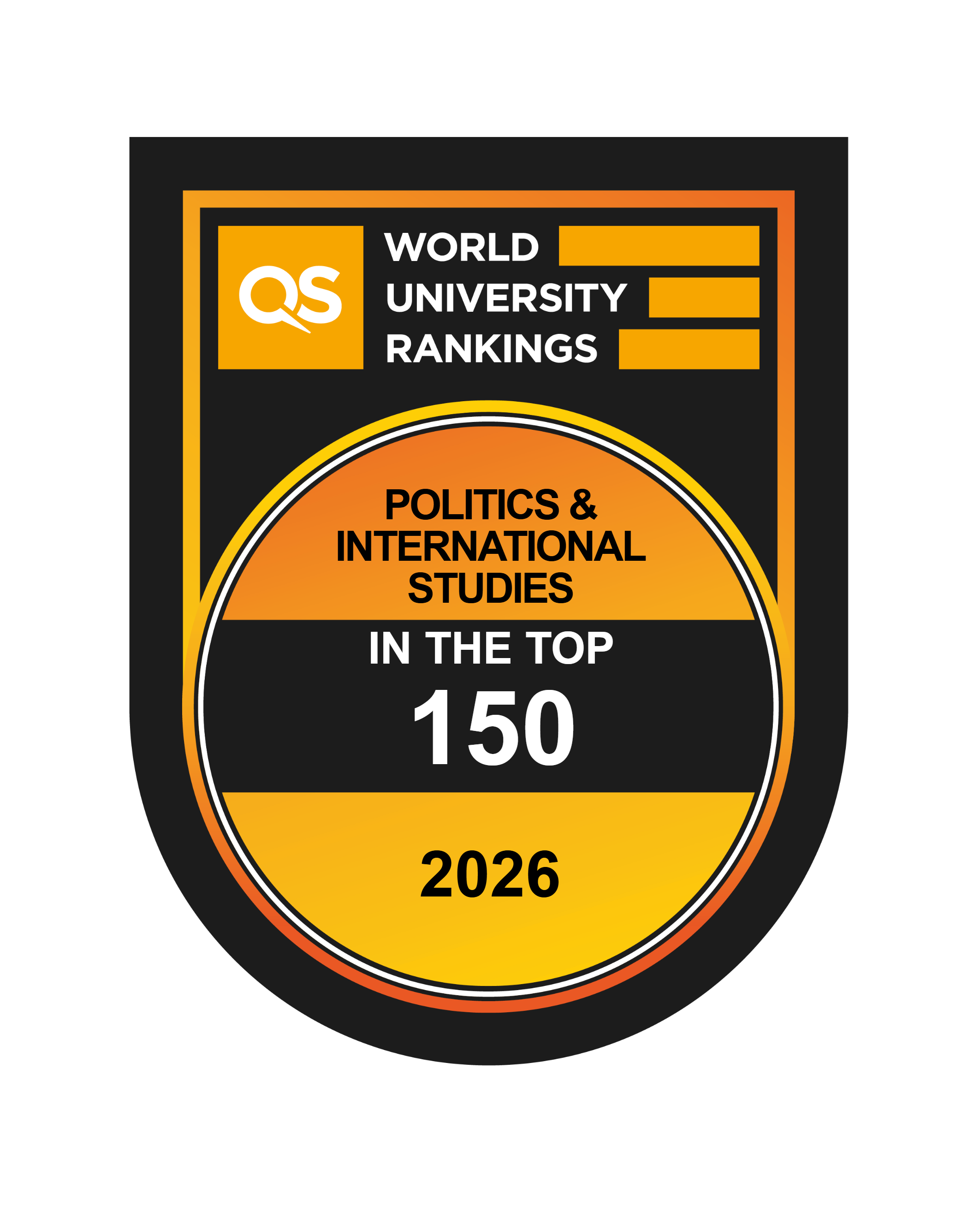
Our Political Science and International Relations subjects are ranked in the top 150 worldwide in the QS World University Rankings 2026.
The QS World University Rankings is an annual global publication that gives overall rankings and subject rankings for more than 1,500 universities worldwide.
Future careers
A PGDipIR builds the expertise and insights you need to work in fields like foreign affairs, international business and trade, and international development. International relations specialists also work around the world in teaching and research, global civil society, and media.
In particular, the PGDipIR could improve your opportunities for work with government agencies including:
- Ministry of Foreign Affairs and Trade
- New Zealand Trade and Enterprise
- Immigration New Zealand
- New Zealand Customs Service
- New Zealand’s defence, police, and intelligence services.
The knowledge and skills the PGDipIR are also relevant to the work of multinational corporations, local companies with global reach, and non-governmental organisations.
More career information
Find out more about careers.
The government careers website, Tahatū, offers more information about jobs, salaries, and current opportunities.
Scholarships
You may be able to get a scholarship to help fund your studies.
We have postgraduate and doctoral scholarships available, as well as specialised scholarships for different groups and subject areas. If nothing fits right now, something may suit you later.
We encourage you to apply. It's a straightforward process, and it could make a real difference.
Scholarships for Humanities and Social Sciences
-
The Scholarship exists to attract and support cellists of outstanding ability and potential to study cello performance at NZSM, and to engage each recipient with the life, artistry, and legacy of Greta Ostova.
-
Applicants will be current violin, viola or violoncello students, enrolled in the NZSM. A particular of the scholarship is to fund postgraduate study, travel, accommodation and other expenses incurred in the pursuit of such study, both within and outside New Zealand. The scholarship is available to both domestic and international students.
-
The Brian Murray Fox Scholarship in History offers an opportunity to students who are intending to undertake their second, third or Honours year of their degree at Te Herenga Waka—Victoria University of Wellington in the year following application.
Scholarships for international students
We're currently offering a NZ$10,000 VUW Postgraduate International Scholarship to all eligible international students enrolling in a Master’s degree or Postgraduate Diploma programme.
Your scholarship will be processed automatically when your programme application is accepted, and the amount will be deducted from your tuition fees.
Other scholarships
We also have postgraduate and doctoral scholarships available, as well as specialised scholarships for different groups and subject areas. If nothing fits right now, something may suit you later.
We encourage you to apply. It's a straightforward process, and it could make a real difference.
Scholarships for Humanities and Social Sciences
-
The Scholarship exists to attract and support cellists of outstanding ability and potential to study cello performance at NZSM, and to engage each recipient with the life, artistry, and legacy of Greta Ostova.
-
Applicants will be current violin, viola or violoncello students, enrolled in the NZSM. A particular of the scholarship is to fund postgraduate study, travel, accommodation and other expenses incurred in the pursuit of such study, both within and outside New Zealand. The scholarship is available to both domestic and international students.
-
This scholarship is available to students intending to do research at postgraduate level at the New Zealand School of Music – Te Kōkī in the field of Music Education. Master’s or Doctoral research is preferred, though Honours level research and projects may be considered. Research or projects which may lead to qualification or enhanced professional practice of the applicant may...
Join our postgraduate community
The Postgraduate Students’ Association provides a voice for you on campus and information on studying at Te Herenga Waka—Victoria University of Wellington.
Postgraduate Students’ Association
MAI ki Pōneke
MAI ki Pōneke are part of an international network of Māori and Indigenous postgraduate students. They provide advice, support, and information to Indigenous postgraduate students of all levels, as well as those thinking about enrolling.
Why Wellington
Our political science and international relations work is considered among the best in the world. Our academic staff produce world-class research that ranks first in New Zealand for its quality and engagement. We’re also linked with major research institutions worldwide.
By studying with us, you'll hear from and connect with renowned speakers, visiting academics, and politicians and government officials. You’ll also have opportunities for internships and professional networks.
Further research or study
Once you’ve met the requirements of your PGDipIR, you can choose to continue your studies by upgrading to the Master of International Relations (MIR).
Get help to manage your finances
We can help you:
- budget your money
- manage your student loan or allowance
- work out your accommodation payment schedule.
If you’re facing financial difficulties, we can help you apply for the Hardship Fund.
You may be eligible for government or community support, too.

Apply for a New Zealand study visa
You’ll need to apply for a study visa if you plan to study with us as an international student.
You should apply for your visa after you’ve received your Offer of Place, and before you come to New Zealand.