

Fast track your career in the museum and heritage sector
Get the practical skills, theoretical knowledge, and sector experience you need to work as a museum and heritage professional.
Join a programme that's an integral part of New Zealand’s museum and heritage sector. It’s been designed for and with the sector to give you the professional development you need for a career in GLAM—galleries, libraries, archives, and museums—or in heritage management.
Taking advantage of Wellington's rich cultural resources, you’ll head out on numerous field trips and meet with experts from local organisations, as well as from academics with strong local and international networks, along with highly qualified professionals drawn from the sector.
Who can study for this qualification
The PGDipMHP is suitable for people looking to start a career in galleries, libraries, archives, and museums, or as a change from their existing career.
You can use the Diploma to progress on to a Master of Museum and Heritage Practice.
You’ll need a Bachelor’s degree with at least a B grade average in 60 points of 300-level courses in the majoring subject or relevant area of study.
Our Postgraduate Museum and Heritage Studies qualifications
We offer three Postgraduate Museum and Heritage Studies qualifications. These are staircased so that courses completed for each qualification can count towards the next step.
The Master of Museum and Heritage Practice involves learning on the job during a placement. You'll also get the opportunity for further professional training and experience through a longer internship.
The Postgraduate Diploma in Museum and Heritage Practice allows you to do in-depth study with fewer courses than the Master's.
The Postgraduate Certificate in Museum and Heritage Practice is an opportunity for specialised professional development and can be a step towards higher study. It includes four courses.
What you’ll learn
You'll gain practical experience in museum and heritage organisations and learn about museum topics and theory.
You'll learn about topics including the history of museum of heritage issues, practices, and policies, Māori perspectives on cultural and natural heritage, and operations involved in museums, galleries, heritage, leisure and cultural organisations.
How you’ll study
Courses include a range of activities including class seminars, field trips, visiting speakers, workshops and other hands-on activities. You'll choose an additional 60 points from approved courses.
There’s also a 120 hour workplace-based placement which is scheduled during the mid-year break, which takes place in June and July. Students are required to complete their placement by the end of the trimester break.
Courses are largely taught face-to-face. Some are recorded. Some sessions are online.
Part-time study
If you’re a domestic student, you can study part time and complete the PGDipMHP over a maximum of two years.
Degree support and advice
We can help you match your interests and career goals with the right course of study.
If you’re a new student, talk to a Future Student Adviser.
If you’re already studying with us, talk to Tītoko—Student Success.

Entry requirements
Entry requirements for domestic students
- Requirements for students who completed university in:
If you live in New Zealand and are a citizen or permanent resident of New Zealand or Australia, you're considered a domestic student.
Some citizens of the Cook Islands, Niue, and Tokelau may automatically hold New Zealand citizenship.
Diplomatic residents living in New Zealand are also regarded as domestic students.
To be accepted into this qualification, you need:
1. (a) Before enrolment, a candidate for the PGDipMHP shall have:
(i) completed a Bachelor’s degree in a relevant area with at least a B grade average or better in 60 points of 300-level courses in the majoring subject or relevant area of study; and
(ii) been accepted by the Board of Studies as capable of proceeding with the proposed course of study.
(b) Requirement a(i) may be waived by the Associate Dean (Students) of the Faculty of Humanities and Social Sciences for a candidate who has had extensive practical, professional, or scholarly experience that provides an equivalent level of preparation.
Qualification requirements
Excerpt from the regulations for the PGDMHP
2. The course of study for the PGDipMHP shall consist of courses worth at least 120 points, including:
(i) MHST 501–504
(ii) 60 further points from the MMHP Schedule or approved 400- or 500-level electives.
3. (a) A candidate shall normally complete the requirements of the PGDipMHP within four years of first enrolling.
(b) The associate dean may extend the maximum period specified in (a).
4. (a) A candidate who has been awarded the PGDipMHP shall abandon that qualification on being awarded the MMHP.
(b) A candidate who has been awarded the PGCertMHP shall abandon that qualification on being awarded the PGDipMHP.
Applying to study
When you enrol you'll need to include
- your CV showing relevant experience
- a writing sample of at least 3,000 words, such as an essay from an undergraduate course
- a personal statement that includes:
- what you hope to gain from the programme
- why you think you should be accepted.
Information session and interview
You'll also need to come to an information session, which will include an informal interview.
- Monday 9 November 2026
- 10am Stout Research Centre for NZ Studies, 12 Waiteata Road, Kelburn Campus.
The session will start with a presentation from us, followed by morning tea and then interviews. Current students will also meet with you and show you around.
The interview will give you a chance to meet the staff on your own and for them to hear from you about why you are applying.
Globally ranked
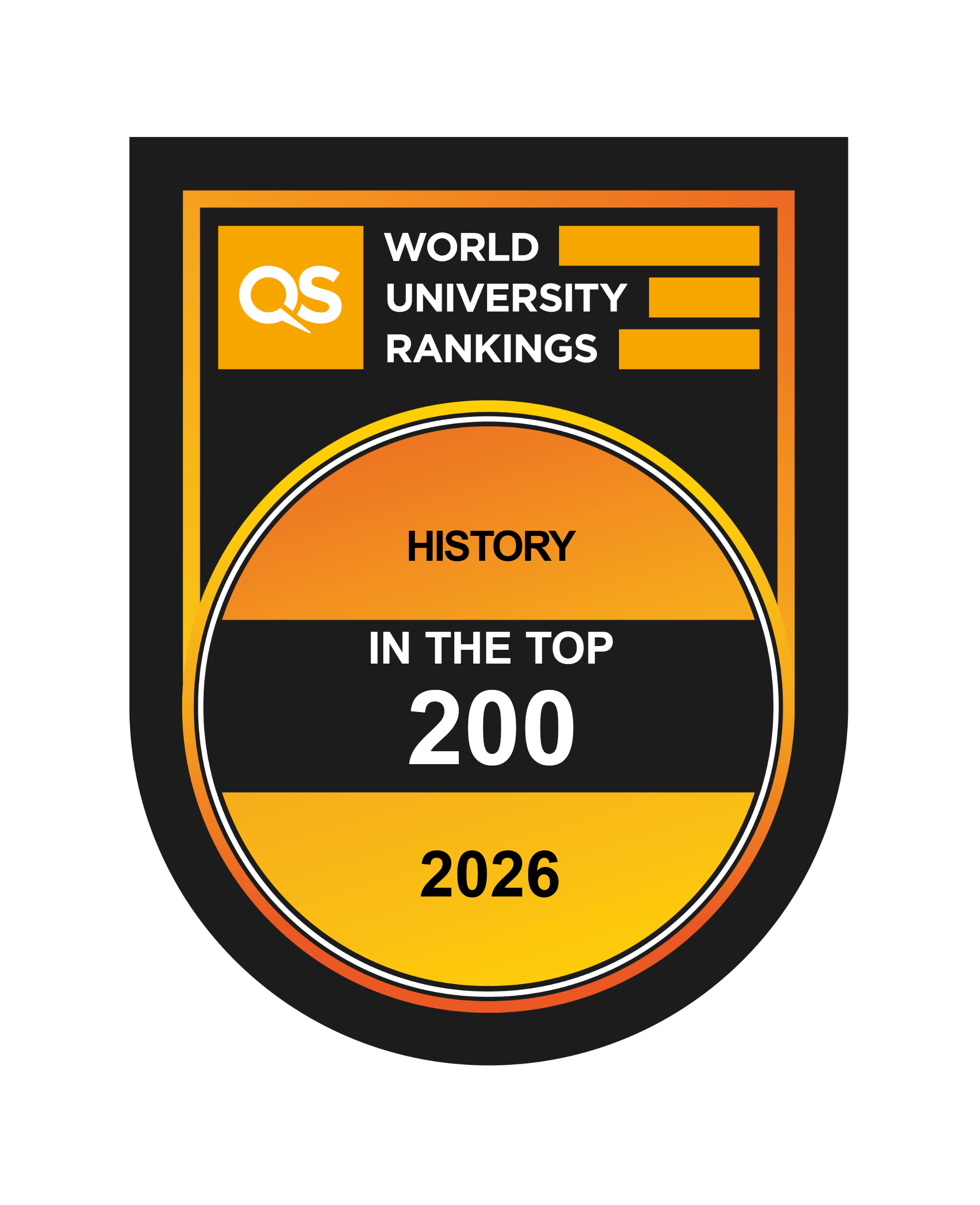
Our History subjects are ranked in the top 200 worldwide in the QS World University Rankings 2026.
The QS World University Rankings is an annual global publication that gives overall rankings and subject rankings for more than 1,500 universities worldwide.
Future careers
Past students have been snapped up for a wide range of roles in the sector, including:
- exhibition developer
- collection manager
- gallery manager
- curator
- researcher
- registrar
- interpreter
- educator.
More career information
Find out more about careers.
The government careers website, Tahatū, offers more information about jobs, salaries, and current opportunities.
Scholarships
You may be able to get a scholarship to help fund your studies.
We have postgraduate and doctoral scholarships available, as well as specialised scholarships for different groups and subject areas. If nothing fits right now, something may suit you later.
We encourage you to apply. It's a straightforward process, and it could make a real difference.
Scholarships for Humanities and Social Sciences
-
The Erasmus Scholarship is open to second year students at Te Herenga Waka—Victoria University of Wellington who want to major in Greek or Latin.
-
This scholarship is designed to support second year students studying English at Te Herenga Waka—Victoria University of Wellington by removing financial barriers to study.
-
This scholarship is designed to support second year students studying History at Te Herenga Waka—Victoria University of Wellington by removing financial barriers to study.
Scholarships for international students
We're currently offering a NZ$10,000 VUW Postgraduate International Scholarship to all eligible international students enrolling in a Master’s degree or Postgraduate Diploma programme.
Your scholarship will be processed automatically when your programme application is accepted, and the amount will be deducted from your tuition fees.
Other scholarships
We also have postgraduate and doctoral scholarships available, as well as specialised scholarships for different groups and subject areas. If nothing fits right now, something may suit you later.
We encourage you to apply. It's a straightforward process, and it could make a real difference.
Scholarships for Humanities and Social Sciences
-
The Erasmus Scholarship is open to second year students at Te Herenga Waka—Victoria University of Wellington who want to major in Greek or Latin.
-
This scholarship was established in 1980 by the former Prime Minister of New Zealand, the Rt. Hon. Sir John Marshall, GBE, CH, BA, LLM, Hon. LLD, to encourage the study of Political Science at Te Herenga Waka - Victoria University of Wellington. The Scholarship was extended to include International Relations.
-
This scholarship was established to encourage students to complete a major in Language Sciences at Te Herenga Waka - Victoria University of Wellington, and continue to further study or careers in this field.
Join our postgraduate community
The Postgraduate Students’ Association provides a voice for you on campus and information on studying at Te Herenga Waka—Victoria University of Wellington.
Postgraduate Students’ Association
MAI ki Pōneke
MAI ki Pōneke are part of an international network of Māori and Indigenous postgraduate students. They provide advice, support, and information to Indigenous postgraduate students of all levels, as well as those thinking about enrolling.
Research an area that interests you
You can choose to take research and research project courses as part of the Diploma:
- Learn about the foundations of good research practice, research design, and critique methods in museum and heritage research.
- Manage a research project in a museum or heritage context, including data collection and analysis, present and report research findings, and reflect on the research process.
- Focus on developing and extending research and writing skills.
Why Wellington
The Stout Research Centre for New Zealand Studies was established in 1984 to encourage interdisciplinary, innovative research approaches in New Zealand history, society, and culture. We have close relationships with many national and regional cultural organisations.
The Centre is home to our Postgraduate Museum and Heritage Studies programme as well as five research projects dedicated to Aotearoa New Zealand history:
Beyond Museum Cases: Māori Practice as Cultural Pedagogy
Security and Surveillance Project
The Missing Link: New Zealand European/Pākehā family memory
Transnational Identity under Observation
Treaty of Waitangi Research.
As the capital, Wellington sits at the heart of national decisions around commemorating, remembering, and reflecting on the past. Our city also hosts Aotearoa New Zealand’s most important cultural and historical records, which you can access as part of your research. Here, you’ll find:
Manatū Toanga | Ministry for Culture and Heritage
Te Papa Tongarewa | Museum of New Zealand
Te Puna Mātauranga o Aotearoa | National Library
Te Rōpū Whakamana i te Tiriti o Waitangi | Waitangi Tribunal
Te Rua Mahara o te Kāwanatanga | Archives New Zealand
Te Tari Whakatau | Office of Treaty Settlements and Takutai Moana.
Further research or study
The Postgraduate Diploma in Museum and Heritage Practice can count towards a Master of Museum and Heritage Practice.
You wouldn’t need to repeat the coursework you’ve already taken for the Diploma.
Master of Arts
If you're thinking of doing a Master of Arts by thesis after your PGDipMHP, it's helpful if you develop research skills through your Diploma study. You can study a research or research proposal course as part of your Diploma.
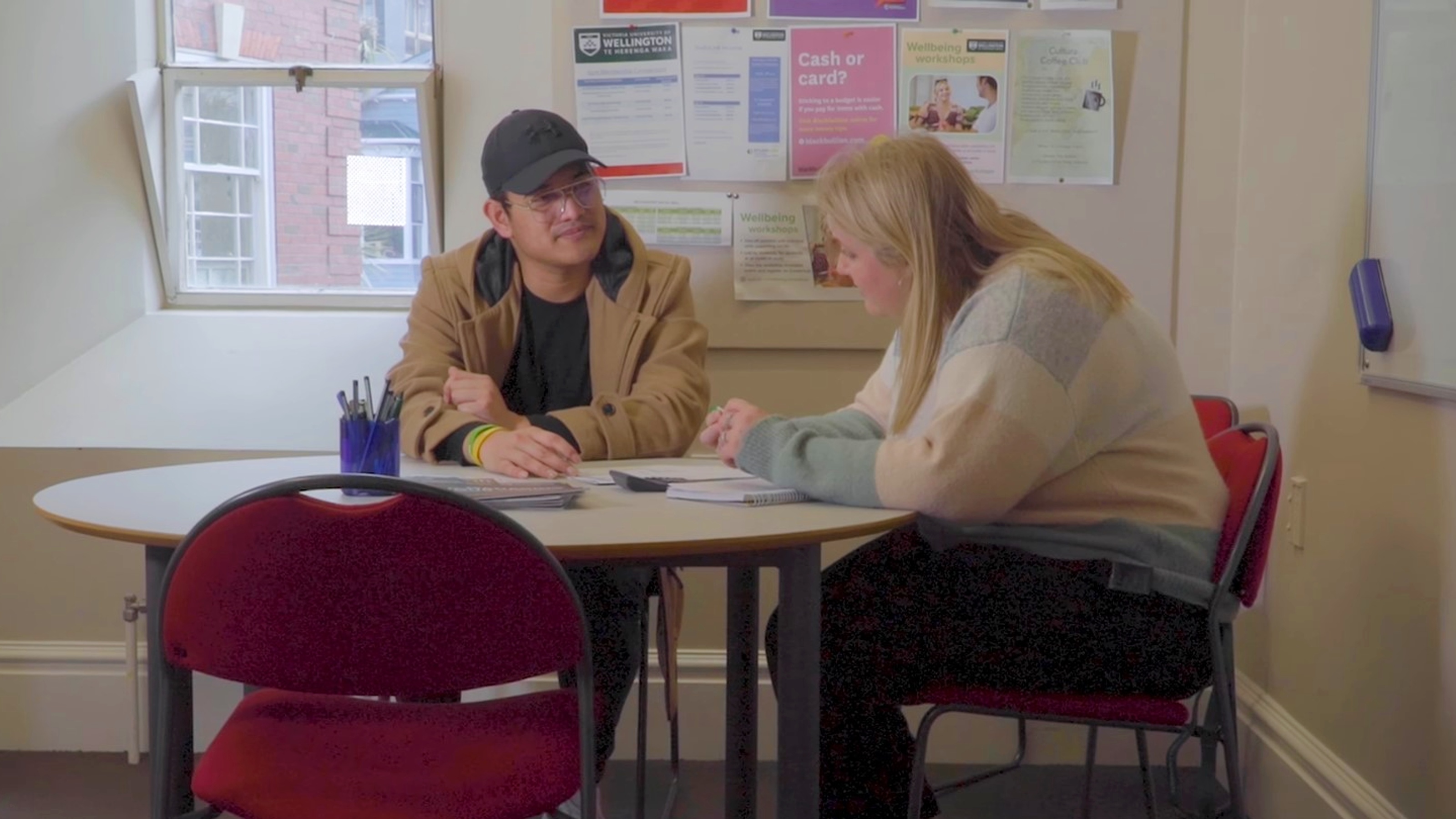
Get help to manage your finances
We can help you:
- budget your money
- manage your student loan or allowance
- work out your accommodation payment schedule.
If you’re facing financial difficulties, we can help you apply for the Hardship Fund.
You may be eligible for government or community support, too.
Apply for a New Zealand study visa
You’ll need to apply for a study visa if you plan to study with us as an international student.
You should apply for your visa after you’ve received your Offer of Place, and before you come to New Zealand.