

Boost your Political Science expertise
Gain expertise in political science for senior roles in the public service and elsewhere with this Postgraduate Diploma.
You’ll study politics where it happens—in Aotearoa New Zealand's capital city. This flexible qualification gives you detail and perspective: a close-up view of the political process, and an international perspective by contrasting New Zealand politics with countries around the world.
Choose courses to suit your career, or learn from related disciplines like International Relations and Strategic Studies. Develop the critical analysis and research skills employers value, and take advantage of the University’s connections in the capital and around the world.
Who can study for this qualifaction
The PGDipPols is a flexible qualification that combines coursework with independent research.
It suits you if:
- you need an advanced understanding of Political Science issues for your current role
- you’re already working and need to raise your professional knowledge and skills to be eligible for senior positions
- you’re a recent graduate and want to test your interest in Political Science before committing to further postgraduate study.
To enrol, you need a Bachelor’s degree or a Graduate Diploma with a major in Political Science, International Relations, or Public Policy.
Postgraduate Political Science qualifications
We offer two specialised postgraduate qualifications in Political Science.
The 180-point Master of Political Science provides the most comprehensive study, as it combines coursework with a research dissertation. It’s delivered over three trimesters of full-time study.
The 120-point Postgraduate Diploma in Political Science has in-depth study and includes the same courses as the Master’s, but without the research dissertation. It’s delivered over two trimesters of full-time study.
These qualifications are ‘staircased’—if you complete the Diploma and decide to keep studying, the courses you've completed can count towards the Master’s.
What you’ll learn
The PGDipPols gives you the core knowledge needed to understand political systems, policy processes, and government in New Zealand and around the world.
You’ll choose from a range of courses in political thought, leadership, representation, political participation, and political action. For example, your core coursework focuses on the different methods and perspectives used in Political Science.
You’ll learn:
- the theoretical perspectives and research methodologies used in Political Science
- how to apply those perspectives and methodologies to empirical questions in contemporary politics.
You then choose from a variety of Political Science courses. You might study:
- contemporary democratic theory
- political leadership
- media, politics and campaigns
- the politics of Pacific Island states, including New Zealand’s role in the Oceania region
- government and politics in Aotearoa New Zealand
- migration.
You can also complement your Political Science courses with approved International Relations and Strategic Studies courses.
How you’ll study
The 120-point PGDipPols is delivered by coursework over two trimesters. There’s no research component.
Your coursework starts with a core course—Approaches to Comparative Political Science—an continues with three taught courses offered in the year.
Many courses are taught in person, although some are available online. You’ll also need to attend weekly seminar sessions on campus.
Workload
If you are studying full time, you can expect a workload of 40–45 hours a week for much of the year.
You can estimate your workload by adding up the number of points you'll be doing. One point is roughly equal to 10–12 hours work.
Full-time and part-time study options
The PGDipPols usually takes six months for full-time students. If you’re a domestic student, you can study part time for a maximum of 12 months.
The PGDipPols is a flexible qualification that fits around your commitments. You can either:
- complete the qualification over six months (two trimesters) of full-time study—a quick way to gain specialist expertise
- if you’re a domestic student, complete the PGDipPols over a longer period—usually over 12 months (four trimesters).
Part-time students doing two courses per trimester will need to do around 20–23 hours of work a week.
Degree support and advice
We can help you match your interests and career goals with the right course of study.
If you’re a new student, talk to a Future Student Adviser.
If you’re already studying with us, talk to Tītoko—Student Success.

Entry requirements
Entry requirements for domestic students
- Requirements for students who completed university in:
If you live in New Zealand and are a citizen or permanent resident of New Zealand or Australia, you're considered a domestic student.
Some citizens of the Cook Islands, Niue, and Tokelau may automatically hold New Zealand citizenship.
Diplomatic residents living in New Zealand are also regarded as domestic students.
To be accepted into this qualification, you need:
1. (a) Before enrolment, a candidate for the PGDipPols shall have:
(i) completed a Bachelor’s degree or a Graduate Diploma in Political Science, International Relations, or Public Policy, or relevant area with at least a B grade average in 60 points of 300-level courses in the majoring subject or relevant area of study; and
(ii) been accepted by the head of school as capable of proceeding with the proposed course of study.
(b) Requirement (a)(i) may be waived by the Associate Dean (Students) of the Faculty of Humanities and Social Sciences for a candidate with a Bachelor’s degree who has had extensive practical, professional, or scholarly experience that provides an equivalent level of preparation.
Qualification requirements
Excerpt from the regulations for the PGDipPol
2. The course of study for the PGDipPols shall consist of:
(a) Approaches to Comparative Political Science (POLS 586); and
(b) 60 points from POLS 400–489; and
(c) 30 further points from POLS 400–488, INTP 400–488 New Zealand Foreign and Security Policy (STRA 515), STRA 530–539.
3. The head of school may exempt from 2(a) a candidate who has mastered the material covered in that course through previous study and/or practical experience. Except where the material was covered in courses at postgraduate level, the candidate shall replace exempted courses with approved electives of equivalent points value.
4. With permission of the head of school, a candidate may replace up to 30 points of the requirements for 2(c) with postgraduate courses taken at this university.
5. A full-time candidate shall normally complete the requirements of the degree by 28 February in the year after first enrolling for it, and a part-time candidate shall normally complete the requirements for the degree by 28 February in the second year after first enrolling. The associate dean may extend those periods in special cases.
6. A candidate who has been awarded the PGDipPols shall abandon that qualification upon being awarded the MPols.
Globally ranked
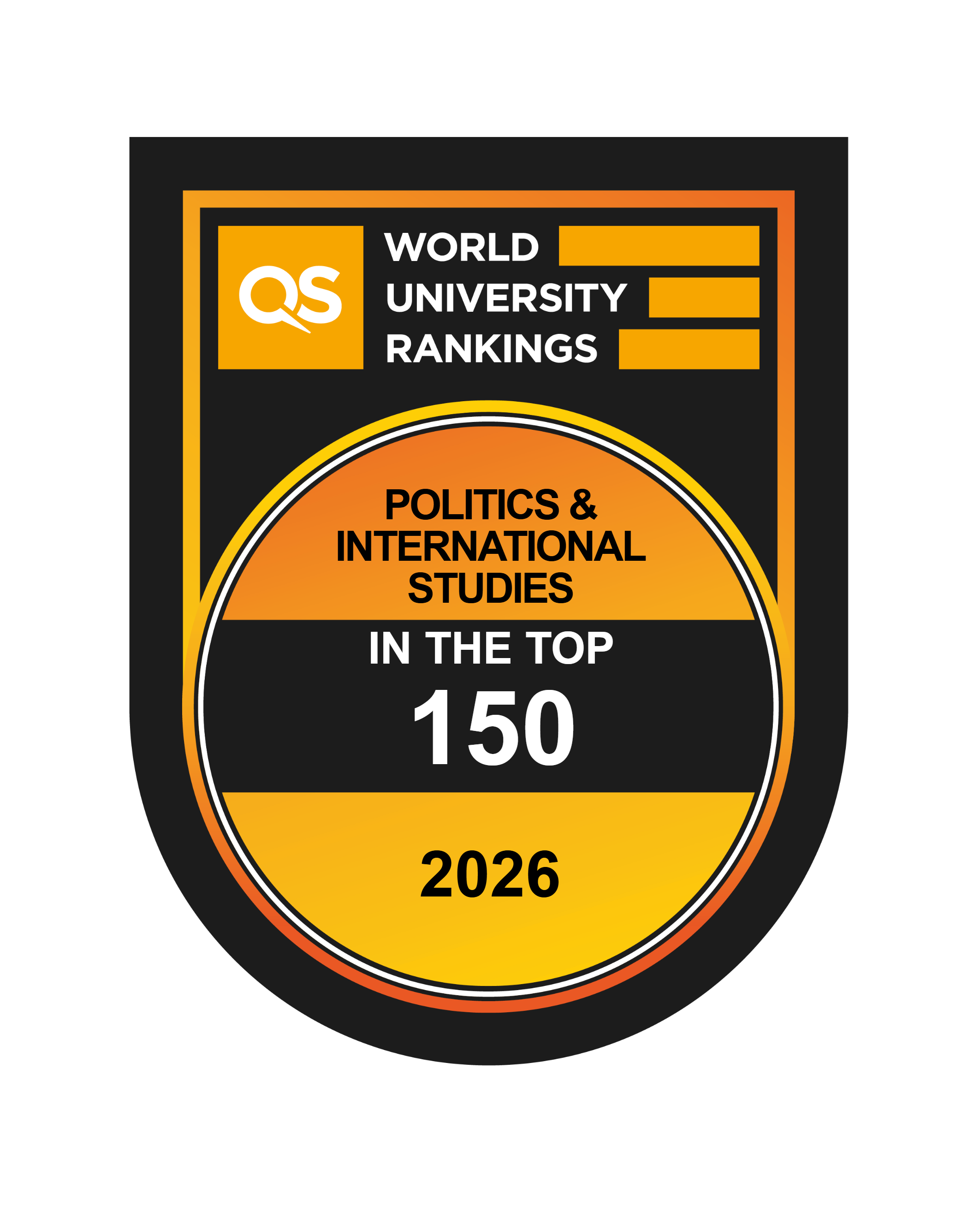
Our Political Science and International Relations subjects are ranked in the top 150 worldwide in the QS World University Rankings 2026.
The QS World University Rankings is an annual global publication that gives overall rankings and subject rankings for more than 1,500 universities worldwide.
Future careers
In general, PGDipPols graduates may work in political environments as well as in non-profits, NGOs, and government departments.
In particular, the PGDipPols gives you the expertise to work in:
- government
- public service and policy analysis
- international relations and diplomacy
- academic research or teaching
- journalism.
Government organisations, for example, employ graduates in policy, stakeholder relations, communications, and research analyst or advisory roles.
More career information
Find out more about careers.
The government careers website, Tahatū, offers more information about jobs, salaries, and current opportunities.
Scholarships
You may be able to get a scholarship to help fund your studies.
We have postgraduate and doctoral scholarships available, as well as specialised scholarships for different groups and subject areas. If nothing fits right now, something may suit you later.
We encourage you to apply. It's a straightforward process, and it could make a real difference.
Scholarships for Humanities and Social Sciences
-
This scholarship is for students undertaking or intending to undertake an Honours or Masters degree at Te Herenga Waka—Victoria University of Wellington in areas related to Peace Building or Peace Studies, Trust Building, Conflict Resolution, addressing Historical Injustice, Restorative Justice, Social Cohesion, Community building and promoting cross-cultural understanding, Change Making or Ethical Leadership.
-
The Brian Murray Fox Scholarship in History offers an opportunity to students who are intending to undertake their second, third or Honours year of their degree at Te Herenga Waka—Victoria University of Wellington in the year following application.
-
The Brian Murray Fox Scholarship in English Literature offers an opportunity to students who are intending to undertake their second, third or Honours year of their degree at Te Herenga Waka Victoria—University of Wellington in the year following application.
Scholarships for international students
We're currently offering a NZ$10,000 VUW Postgraduate International Scholarship to all eligible international students enrolling in a Master’s degree or Postgraduate Diploma programme.
Your scholarship will be processed automatically when your programme application is accepted, and the amount will be deducted from your tuition fees.
Other scholarships
We also have postgraduate and doctoral scholarships available, as well as specialised scholarships for different groups and subject areas. If nothing fits right now, something may suit you later.
We encourage you to apply. It's a straightforward process, and it could make a real difference.
Scholarships for Humanities and Social Sciences
-
This scholarship was established in 1980 by the former Prime Minister of New Zealand, the Rt. Hon. Sir John Marshall, GBE, CH, BA, LLM, Hon. LLD, to encourage the study of Political Science at Te Herenga Waka - Victoria University of Wellington. The Scholarship was extended to include International Relations.
-
This scholarship was established to encourage students to complete a major in Language Sciences at Te Herenga Waka - Victoria University of Wellington, and continue to further study or careers in this field.
-
This scholarship is to assist students in the last year of their first Bachelors degree at Victoria University of Wellington. The scholarship fund will be awarded equally between male and female students.
Join our postgraduate community
The Postgraduate Students’ Association provides a voice for you on campus and information on studying at Te Herenga Waka—Victoria University of Wellington.
Postgraduate Students’ Association
MAI ki Pōneke
MAI ki Pōneke are part of an international network of Māori and Indigenous postgraduate students. They provide advice, support, and information to Indigenous postgraduate students of all levels, as well as those thinking about enrolling.
Why Wellington
As New Zealand’s political capital, Wellington is the seat of power. That makes it perhaps the best place in the country to study politics.
Here you can visit the Beehive, have lunch in Parliament grounds, attend Question Time, and see the rough and tumble of politics-in-the-making. The University's Wellington location and strong ties with the public sector make it easier to build networks through collaborative projects, policy seminars, and internships with policy agencies.
You’ll have the chance to listen to guest lectures from leaders in the public service, policy professionals, and government ministers.
Further research or study
If you do well in your Diploma, you may be able to convert to a Master of Political Science (MPols). You wouldn’t need to repeat the coursework they share, as you’ll have already met the coursework requirements for the Master’s degree in your Diploma study.
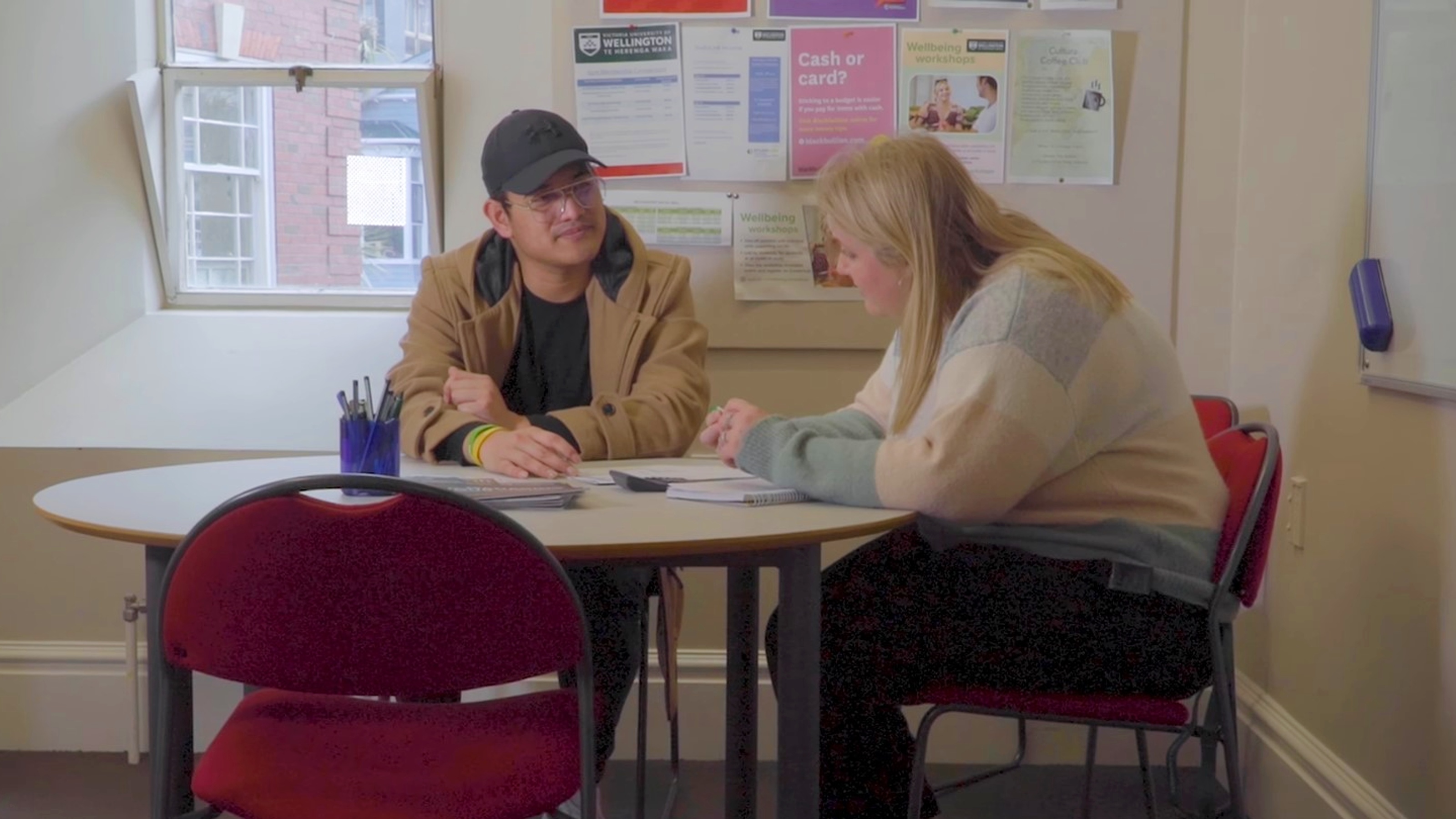
Get help to manage your finances
We can help you:
- budget your money
- manage your student loan or allowance
- work out your accommodation payment schedule.
If you’re facing financial difficulties, we can help you apply for the Hardship Fund.
You may be eligible for government or community support, too.
Apply for a New Zealand study visa
You’ll need to apply for a study visa if you plan to study with us as an international student.
You should apply for your visa after you’ve received your Offer of Place, and before you come to New Zealand.