

Succeed in senior leadership
The Executive MBA is an internationally recognised qualification that equips you to succeed in senior leadership roles in business or government.
Study intensively or part time, with structures designed to fit around your work and other commitments. Our face-to-face teaching format will keep you engaged and connected. You’ll build valuable networks with leading academics, fellow students, and business professionals.
Along with practical skills, you’ll develop the strategic judgement and analytical capability you need to lead in complex environments—and take your career to the next level.
International recognition
Wellington School of Business and Government is among the top 1% of business schools worldwide that hold the ‘Triple Crown’ of international business education accreditations. By studying here, you can be confident your qualification will be recognised globally for its quality.
Who can study for the EMBA
The Executive MBA is designed for mid-career professionals on a leadership pathway.
To get into this programme, you need:
- a Bachelor’s degree or a Postgraduate Certificate in Business Administration, with at least a B average.
- at least five years of relevant work experience—preferably in a leadership role.
We may be able to waive some of these requirements, depending on your background.
What you’ll learn
In the EMBA, you’ll develop practical skills that you can immediately put to use in your professional life. You’ll build specialist knowledge to maximise your career potential.
Core courses
You’ll complete eight core courses that will give you a solid grounding in key business opportunities and issues. Courses cover topics like:
- executive leadership
- culture and change
- corporate financial management
- strategic marketing
- digital transformation.
Elective courses
You’ll complete four elective courses from a range of topics, including innovation and entrepreneurship, negotiation and dispute resolution, and strategic management.
Professional development
Each core course in the EMBA includes professional development activities focused on personal growth, leadership, business, and technology skills. Typically, your core course timetable is split equally between professional development and class time.
Activities for professional development could include:
- full-day workshops
- individual coaching sessions
- consultancy projects with not-for-profit organisations
- guest lectures from industry experts
- an international study tour.
How you’ll study
Core classes are held in person on Fridays and Saturdays across all three trimesters. You’ll learn through interactive, face-to-face teaching that creates deeper engagement and stronger connections than online study.
Choose from a wide range of electives across our professional Master’s programmes—you’ll be able to tailor your studies to your needs and apply what you’re learning to your professional life right away.
Timetables vary for elective courses, depending on the subject and the Master's programme they are taken from.
Full- or part-time study
There are two ways to study the EMBA, each with a different workload. Choose the approach that gives you the best balance for your work and other life commitments.
Full-time
- 3–4 courses per trimester
- 4 trimesters duration
- Complete in about 1.5 years
Part-time
- 2 courses per trimester
- 6 trimesters duration
- Complete in 2 years
- Available to domestic students only
Workload
The average workload for each course is about 10 to 12 hours per week, including lectures, workshops, and self-directed study. This will vary from week to week, depending on your readings, assignments, and workshops.
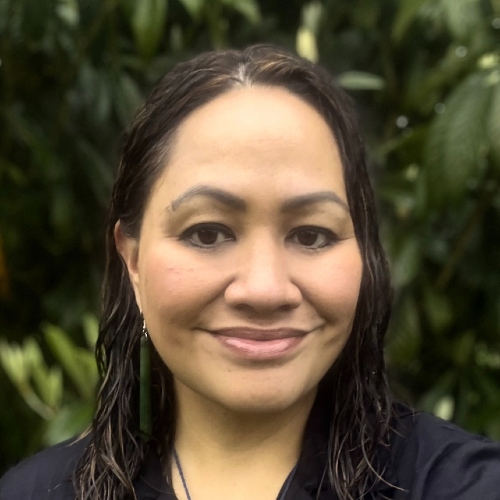
One of the most gratifying experiences was the cohort interaction. Collaborating with diverse, talented professionals broadened my outlook and fostered lasting connections.
Qualification support and advice
We can help you match your interests and career goals with the right course of study.
Get in touch and a copy of our prospectus, or get in touch directly with our Recruitment Manager, Jade Chiam.
Email: jade.chiam@vuw.ac.nz

Entry requirements
Entry requirements for domestic students
- Requirements for students who completed university in:
If you live in New Zealand and are a citizen or permanent resident of New Zealand or Australia, you're considered a domestic student.
Some citizens of the Cook Islands, Niue, and Tokelau may automatically hold New Zealand citizenship.
Diplomatic residents living in New Zealand are also regarded as domestic students.
To be accepted into this qualification, you need:
1. (a) Before enrolment, a candidate for the EMBA degree shall have:
(i) completed a Bachelor’s degree or the PGCertBusAdmin, and gained an average of B or better in the qualification; and
(ii) had at least five years of relevant work experience at a level acceptable to the EMBA director; and
(iii) been accepted by the EMBA director as capable of proceeding with the proposed course of study.
(b) Requirement (a)(i) may be waived by the Associate Dean (Students) of the Wellington School of Business and Government for a candidate who has had extensive practical, professional, or scholarly experience of an appropriate kind.
Qualification requirements
Excerpt from the regulations for the EMBA
2. (a) Except as provided in (b) or in sections 4 and 5, the course of study for the EMBA shall courses worth 180 points, including:
Part 1: EMBA 501–507
Part 2: Integrative Strategic Consultancy (EMBA 508) or 509; 60 further points from the Schedule to the EMBA regulations, or approved 400- or 500-level substitutes
(b) A candidate who has sufficient mastery of the material contained in any required course, whether through appropriate professional or scholarly experience or through passing an equivalent course for a completed qualification, may be permitted by the director to replace it with a further elective from the Schedule to the EMBA Regulations.
3. At the discretion of the associate dean, a candidate who holds the PGCertBusAdmin, PGDipBusAdmin, PGDipHRM, PGDipMKT, or CertMS may subsequently credit those courses to the EMBA, provided the candidate abandons the certificate or diploma upon being awarded the EMBA.
4. (a) A candidate shall normally be enrolled for at least three trimesters and shall complete the degree within four years of enrolling in any course credited to the qualification. The director may extend the maximum period in special cases.
(b) A candidate who has failed two or more courses, or any course twice, may continue in the programme only with the permission of the associate dean.
Related qualifications
Our business administration qualifications form a tiered family. They’re ‘staircased’, so courses you complete for a smaller qualification can count towards a larger one.
- Executive MBA (180 points)—our flagship qualification, and the one most students enrol in
- Postgraduate Diploma in Business Administration (120 points)
- Postgraduate Certificate in Business Administration (60 points)
You can start with the Certificate or Diploma and apply to transfer to the Executive MBA later.
Choose the qualification with the entry requirements, time commitment, and career benefits that suit you best.
Find out more about our Postgraduate Business Administration.
Future careers
The Executive MBA prepares you for a changing work environment. It’s a powerful qualification, whether you’re aiming for an executive role or already have one.
The EMBA enhances your leadership impact, opens doors to senior roles, and substantially increases your earning potential. Many of our graduates are now C-suite business and public sector executives, both in New Zealand and overseas.
More career information
The government careers website, Tahatū, offers information about jobs, salaries, and current opportunities. Note that the Tahatū website is mainly aimed at school leavers and those in the early stages of their careers.
Scholarships
You may be able to get a scholarship to help fund your studies.
We have postgraduate and doctoral scholarships available, as well as specialised scholarships for different groups and subject areas. If nothing fits right now, something may suit you later.
We encourage you to apply. It's a straightforward process, and it could make a real difference.
Scholarships for business subjects
-
This scholarship is open to Pasifika students intending to enrol in a Postgraduate Certificate, Diploma or Master’s degree in Business at the Wellington School of Business and Government. Applicants are expected to have met the admissions requirements for the qualification of interest. Applicants will be assessed on merit however preference may be given to applicants experiencing financial hardship.
-
This scholarship is for students undertaking or intending to undertake an Honours or Masters degree at Te Herenga Waka—Victoria University of Wellington in areas related to Peace Building or Peace Studies, Trust Building, Conflict Resolution, addressing Historical Injustice, Restorative Justice, Social Cohesion, Community building and promoting cross-cultural understanding, Change Making or Ethical Leadership.
-
Applicants must be of Māori descent, identify as female, enrolled or intending to enrol full-time or part-time in an undergraduate or postgraduate programme at Wellington School of Business and Government. Grade point average (GPA) or grade point equivalent (GPE) of at least 6.00 is required.
Scholarships for international students
We’re currently offering a NZ$10,000 VUW Postgraduate International Scholarship to all eligible international students enrolling in a Master’s degree or Postgraduate Diploma programme.
Your scholarship will be processed automatically when your programme application is accepted, and the amount will be deducted from your tuition fees.
Other scholarships
We also have postgraduate and doctoral scholarships available, as well as specialised scholarships for different groups and subject areas. If nothing fits right now, something may suit you later.
We encourage you to apply. It’s a straightforward process, and it could make a real difference.
Scholarships for business subjects
-
This scholarship is open to Pasifika students intending to enrol in a Postgraduate Certificate, Diploma or Master’s degree in Business at the Wellington School of Business and Government. Applicants are expected to have met the admissions requirements for the qualification of interest. Applicants will be assessed on merit however preference may be given to applicants experiencing financial hardship.
-
In honour of Jonathan Nicholls (ACC's Head of Actuarial Services who passed away in early 2015), ACC wishes to promote the actuarial profession in much the same way that Jonathan did. ACC is dedicated to supporting Actuarial Science students and others looking to pursue a career in the actuarial profession.
-
This scholarship is to assist students in the last year of their first Bachelors degree at Victoria University of Wellington. The scholarship fund will be awarded equally between male and female students.
Join our postgraduate community
The Postgraduate Students’ Association provides a voice for you on campus and information on studying at Te Herenga Waka—Victoria University of Wellington.
Postgraduate Students’ Association
MAI ki Pōneke
MAI ki Pōneke are part of an international network of Māori and Indigenous postgraduate students. They provide advice, support, and information to Indigenous postgraduate students of all levels, as well as those thinking about enrolling.
Ask your employer for support
Pursuing postgraduate study can be a win-win for you and your employer. See some advice about asking your employer for support with your study.

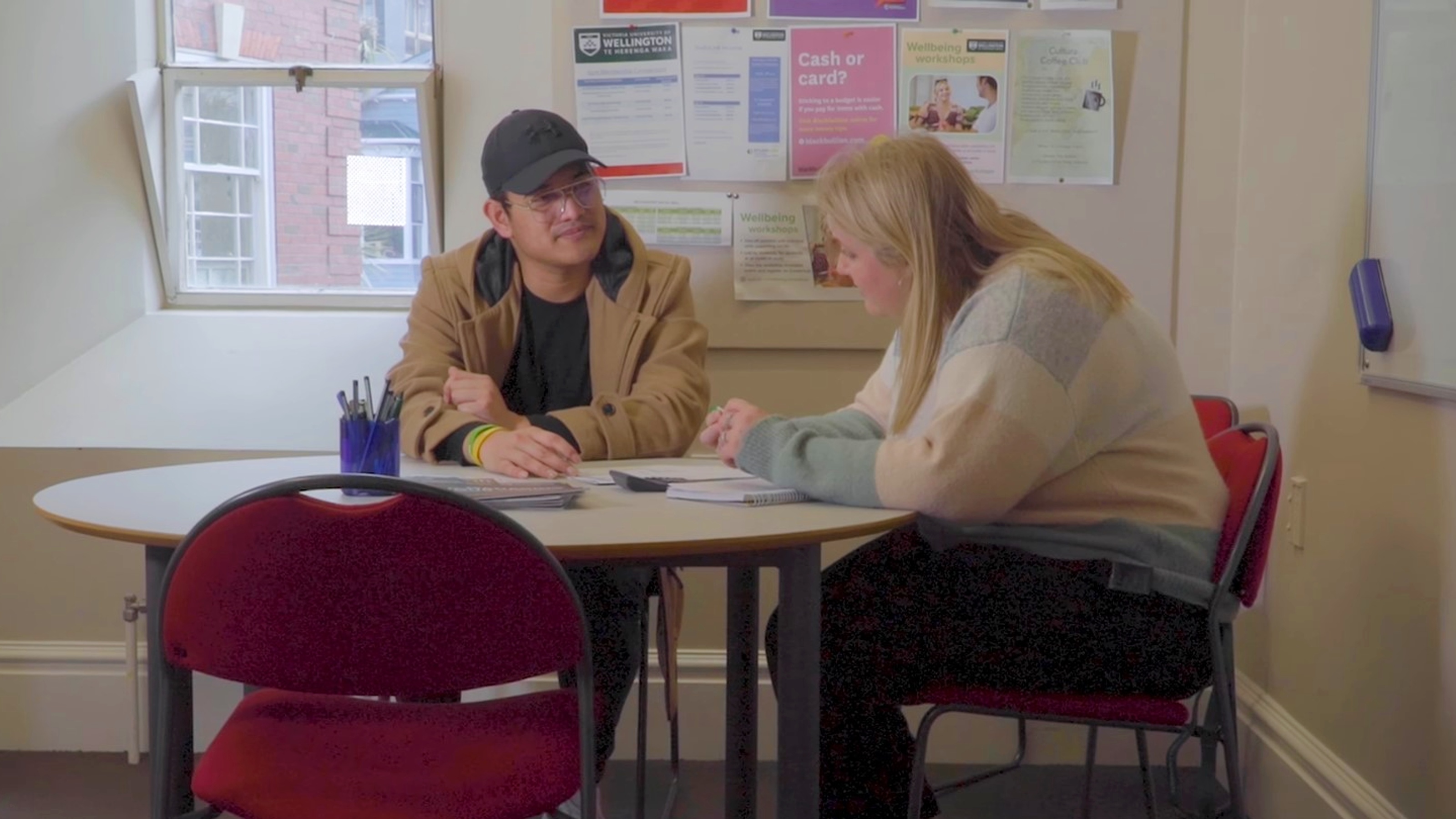
Get help to manage your finances
We can help you:
- budget your money
- manage your student loan or allowance
- work out your accommodation payment schedule.
If you’re facing financial difficulties, we can help you apply for the Hardship Fund.
You may be eligible for government or community support, too.
Apply for a New Zealand study visa
You’ll need to apply for a study visa if you plan to study with us as an international student.
You should apply for your visa after you’ve received your Offer of Place, and before you come to New Zealand.