

Advance your building science and construction skills
Bring your construction and building science knowledge and skills up to date with this graduate diploma.
You’ll learn about construction processes and building technology, and how to incorporate the principles of energy efficiency, lighting, and acoustics into construction. You’ll also learn about project management—how to organise teams, plan the construction process, and manage contractors and construction sites.
We have a range of new courses to build the qualification you need to go further. Choose between courses in architecture, building science, construction, construction law, interior architecture, landscape architecture, and urban and regional planning, as well as engineering, health, and science.
Who can study for this qualification
The GDipCBSc is designed for people with a background in architecture, construction, building science, engineering, or environmental science.
It suits you if you are:
- already working in construction or building consultancy and need a short, focused qualification to bring your skills and knowledge up to date
- interested in postgraduate-level study, such as with the Master of Building Science or the Master of Construction, and need a preparatory qualification first.
To enrol, you need a relevant Bachelor’s degree, such as a BAS, BBSc, or BConst. See the Requirements section below for more information.
What you’ll learn
This flexible diploma lets you deepen your knowledge in a specialist area or develop foundational skills in a new direction.
Choose from a wide range of relevant courses to build a unique programme of study, or focus on one of eight specialist areas.
Specialist subject areas
To specialise in a subject, take four courses in your chosen area.
Building Surveying
Help build homes and larger properties that are safe, efficient, and resilient. Understand New Zealand building codes, regulations, and standards. Identify and assess common building defects, and develop skills to evaluate and implement sustainable building practices.
Built and Natural Heritage Conservation
Understand heritage conservation principles and practices to preserve our architectural treasures and natural wonders. You’ll learn the art and science of conservation by combining traditional knowledge with modern techniques.
Construction Health and Safety
Learn how health and safety principles apply in the construction industry. Get the skills to promote a strong safety culture and advocate for the wellbeing of construction workers. Become an expert in safety related to hazardous materials, fire, excavation, and electrical equipment.
Construction Management
Learn to lead and manage complex construction projects—from skyscrapers to sustainable community housing. Know New Zealand’s building codes and regulations for compliance. Learn how new technologies boost innovation, efficiency, and sustainability in the industry.
Project Management
Learn to balance people, time, finances, and laws to ensure that construction projects flow smoothly. Gain skills in contract management and effective communication. Learn to navigate construction and environmental law, and understand issues around supply, demand, and competition.
Smart Cities and Digital Built Environments
Shape the future of our cities. Use digital technologies like AI, digital twins, and virtual reality to design intelligent buildings and infrastructure. Learn to plan, design, and manage the building of smart-built environments.
Sustainable Construction
Contribute to a more sustainable future—learn to incorporate sustainable practices into construction methods to create environmentally responsible and socially conscious buildings.
Sustainable Engineering Systems
Gain the practical, theoretical, and technical knowledge to design sustainable buildings. Study areas like energy-efficient systems, materials science, life-cycle analysis, and energy performance modelling.
Skills for the future of the construction industry
We design and update our courses in collaboration with the building and construction industry. The courses therefore cover key emerging technologies in the sector, such as:
- artificial intelligence
- virtual reality
- robotics
- drones
- building information modelling (BIM)
- building performance simulation.
How you’ll study
This is a 120-point diploma that you’ll complete over two trimesters of full-time study, or four trimesters if you’re a domestic student studying part time.
Classes are a mix of in-person learning, blended learning (online and in person), and block format.
Duration and workload
If you are studying full time, you can expect a workload of 40–45 hours a week. Part-time students will need to do around 20–23 hours of work a week.
A shorter qualification
If you want a shorter qualification you can complete sooner, a Graduate Certificate in Construction and Building Science might suit you best. Choose four courses instead of eight, and complete the Certificate in a single trimester of full-time study.
Qualification support and advice
We can help you match your interests and career goals with the right course of study.
If you’re a new student, talk to a Future Student Adviser through our enquiry form.
If you’re already studying with us, talk to Tītoko—Student Success.
For the research portion of your study, you’ll need a supervisor to help guide your research. Your programme coordinator will work with you to find the right person.

Entry requirements
Entry requirements for domestic students
- Requirements for students who completed secondary school in:
If you live in New Zealand and are a citizen or permanent resident of New Zealand or Australia, you're considered a domestic student.
Some citizens of the Cook Islands, Niue, and Tokelau may automatically hold New Zealand citizenship.
Diplomatic residents living in New Zealand are also regarded as domestic students.
To be accepted into this qualification, you need:
1. (a) Before enrolment, a candidate for the GDipCBSc shall have:
(i) completed a BAS, BBSc, or BConst degree or an equivalent qualification; and
(ii) been accepted by the Head of School as capable of proceeding with the proposed course of study.
(b) Requirement (a)(i) may be waived by the head of school for a candidate who has practical, professional, or scholarly experience that provides equivalent preparation.
Qualification requirements
Excerpt from the regulations for the GDipCBSc
2. (a) The personal course of study for the GDipCBSc shall consist of a coherent programme of study approved by the Associate Dean on the recommendation of the head of school. Except as provided in (b), it shall include at least 120 points from courses listed on the BAS, BBSc, BConst, BDI, MArch(Prof), MBildSc, MConst, MConsLaw, MIA, MLA or MURPlan schedules, of which at least 75 points shall be in courses numbered 300 or above.
(b) At the discretion of the Associate Dean, up to 30 points in the GDipCBSc may be replaced with approved courses from other programmes offered at this university.
3. (a) A candidate for the GDipCBSc shall be enrolled for at least two trimesters and shall complete the requirements of the diploma within four years of first enrolling in it.
(b) The Associate Dean may extend the maximum period in either (a) in special cases.
Specialisation requirements
Each of the eight specialist areas requires you to take four courses in addition to the programme requirements.
Specialisation subjects and requirements
Explore your subject options below.
GDipCBSc subjects
Building Surveying
Built and Natural Heritage Conservation
Construction Health & Safety
Construction Management
Project Management
Smart Cities and Digital Built Environments
Sustainable Construction
Sustainable Engineering System
No matching majors found.
Why Wellington
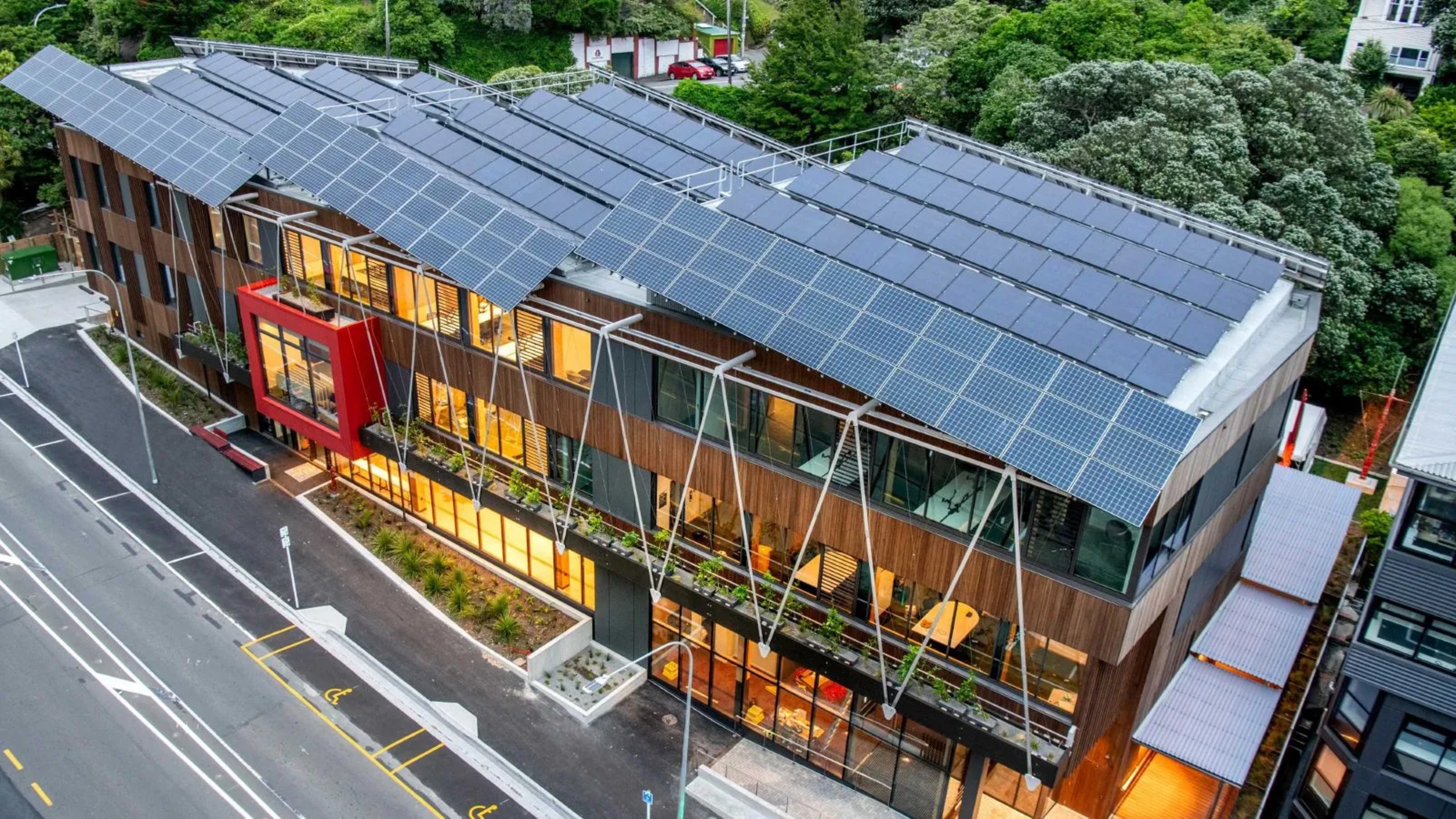
Wellington is a great place to study Construction and Building Science. New Zealand’s capital city accounts for a large share of national construction employment.
Thanks to Wellington’s geographical, climatic, and other challenges, you can expand your skills in building structures that withstand earthquakes, high winds, and flooding. You’ll apply locally developed building technology principles, and combine these with traditional knowledge and sustainable techniques.
And once you graduate, Wellington’s concentration of central government and regulatory bodies also offers unique opportunities for policy and regulatory careers unavailable in other cities.
Future careers
The GDipCBSc is an excellent way to to progress your career in the design and development of our built environment. It’s also a pathway to qualifications for management within the sector.
More career information
Find out more about careers in construction.
The government careers website, Tahatū, offers more information about jobs, salaries, and current opportunities.
Scholarships
You may be able to get a scholarship to help fund your studies.
We have postgraduate and doctoral scholarships available, as well as specialised scholarships for different groups and subject areas. If nothing fits right now, something may suit you later.
We encourage you to apply. It’s a straightforward process, and it could make a real difference.
Scholarships for Architecture
-
The fund, which was established at the time of the renovation of the C3 lecture theatre, is to assist a second-year student from any faculty in their studies at Te Herenga Waka—Victoria University of Wellington
-
Applicants must be female, New Zealand or Canadian citizens studying full time at 300 level BSc (Hons) and Master's by Coursework in any area of Science, including Architecture and Design at Te Herenga Waka—Victoria University of Wellington.
Scholarships for international students
We’re currently offering a NZ$10,000 VUW Postgraduate International Scholarship to all eligible international students enrolling in a Master’s degree or Postgraduate Diploma programme.
Your scholarship will be processed automatically when your programme application is accepted, and the amount will be deducted from your tuition fees.
Other scholarships
We also have postgraduate and doctoral scholarships available, as well as specialised scholarships for different groups and subject areas. If nothing fits right now, something may suit you later.
We encourage you to apply. It’s a straightforward process, and it could make a real difference.
Scholarships for Architecture
-
Applicants must be female, New Zealand or Canadian citizens studying full time at 300 level BSc (Hons) and Master's by Coursework in any area of Science, including Architecture and Design at Te Herenga Waka—Victoria University of Wellington.
-
These scholarships are for students of Pasifika ethnicity from Porirua or surrounding areas who are enrolling or intending to enrol in an undergraduate course in the School of Engineering and Computer Science at Te Herenga Waka—Victoria University of Wellington.
Join our postgraduate community
The Postgraduate Students’ Association provides a voice for you on campus and information on studying at Te Herenga Waka—Victoria University of Wellington.
Postgraduate Students’ Association
MAI ki Pōneke
MAI ki Pōneke are part of an international network of Māori and Indigenous postgraduate students. They provide advice, support, and information to Indigenous postgraduate students of all levels, as well as those thinking about enrolling.
Further research or study
After you finish your degree, there are plenty of postgraduate study options. You could focus on research or coursework, through a Master’s degree.
You’ll join a talented team of internationally recognised researchers doing innovative work.

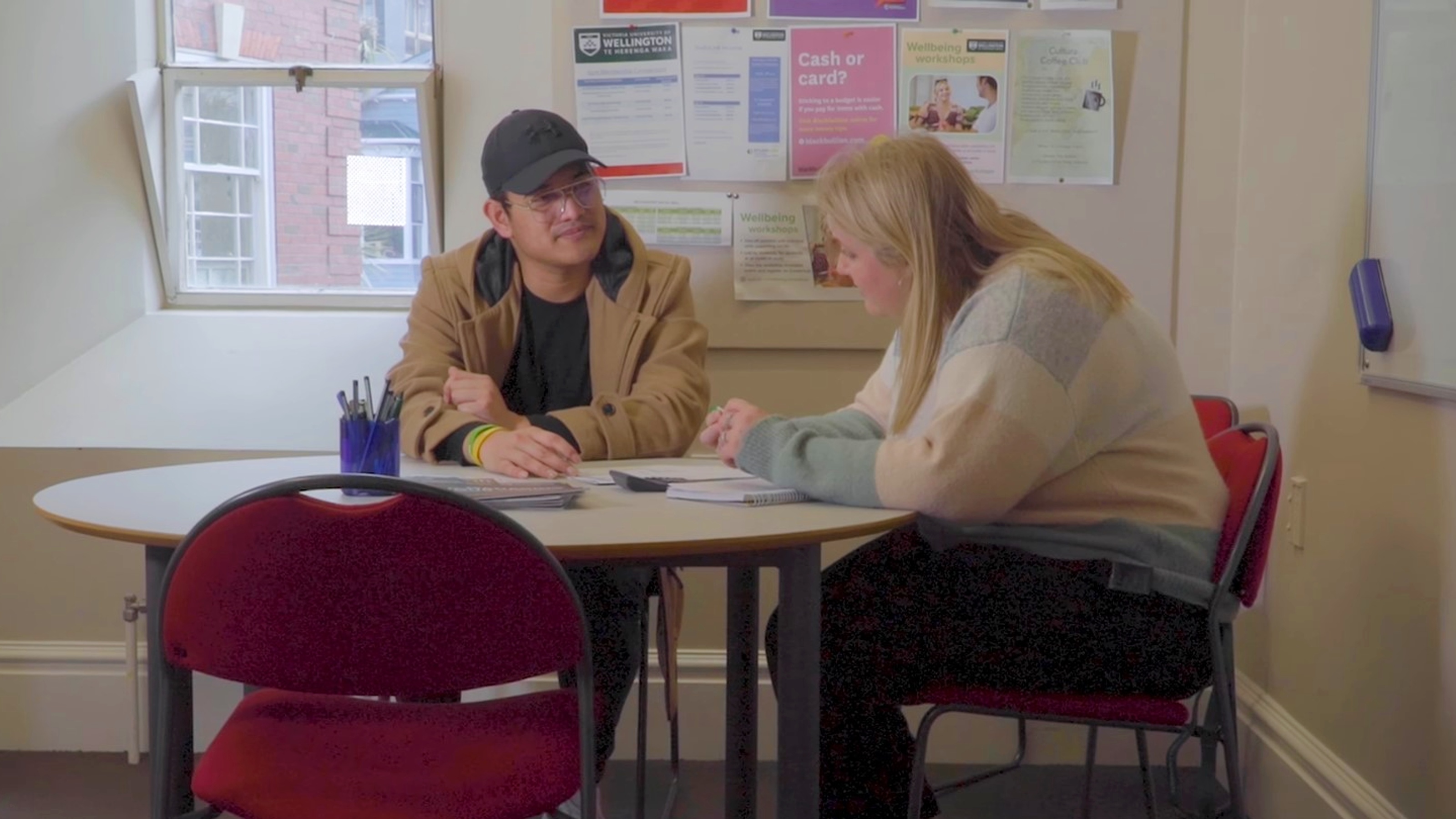
Get help to manage your finances
We can help you:
- budget your money
- manage your student loan or allowance
- work out your accommodation payment schedule.
If you’re facing financial difficulties, we can help you apply for the Hardship Fund.
You may be eligible for government or community support, too.
Apply for a New Zealand study visa
You’ll need to apply for a study visa if you plan to study with us as an international student.
You should apply for your visa after you’ve received your Offer of Place, and before you come to New Zealand.