

Channel your creativity into an arts career
Develop your arts practice while drawing on everything the creative capital has to offer. Our Master of Fine Arts (Creative Practice) (MFA(CP)) is a practical, industry-focused degree that will help you build new a new network of contacts in Wellington’s creative industries.
Advance your potential as a creative leader by developing mastery, craft, and high-level practical skills. Lead an ambitious creative project over 12 months of intensive study.
Depending on your chosen subject, you can explore visual narrative, sound, creating music, orchestral studies, film-making, or theatre performance and production. Whatever area you want to explore, you’ll be joining a community that values pushing the boundaries of creative practice.
Nick Veale, MFA(CP) Music graduate
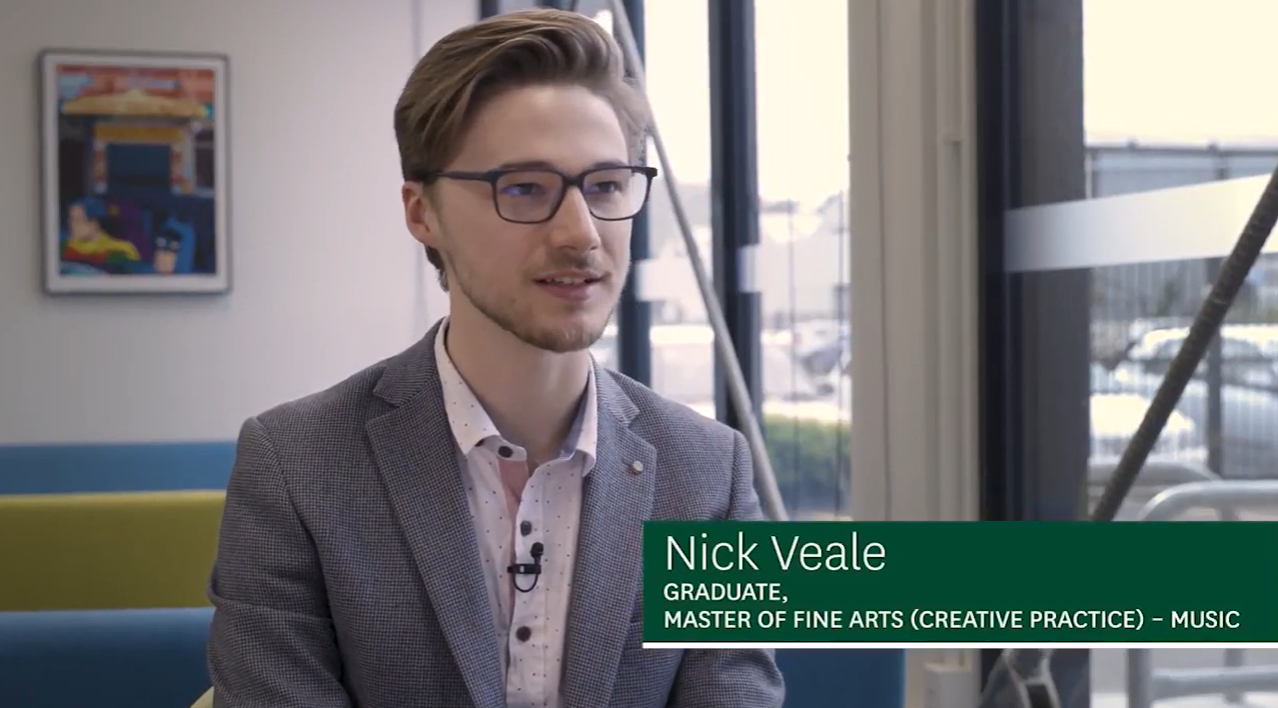
Evolve your artistry
Elevate your practice by focusing on an area that interests you. From documentary film, to television scores, graphic novels, game design, and performing arts, learn alongside other practising creatives.
Sharpen your technique, expand your toolkit, and find a voice that works on screen, stage, or page, or in the studio.
Check out past student work to get inspired:
Who can study for this qualification
You can study for an MFA(CP) if you have a Bachelor’s degree in a relevant subject. This includes:
- Creative Writing
- Design—illustration, game design, and animation
- Film—screen and media production
- Music/Sound—film scoring, orchestral performance, or audio post-production
- Theatre.
You don’t always need a Bachelor’s in one of these subjects to apply for the MFA(CP). People with degrees in other fields or a lot of professional experience may also be eligible.
Contact the relevant head of school to talk about your options.
What you’ll learn
The MFA(CP) builds on your undergraduate degree by mixing theory and research with practical experience to broaden your creative practice.
Your study will involve:
- Independent research—work on a creative project that showcases your abilities. Guided by your academic supervisor, you’ll push the boundaries in your field.
- Adaptive skills—learn how to work effectively on your own and as part of a team, essential skills for making a living in the arts.
- Industry experience—complete an internship with an arts organisation, getting valuable work experience and making professional connections.
- Wellington access—connect with our partners in the city’s creative scene, from world-class film studios, to the New Zealand Symphony Orchestra , design or game studios, and local performing arts groups.
- Creative community—join a group of talented, like-minded students in a space where you can share ideas, get inspired, and collaborate.
What you learn depends on the subject you choose to study:
How you’ll study
If you study full time, you'll complete the 180-point MFA(CP) in 12 months, which is three trimesters.
- The degree starts in February—Trimester 1 of the University year.
- The degree is delivered over three trimesters, which is one academic year.
- You’ll take three core courses:
- two courses with set hours and assignments
- one course which may include self-directed study, or working on a major creative work.
- You’ll take a further two courses, which are interactive and taught through lectures, case studies, and in-class presentations.
Degree content
The MFA(CP) combines study with practical experience and learning. To complete the degree, you’ll need to complete 180 points across three trimesters.
Course lengths vary—some run for a single trimester, while others span multiple trimesters.
Part 1
You’ll study two courses over one trimester. One course covers practical knowledge and skills you need to come up with, manage, and market a creative project.
For your second course—depending on your subject—you’ll either choose a course from 400-level or complete a compulsory course:
- Design—narrative design
- Film—digital cinema production
- Music/Sound—you can choose from courses specialising in film scoring or sound, orchestral performance, or approved Music or Performance courses at 400-level
- Theatre—multidisciplinary practice.
Part 2
You’ll study two courses, one of which is an approved, supervised work-based project at an arts organisation or creative business, which will take between two and three trimesters
Your second course will take one trimester. Depending on your subject, you’ll either choose a course from 400-level or complete a compulsory course:
- Design—visual and narrative development
- Film—commercial production
- Music/Sound—you can choose from courses specialising in film scoring and sound, orchestral performance, or approved Music courses at 400-level
- Theatre—multidisciplinary practice.
Part 3
You’ll complete a creative research project in your chosen subject, supervised by an academic staff member. This will take around three trimesters.
Where you’ll study
- Design students are based at our Te Aro campus and Te Auaha building.
- Film and most Music/Sound students are based at the Miramar Creative Centre. Students focused on orchestral studies are based at our Kelburn campus.
- Theatre students work in a fully equipped theatre space, workshop, and studio based at our Kelburn campus.
Qualification support and advice
We can help you match your interests and career goals with the right course of study.
If you’re a new student, talk to a Future Student Adviser through our enquiry form.
If you’re already studying with us, talk to Tītoko—Student Success.
For the research portion of your study, you’ll need a supervisor to help guide your research. Your programme coordinator will work with you to find the right person.

Get accepted into this programme
Entry requirements for domestic students
- Requirements for students who completed university in:
If you live in New Zealand and are a citizen or permanent resident of New Zealand or Australia, you're considered a domestic student.
Some citizens of the Cook Islands, Niue, and Tokelau may automatically hold New Zealand citizenship.
Diplomatic residents living in New Zealand are also regarded as domestic students.
To be accepted into this qualification, you need:
1. (a) Before enrolment, a candidate for the MFA(CP) degree shall have:
(i) completed an undergraduate degree at Te Herenga Waka—Victoria University of Wellington or, at the discretion of the Associate Dean (Students) of the Faculty of Humanities and Social Sciences, at another university; and
(ii) satisfied the prerequisites listed in section 2 of the MFA(CP) regulations for the subject to be presented (normally with a B grade average or better in the relevant courses), or been granted an exemption from those prerequisites by the relevant head of school; and
(iii) been accepted by the relevant head of school as capable of completing the proposed course of study.
(b) Requirement (a)(i) may be waived by the associate dean for a candidate who has had extensive practical, professional, or scholarly experience of an appropriate kind.
2. The subjects for the MFA(CP) and their prerequisites are as follows:
Subjects:
Film, Design, Music/Sound, Theatre
Prerequisites:
(a) (i) a major in the subject presented or another relevant subject (as determined by the relevant head of school); or
(ii) in the case of Design only, a BDI degree or GDipDI or another relevant qualification (as determined by the head of school); and
(b) a satisfactory portfolio, interview and/or audition.
Entry requirements
Your acceptance into this programme is based on your previous qualifications and experience.
Degree requirements
Excerpt from the regulations for the MFA(CP)
3. (a) Except as provided in (c) and in section 7, the course of study for the MFA(CP) degree shall consist of courses worth at least 180 points from the schedules to the MFA(CP), MDI, MDT, MUXD, BMus(Hons), and BA(Hons) regulations, including:
Part 1: Collaborative and Creative Project Management (ARTS 403) and 30 further approved 400-level points
Part 2: Internship (ARTS 490), 30 further approved 400-level points
Part 3: One of the following: Creative Project (DSDN 590), Creative Project (FILM 590), Creative Project (NZSM 590), Creative Project (THEA 590).
(b) Part 1 should normally be completed before a candidate proceeds to Part 2. Part 2 should normally be completed before a candidate proceeds to Part 3.
(c) Notwithstanding (b), a candidate who has completed courses corresponding to those in Part 1 or who has substantial academic or scholarly experience may, at the discretion of the head of school, omit Part 1 and be admitted directly to Part 2.
4. A candidate for the MFA(CP) shall normally be enrolled for at least three trimesters, and complete the degree within three years of first enrolling. The associate dean may extend the maximum period in special cases.
Future careers
The MFA(CP) provides you with practical skills and experience, which gives you career pathways in Aotearoa and abroad.
Throughout your study, you’ll develop exceptional technical skills along with skills in project management. Through your hands-on experience, you’ll get important skills relevant to your chosen field and access to networks in creative industries.
More career information
Find out more about careers in the creative sector.
The government careers website, Tahatū, offers more information about jobs, salaries, and current opportunities.
Scholarships
You may be able to get a scholarship to help fund your studies.
We have postgraduate and doctoral scholarships available, as well as specialised scholarships for different groups and subject areas.
Scholarships for postgraduate study
-
Applicants must be New Zealand citizens or permanent residents who have applied for the Master of Fine Arts in Creative Practice (MFA(CP)) within NZSM, will reside in Wellington during their studies, and have either completed an undergraduate performance degree on an orchestral instrument with a GPA of at least 7.0 at a New Zealand university or demonstrated equivalent professional experience.
-
Applicants will be current violin, viola or violoncello students, enrolled in the NZSM. A particular of the scholarship is to fund postgraduate study, travel, accommodation and other expenses incurred in the pursuit of such study, both within and outside New Zealand. The scholarship is available to both domestic and international students.
-
The Scholarship exists to attract and support cellists of outstanding ability and potential to study cello performance at NZSM, and to engage each recipient with the life, artistry, and legacy of Greta Ostova.
Scholarships for international students
We are currently offering a NZ$10,000 VUW Postgraduate International Scholarship to all eligible international students enrolling in a Master’s degree or Postgraduate Diploma programme.
Your scholarship will be processed automatically when your programme application is accepted, and the amount will be deducted from your tuition fees.
Other scholarships
We also have postgraduate and doctoral scholarships available, as well as specialised scholarships for different groups and subject areas.
Scholarships for postgraduate study
-
Applicants will be current violin, viola or violoncello students, enrolled in the NZSM. A particular of the scholarship is to fund postgraduate study, travel, accommodation and other expenses incurred in the pursuit of such study, both within and outside New Zealand. The scholarship is available to both domestic and international students.
-
The Scholarship exists to attract and support cellists of outstanding ability and potential to study cello performance at NZSM, and to engage each recipient with the life, artistry, and legacy of Greta Ostova.
-
Applicants must be female, New Zealand or Canadian citizens studying full time at 300 level BSc (Hons) and Master's by Coursework in any area of Science, including Architecture and Design at Te Herenga Waka—Victoria University of Wellington.
Join our postgraduate community
The Postgraduate Students’ Association provides a voice for you on campus and information on studying at Te Herenga Waka—Victoria University of Wellington.
Postgraduate Students’ Association
MAI ki Pōneke
MAI ki Pōneke are part of an international network of Māori and Indigenous postgraduate students. They provide advice, support, and information to Indigenous postgraduate students of all levels, as well as those thinking about enrolling.
Why Wellington
Study in the creative people and connect with leaders in the arts industry. Out of any city in Aotearoa New Zealand, Wellington has the highest percentage of its workforce employed in the creative sector—according to the Infometrics Creativity Index.
Hone your craft while connecting with those leading the creative industries in Aotearoa by making the most of our partnerships with national and world-leading organisations.
Master of Fine Arts (Creative Practice) film trailers
Trailers from our Master of Fine Arts (Creative Practice) film students.

Academic staff research areas
Ewan Clark

Lecturer (Teaching) in Composition
Zach Dodson

Associate Professor
Kerryn Palmer
Senior Lecturer (Teaching)
Paul Wolffram
Associate Professor
Get help to manage your finances
We can help you:
- budget your money
- manage your student loan or allowance
- work out your accommodation payment schedule.
If you’re facing financial difficulties, we can help you apply for the Hardship Fund.
You may be eligible for government or community support, too.
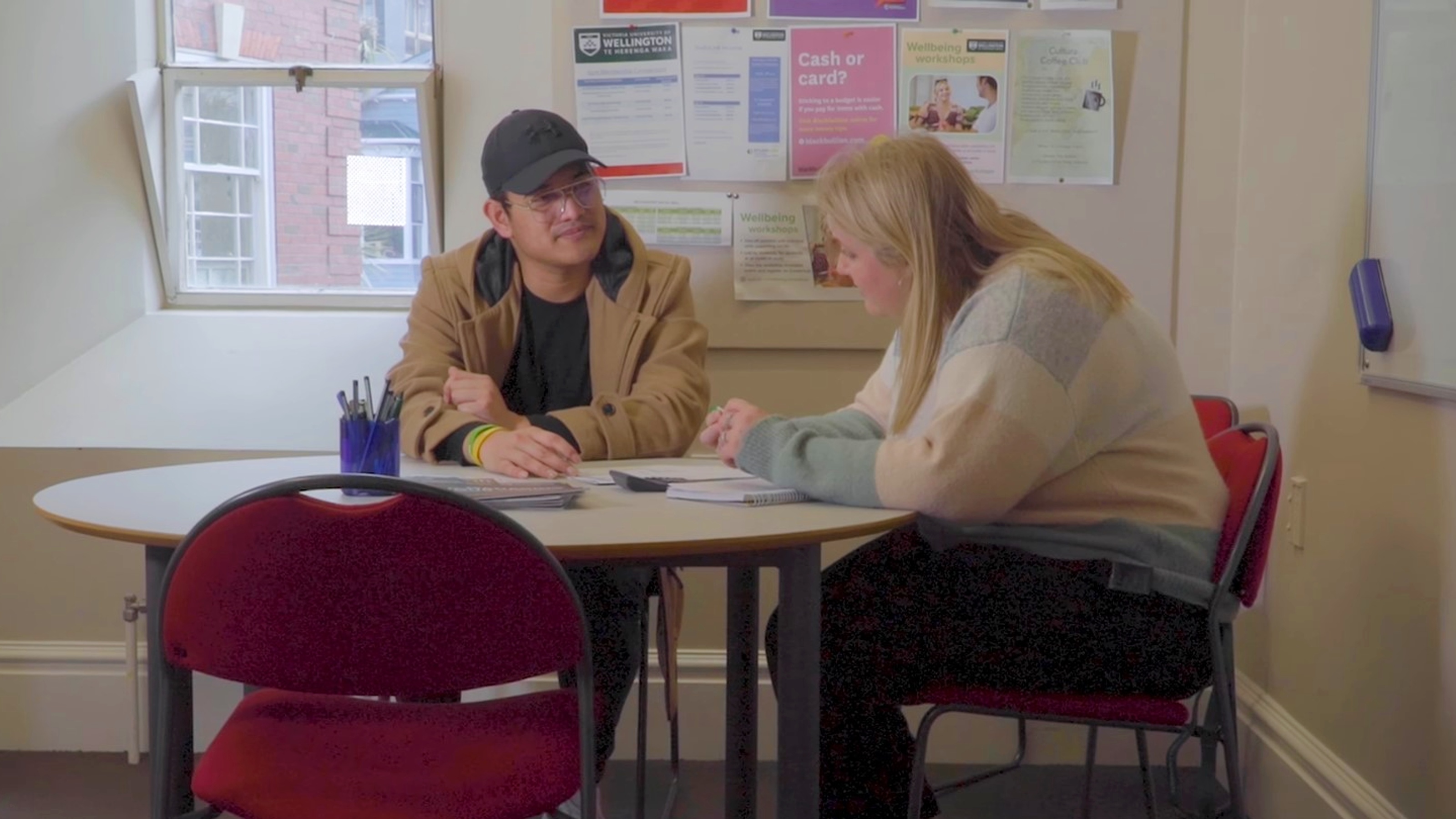
Apply for a New Zealand study visa
You’ll need to apply for a study visa if you plan to study with us as an international student.
You should apply for your visa after you’ve received your Offer of Place, and before you come to New Zealand.