
Find creative solutions to global issues
Our Master of Global Studies prepares you to engage with global challenges. Further develop the analytical skills and knowledge essential for multi-dimensional careers in today’s world.
You’ll approach global problems from many perspectives. Engage with today’s issues like human rights, health, environmental sustainability, global business, economics, and cultures and identities. Explore key concepts like globalisation, inequality, gender equity, and Indigenous sovereignty.
This degree suits graduates from a range of backgrounds. You’ll build your creative thinking skills, and your ability to work with others to find creative solutions to pressing global problems. Prepare for careers in areas like foreign affairs and diplomacy, human services, and international media.
Who can study for this qualification
The MGS suits graduates from a wide range of backgrounds, including arts, social sciences, and environmental studies. It is a good fit for you if:
- you’re a recent graduate and want to deepen your expertise for a career in (for example) global business or diplomacy
- you’re already working and want to accelerate your career or change direction.
It’s a good option if you want a Master’s degree with a focus on professional skills rather than research.
You don’t need an Honours degree to enrol. You need a Bachelor’s degree in a relevant subject. See the requirements section below for all the entry requirements.
What you’ll learn
Every student takes four course courses that lay a foundation for their chosen study pathway.
Your core courses emphasise plural knowledge systems—in particular, the importance of mātauranga Māori and other interdisciplinary Indigenous perspectives within global contexts.
Your courses cover:
- conceptual and ethical questions in Global Studies
- how cultural, political, economic, and ecological systems intersect in the context of globalisation, deglobalisation, and shifting power relations.
- foundational social and cultural theory that informs efforts towards transformative change
- how prominent thinkers across a range of disciplines frame and try to address pressing global challenges.
- intercultural skills
- practicing the advanced intercultural skills you‘ll need for work in or from Aotearoa New Zealand, and to work within multicultural organisations.
How you’ll study
The 180-point Master of Global Studies is a cross-disciplinary qualification. It gives you a structured learning framework with the flexibility to tailor your studies to your interests and career goals.
Your study has two components:
- Core coursework
- Practical project or research work according to your chosen study pathway (see below).
We offer four study pathways.
Research project
Pursue an individual research project on a Global Studies topic, supported by a supervisor. Deliver a research proposal and a 15-minute conference-style presentation on your proposed research, then deliver an 8,000-word research paper.
Internship
Take a placement with a public sector agency, non-governmental organisation, or private sector establishment and complete a supervised work-based project focusing on a global issue or issues.
Dissertation
Complete a 60-point dissertation Complete an individual research project in relation to a Global Studies topic. Get support from a supervisor and write up your research as an 18,000-word dissertation.
Thesis
Half your study—90 points—is by research thesis. You’ll complete an in-depth individual research project on an approved Global Studies topic of your choice. A supervisor will support and guide your work.
- The degree starts in February, which is Trimester 1 of the university year.
- You’ll complete the MGS in three to four trimesters—12 to 18 months—of full-time study.
- Classes are taught in person, on campus. You may be able to attend some courses online—contact the school before you enrol.
- You take core courses in trimesters 1 and 2, and complete the capstone course and a research project, dissertation, or internship in your final trimester.
Learning methods that mirror professional practice
The degree is designed so that the lessons you learn in the classroom today, you can use in the workplace tomorrow. We use assessment methods like group presentations, debating, and industry projects to replicate working environments and build your practical, applicable skills. Your courses are interactive and taught through lectures, tutorials, and in-class presentations.
Part-time study options
If you’re a domestic student studying part time, you can complete the degree over two years, which is six to eight trimesters.
A tiered family of qualifications
We offer three qualifications in Postgraduate Global Studies:
- Master of Global Studies
- Postgraduate Diploma
- Postgraduate Certificate
These qualifications are ‘staircased’—they allow movement in both directions.
If you begin by enrolling in the Certificate or Diploma programme, you may be able to continue on to complete a Master's degree. Or if you enrol in the Master's but can't complete it for some reason, you may have completed enough courses to graduate with the Certificate or Diploma.
Qualification support and advice
We can help you match your interests and career goals with the right course of study.
If you’re a new student, talk to a Future Student Adviser through our enquiry form.
If you’re already studying with us, talk to Tītoko—Student Success.
For the research portion of your study, you’ll need a supervisor to help guide your research. Your programme coordinator will work with you to find the right person.

Entry requirements
Entry requirements for domestic students
- Requirements for students who completed university in:
If you live in New Zealand and are a citizen or permanent resident of New Zealand or Australia, you're considered a domestic student.
Some citizens of the Cook Islands, Niue, and Tokelau may automatically hold New Zealand citizenship.
Diplomatic residents living in New Zealand are also regarded as domestic students.
To be accepted into this qualification, you need:
1. (a) Before enrolment, a candidate for the MGS degree shall have:
(i) completed a Bachelor’s degree in a relevant subject, with a B grade average or better in at least 60 points of relevant courses at 300 level*; and
(ii) been accepted by the MGS Programme Director as capable of completing the proposed course of study.
* Note: relevant subjects may include but are not limited to Anthropology, Asian Studies, Communication, Development Studies, Economics, Environmental Science, Environmental Studies, Environmental Humanities, Gender Studies, Geography, Global Studies, History, Indigenous Studies, Intercultural Communication, International Relations, Law, Languages and Cultures, Linguistics, Pacific Studies, Philosophy, Political Science, Psychology, Public Policy, Religious Studies, Sociology.
(b) Requirement (a)(i) may be waived by the Associate Dean (Students) in the Faculty of Humanities and Social Sciences for a candidate who has had extensive practical, professional or scholarly experience that provides an equivalent level of preparation.
Qualification requirements
Excerpt from the regulations for the MGS
2. The personal course of study for the MGS degree shall consist of 180 points in a coherent programme of study approved by the Programme Director.
3. (a) Except as provided in section 5, the course of study for the MGS degree shall consist of the following courses from the Schedule to the MGS Regulations.
(i) Concepts and Challenges in Global Studies (GLBL 401), GEOG 402, Intercultural Communication and Professional Practice (ICAT 403)
(ii) Capstone Global Studies in Practice Project (GLBL 501)
(iii) Either Global Studies Dissertation (GLBL 593), or: one course from (Global Impact Internship (GLBL 502), Global Studies Research Project (GLBL 503), ICAT 502, ICAT 503) and a further 30 pts from the MGS Schedule
(iv) 30 further pts from the MGS Schedule
(b) With the approval of the Programme Director, courses listed in 3(a) (iii) and (iv) may be replaced by Global Studies Thesis (GLBL 595).
4. (a) A candidate for the MGS shall normally be enrolled for at least three trimesters, and complete the degree within three years of first enrolling. The Associate Dean may extend the maximum period in special cases.
(b) A candidate who passes Concepts and Challenges in Global Studies (GLBL 401), GEOG 402, Intercultural Communication and Professional Practice (ICAT 403) and 60 further points of the MGS, and does not proceed to complete the degree may be awarded a Postgraduate Diploma in Global Studies (PGDipGS).
(c) A candidate who completes Concepts and Challenges in Global Studies (GLBL 401), GEOG 402 and 30 further points of the requirements of the MGS, and does not proceed to complete the degree may be awarded a Postgraduate Certificate in Global Studies (PGCertGS).
Globally ranked
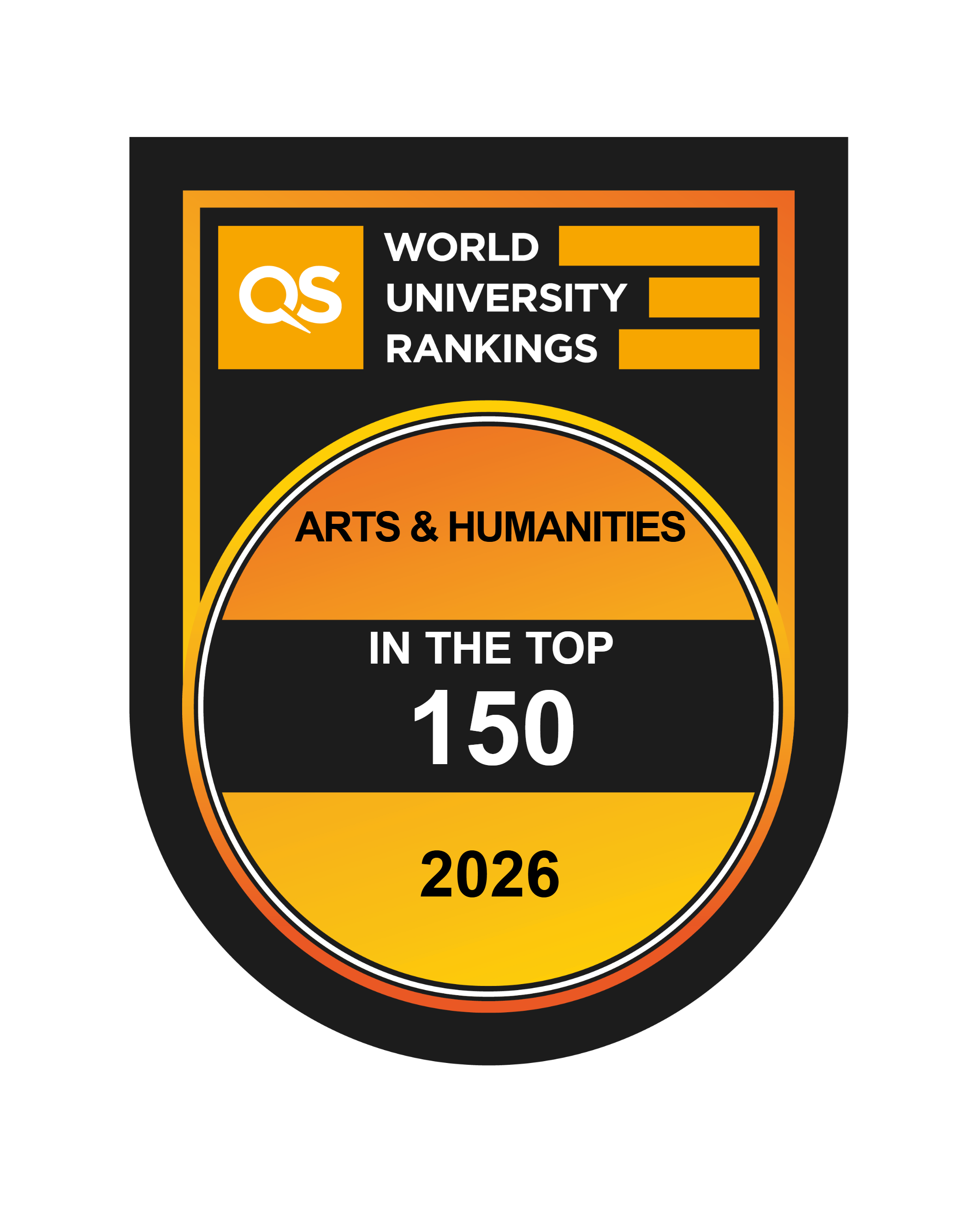
We're ranked within the top 150 universities in the world in the QS World University Rankings 2026 for key areas of Global Studies: Politics and International Relations, Development Studies, and Geography.
Our History, Modern Languages, Philosophy, Earth Sciences, Social Policy and Administration, and Sociology subjects all rank in the top 150 globally.
The QS World University Rankings is an annual global publication that gives overall rankings and subject rankings for more than 1,500 universities worldwide.
Future careers
The MGS prepares you for careers where the ability to work across disciplines, cultures, and sectors is useful in professional contexts.
For example, your study will give you the interdisciplinary and intercultural abilities for positions in industries and institutions within:
- foreign affairs and diplomacy
- policy and research
- global health
- advocacy, social entrepreneurship, and civil society
- journalism, communications, and international media
- tourism, hospitality, and cultural industries
- teaching—with further postgraduate study.
More career information
Find out more about global careers.
The government careers website, Tahatū, offers more information about jobs, salaries, and current opportunities.
Scholarships
You may be able to get a scholarship to help fund your studies.
We have postgraduate and doctoral scholarships available, as well as specialised scholarships for different groups and subject areas. If nothing fits right now, something may suit you later.
We encourage you to apply. It's a straightforward process, and it could make a real difference.
Scholarships for Humanities and Social Sciences
-
This scholarship is for students undertaking or intending to undertake an Honours or Masters degree at Te Herenga Waka—Victoria University of Wellington in areas related to Peace Building or Peace Studies, Trust Building, Conflict Resolution, addressing Historical Injustice, Restorative Justice, Social Cohesion, Community building and promoting cross-cultural understanding, Change Making or Ethical Leadership.
-
The Brian Murray Fox Scholarship in History offers an opportunity to students who are intending to undertake their second, third or Honours year of their degree at Te Herenga Waka—Victoria University of Wellington in the year following application.
-
The Brian Murray Fox Scholarship in English Literature offers an opportunity to students who are intending to undertake their second, third or Honours year of their degree at Te Herenga Waka Victoria—University of Wellington in the year following application.
Scholarships for international students
We are currently offering a NZ$10,000 VUW Postgraduate International Scholarship to all eligible international students enrolling in a Master’s degree or Postgraduate Diploma programme.
Your scholarship will be processed automatically when your programme application is accepted, and the amount will be deducted from your tuition fees.
Other scholarships
We also have postgraduate and doctoral scholarships available, as well as specialised scholarships for different groups and subject areas. If nothing fits right now, something may suit you later.
We encourage you to apply. It's a straightforward process, and it could make a real difference.
Scholarships for Humanities and Social Sciences
-
The purpose of the award is to assist postgraduate (full-time or part-time) students in the study of a Master’s of Linguistics, Applied Linguistics or TESOL by coursework at Te Herenga Waka–Victoria University of Wellington. Applicant will be assessed on the basis of academic merit. Relevant prior experience may also be taken into account.
-
This scholarship has been established by the School of Linguistics and Applied Language Studies.
-
The purpose of this scholarship is to encourage postgraduate study of French and German language at Te Herenga Waka—Victoria University of Wellington.
Join our postgraduate community
The Postgraduate Students’ Association provides a voice for you on campus and information on studying at Te Herenga Waka—Victoria University of Wellington.
Postgraduate Students’ Association
MAI ki Pōneke
MAI ki Pōneke are part of an international network of Māori and Indigenous postgraduate students. They provide advice, support, and information to Indigenous postgraduate students of all levels, as well as those thinking about enrolling.
Why Wellington
Wellington—New Zealand’s capital city—is a great place to take Global Studies. It’s a globally connected city that hosts dozens of government agencies, and international businesses and organisations, that shape New Zealand’s engagement with the world.
You’ll benefit from networking opportunities and gain international business insights in a supportive, multicultural environment.
Wellington is also a safe and accessible city that welcomes different cultures, languages, and traditions. Crime rates are low, public transport is excellent, and the city centre is walkable and compact—so your travel times between home and lectures are short.
Professional doctorate or PhD?
If you're aiming for an academic research career, our three-year Doctor of Philosophy (PhD) may suit you better than a professional doctorate.
Both professional doctorates and the PhD are research degrees, but they differ in focus:
- Professional doctorates centre your research on your own professional practice.
- The PhD gives you the freedom to explore an academic perspective, across a much wider range of topics, themes, and subject areas.
Academic staff research areas
Stephen Epstein

Head of School
April Henderson

Presenter
Sally Hill

Professor of Global Studies
Sarah Leggott

Head of School
Giacomo Lichtner
Professor
Katharine McKinnon
Professor
Marco Sonzogni

Professor
Get help to manage your finances
We can help you:
- budget your money
- manage your student loan or allowance
- work out your accommodation payment schedule.
If you’re facing financial difficulties, we can help you apply for the Hardship Fund.
You may be eligible for government or community support, too.

Apply for a New Zealand study visa
You’ll need to apply for a study visa if you plan to study with us as an international student.
You should apply for your visa after you’ve received your Offer of Place, and before you come to New Zealand.