
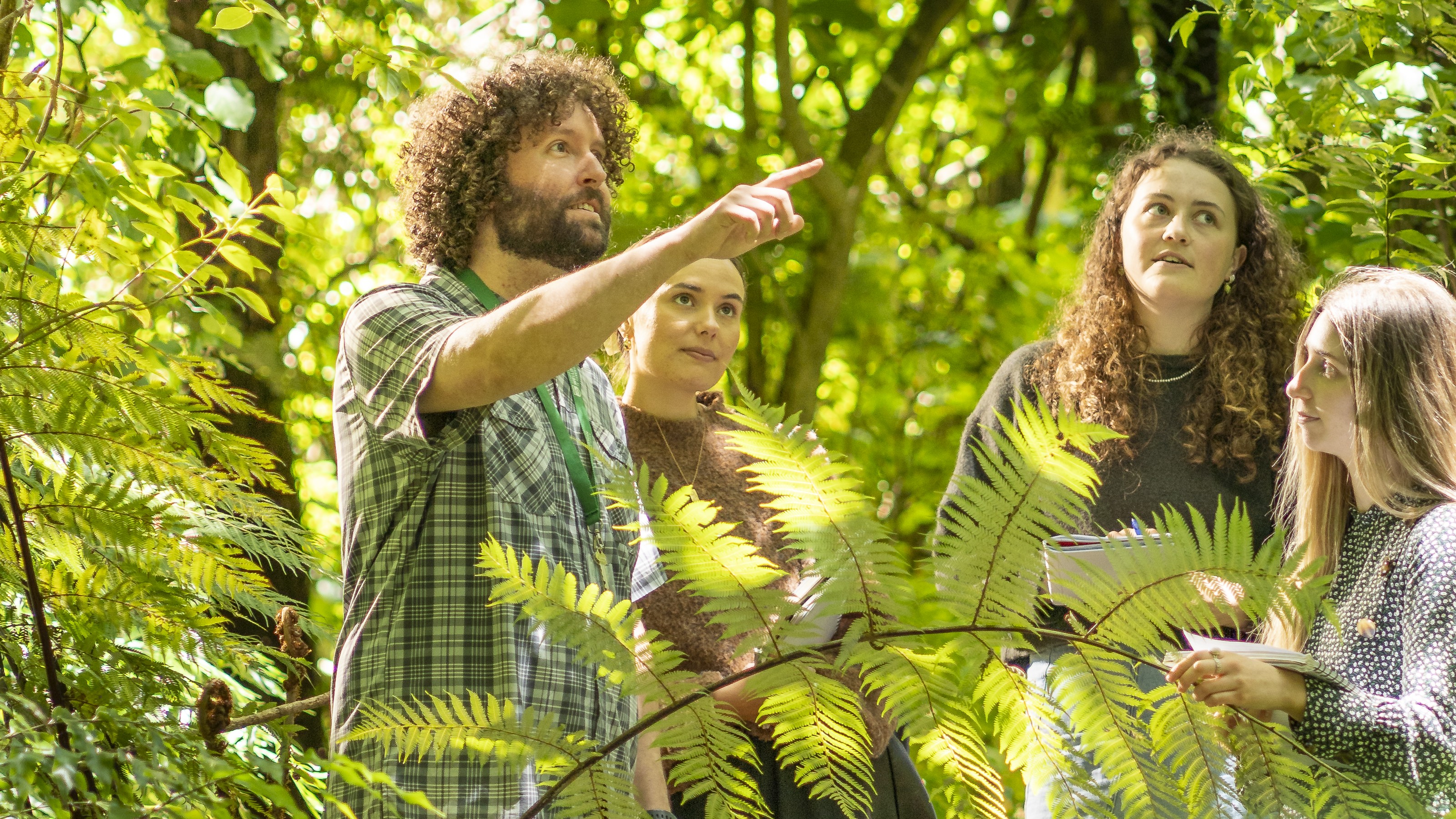
Study the environment through a scientific lens
Explore environmental issues, the science behind them, and possible solutions. Address challenges like climate change, freshwater degradation, biodiversity loss, and soil depletion. Learn about critical topics such as human behaviour, sustainability, and globalisation.
Focus on the Earth’s surface and the forces that shape it—both natural and human. Look at potential strategies to manage our environmental impact. Explore how to deal with climate change, restore biodiversity, and assess the cleanliness and sustainability of Aotearoa New Zealand.
Get hands-on experience during your studies. You'll develop your own projects, analyse data, and present your findings. Hear from Wellington’s network of local and regional councils, ministries, research institutes, and iwi.
Gain a broad understanding of the field
In Environmental Science, you’ll explore topics such as:
- the interaction between species, ecosystems, and Aotearoa New Zealand's natural history
- the physical systems needed to support life: the atmosphere, hydrosphere, and lithosphere
- global change through time, sustainability, restoration, and environmental futures
- human–environment relationships in New Zealand, including in the context of te ao Māori and
Te Tiriti o Waitangi - ways to evaluate claims about the state of the environment.
Why Wellington
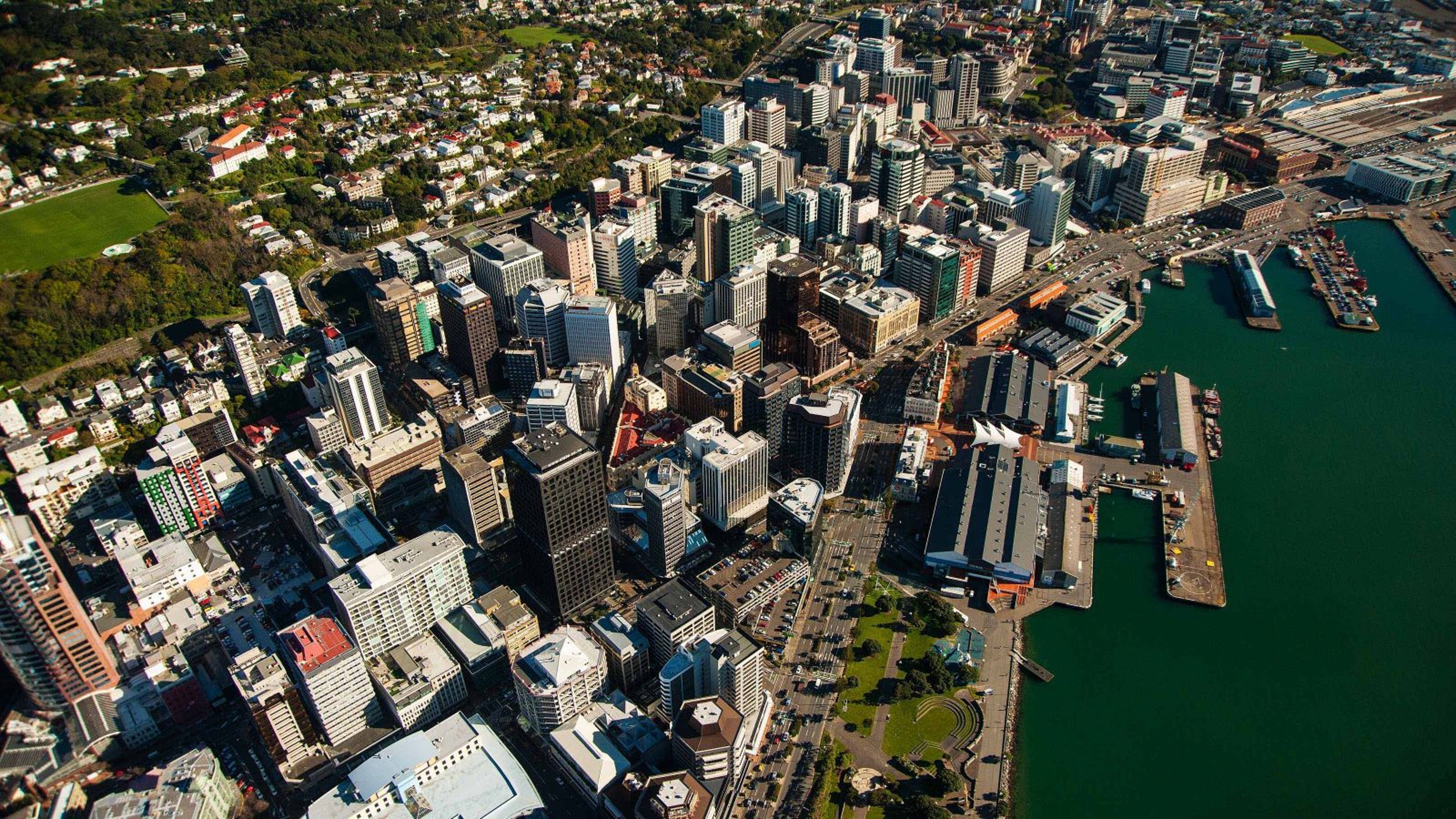
Wellington has the highest concentration of scientists and science organisations in Aotearoa New Zealand.
Your teachers are active scientists and world experts in areas such green energy, geo-hazards, global warming, space science, human geography, volcanology, artificial intelligence, drug development, and viral diseases.
Affiliated centres and institutes
Major research centres and institutes are affiliated with our Faculty of Science and Engineering, including:
Choose your study path
You can major or minor in Environmental Science as part of either of these degrees:
- Bachelor of Science
- Bachelor of Environment and Society.
Which degree you study depends on your interests and career goals. Each degree has specific core courses that you’ll study regardless of your major or minor.
- The Bachelor of Science offers more than 25 science subjects that you can mix and match together. You’ll study both in and outside the classroom in labs and research.
- The Bachelor of Environment and Society enables you to think critically about the causes and effects of environmental problems, based on a firm grasp of the physical processes shaping our world. A core part of this degree involves fieldwork around the Wellington region.
Degree structure options
Both degrees give you options on how you structure your study—with double majors, second majors from outside degrees, minors, or conjoint degrees. Each qualification page lists this in full detail.
Environmental Science makes an excellent double major subject. It pairs well with:
- Earth Science
- Geography
- Biology
- Chemistry
- Environmental Studies.
Degree support and advice
We can help you match your interests and career goals with the right course of study.
If you’re a new student, talk to a Future Student Adviser.
If you’re already studying with us, talk to Tītoko—Student Success.

Study options
Find out how you can study Environmental Science at Te Herenga Waka—Victoria University of Wellington.
Future careers
As an Environmental Science graduate, you’ll have career options as an:
- environmental adviser
- resource sustainability adviser
- environmental consultant
- policy analyst.
You’ll also have the skills and knowledge to move into more science-related roles. This is common if you combine your study with subjects such as:
- Geology and Geophysics
- Ecology
- Geography
- Geographic Information Systems Science (GIScience)
- Statistics
- Data Science.
More career information
Find out more about careers in Environmental Science.
The government careers website, Tahatū, offers more information about jobs, salaries, and current opportunities.
Scholarships
You may be able to get a scholarship to help fund your studies.
We have first-year and school-leaver scholarships available, as well as specialised scholarships for different groups and subject areas.
Scholarships for Environmental Science
-
Applicants must be of Pacific descent, be enrolled, or intending to enrol, in undergraduate or postgraduate studies, majoring in one or more of the following areas: Climate Change Science and Policy, Conservation Biology, Ecological Restoration, Ecology and Biodiversity, Environmental Science, Environmental Studies, Marine Biology, or Marine Conservation, and have a minimum GPA of GPA of 6.5. Applicants may be studying...
-
The fund, which was established at the time of the renovation of the C3 lecture theatre, is to assist a second-year student from any faculty in their studies at Te Herenga Waka—Victoria University of Wellington
-
Applicants must be female, New Zealand or Canadian citizens studying full time at 300 level BSc (Hons) and Master's by Coursework in any area of Science, including Architecture and Design at Te Herenga Waka—Victoria University of Wellington.
Scholarships for international students
We are currently offering a NZ$15,000 VUW Undergraduate International Scholarship to all eligible international students enrolling in a Bachelor’s degree.
Your scholarship will be processed automatically when your programme application is accepted, and the amount will be deducted from your tuition fees.
We also offer specialised scholarships for different groups and subject areas. .
Scholarships for Environmental Science
-
Applicants must be of Pacific descent, be enrolled, or intending to enrol, in undergraduate or postgraduate studies, majoring in one or more of the following areas: Climate Change Science and Policy, Conservation Biology, Ecological Restoration, Ecology and Biodiversity, Environmental Science, Environmental Studies, Marine Biology, or Marine Conservation, and have a minimum GPA of GPA of 6.5. Applicants may be studying...
-
Applicants must be female, New Zealand or Canadian citizens studying full time at 300 level BSc (Hons) and Master's by Coursework in any area of Science, including Architecture and Design at Te Herenga Waka—Victoria University of Wellington.
-
Applicants must be enrolled or intending to enrol in a Master's of PhD programme in the Faculty of Science and Engineering, undertaking research in any aspect of biodiversity and restoration ecology, including the use of novel technologies. Preference will be given to applicants from the School of Biological Sciences and the School of Geography, Environment and Earth Sciences.
Postgraduate study
After completing your undergraduate study in Environmental Science, you can continue your studies at postgraduate level. We offer several options.
You could study a few more advanced-level courses through a Postgraduate Certificate or Diploma in Science.
Or you could explore research and coursework in your area of interest with one of the following:
- Master of Environmental Science
- Master of Development Studies
- Master of Science—majoring in Environmental Science or Geography

Get help to manage your finances
We can help you:
- budget your money
- manage your student loan or allowance
- work out your accommodation payment schedule.
If you're facing financial difficulties, we can help you apply for the Hardship Fund.
You may be eligible for government or community support, too.


Wellington Global Exchange
If you're a current student at Victoria University of Wellington, you can complete part of your degree overseas. Choose from our 140 partner universities worldwide.
Study Abroad and Exchange Programme
If you're an overseas student, you can spend a trimester or a year at Victoria University of Wellington. You'll earn credits at your home university while you study here.