

Study for a communications career
Our Bachelor of Communication is designed in partnership with the communications industry. You’ll learn the history and theory of communications media and analyse how communication shapes and reflects relationships in our media-saturated society.
You’ll explore the possibilities of different media—like writing, print, video, and social media—and learn how to use them to express your message. Practise and develop these skills in the communications area that interests you, such as politics, media, intercultural studies, or science communication.
You’ll also develop strong critical thinking skills and combine them with your creativity to prepare for an exciting career in communication.
Why communication matters
See why you should study for a Bachelor of Communication at Victoria University of Wellington.
What you’ll learn
The Bachelor of Communication teaches you the theory, practice, and art of communication. You'll learn to apply this across disciplines like politics, science, media, and intercultural studies. Courses are designed with input from the communications industry.
Guest lecturers with successful industry careers give you real-world insights. You'll also get the chance to start building professional contacts.
You'll graduate with strong communication skills and a nuanced understanding of what works in different sectors.
Foundational concepts in communication
Core courses cover the foundations of communication theory and practice:
- How communication shapes, and responds to, human relationships in different contexts
- Media, society, and politics in an era of technological change—including mass media, concentrated media ownership, and public and digital media
- Communication research methods used across industries, platforms, and audiences, with a focus on Aotearoa New Zealand, including kaupapa Māori methods.
An applied communication project
You'll complete an applied communication project, putting the degree's theories and methods into practice. It'll also build teamwork, research, and other practical skills for the workforce.
Year breakdown
First year
In your first year you’ll begin building the fundamental framework of your degree, becoming familiar with communication theories and practices. You’ll also begin your major and an optional complementary minor or major.
Choose from seven major subjects in your BC:
- Intercultural Communication
- Language Sciences
- Literary and Creative Communication
- Marketing Communication
- Media Studies
- Political Communication
- Science Communication.
We’re the only university to offer majors in Science Communication, and Literary and Creative Communication.
Second year
You’ll be refining and building on your knowledge of communication, as well as deepening your knowledge of your major and complementary minor or major subjects.
Third year
In your third year, you’ll complete the 300-level courses for your major subject or subjects, and do your research project or applied project.
As well as more traditional lectures, you’ll attend smaller, more informal lectures and workshops, where you will work independently as well as collaborate with your peers. You will also have opportunities to hear from, and potentially to work with, industry experts.
At the end of your third year, you’ll have a solid base from which to launch your career.
Degree support and advice
We can help you match your interests and career goals with the right course of study.
If you’re a new student, talk to a Future Student Adviser.
If you’re already studying with us, talk to Tītoko—Student Success.

How our degrees work
Flexible, or structured? Learn more about the different types of undergraduate degrees at Te Herenga Waka—Victoria University of Wellington.

Get accepted into this degree
Entry requirements for domestic students
- Requirements for students who completed secondary school in:
If you live in New Zealand and are a citizen or permanent resident of New Zealand or Australia, you're considered a domestic student.
Some citizens of the Cook Islands, Niue, and Tokelau may automatically hold New Zealand citizenship.
Diplomatic residents living in New Zealand are also regarded as domestic students.
To be accepted into this qualification, you need:
A New Zealand university entrance qualification or equivalent.
Degree requirements
Excerpt from the regulations for the BC
For this degree, you'll need to complete at least 360 points.
- Complete six core courses:
- Introduction to Communication Studies COMS 101
- Media, Society and Politics MDIA 102
- Approaches to Communication Research COMS 201
- One further course from COMS 200–299
- Applied Communication Project COMS 301
- One further course from COMS 300–399
- Meet the requirements for at least one major subject.
- Meet the requirements for an approved complementary minor or major.
Major requirements
Majors are the subjects you focus your degree on.
Explore more degree options by adding an optional second major or minor. How our flexible degrees work.
Major subjects and requirements
Explore your major options below.
BC subjects
Intercultural Communication
Language Sciences
Literary and Creative Communication
Marketing Communication
Media Studies
Political Communication
Science Communication
No matching majors found.
Second major subjects
You can choose to add an optional second major from within the BC or from another degree. Explore your options for a second major below.
Actuarial Science
Artificial Intelligence
Asian Studies
Biology
Cell and Molecular Bioscience
Chemistry
Chinese
Communication Design
Computer Science
Cultural Anthropology
Data Science
Design for Social Innovation
Development Studies
Earth Science
Ecology and Biodiversity
Electronic / Computer Systems
English Literature
Environmental Science
Environmental Studies
Film
French
Geography
German
Greek
Health Promotion
Information Systems
Intercultural Communication
International Business
International Relations
Japanese
Language Sciences
Latin
Literary and Creative Communication
Māori Psychology
Māori Studies
Marine Biology
Marketing Communication
Mathematics
Media Design
Media Studies
Mental Health Principles and Applications
Physics
Political Communication
Political Science
Popular Music Studies
Psychological Science
Public Policy
Science Communication
Spanish
Statistics
Te Reo Māori
Theatre
21 of 53 major subjects shown
Change filtersNo matching majors found.
Minor requirements
Add another dimension to your degree by choosing an optional minor. Most major BSc subjects are available as minors.
Some subjects are only available as minors. While most minors require 60 points at 200- and 300-level, there are a few minors with specific requirements.
Minor subjects and requirements
Start planning your study BC
Use the tiles to find out how you could include the selected minor in your degree. Not all major and minor combinations are available, so talk to us before you lock down your plan of study.
BC minor subjects
Actuarial Science
Applied Physics
Artificial Intelligence
Asian Studies
Biology
Biotechnology
Brain Sciences & Mental Health
Cell and Molecular Bioscience
Chemistry
Chinese
Cognitive Science
Communication Design
Computer Graphics
Computer Science
Creative Writing
Criminal Justice & Psychology
Cultural Anthropology
Data Science
Design for Social Innovation
Development Studies
Ecology and Biodiversity
Electronic / Computer Systems
English Literature
Environmental Science
Environmental Studies
Film
Forensic Science
French
Geography
Geology
Geophysics
Geophysics (Meteorology)
German
Greek
Health Promotion
Information Systems
Innovation and Entrepreneurship Studies
Intercultural Communication
International Business
International Relations
Japanese
Kaitiakitanga
Language Sciences
Latin
Management
Māori Psychology
Māori Studies
Marine Biology
Marketing
Marketing Communication
Mathematics
Media Design
Media Studies
Mental Health Principles and Applications
New Zealand Sign Language
Pacific Studies
Physical Geography
Physics
Political Communication
Political Science
Popular Music Studies
Psychological Science
Psychology
Public Policy
Renewable Energy Systems
Samoan Studies / Matā‘upu tau Sāmoa
Science Communication
Social Policy
Sociology
Spanish
Statistics
Te Reo Māori
Theatre
Work and Organisational Psychology
21 of 74 minor subjects shown
Change filtersNo matching minors found.
Future careers
Almost any industry that manages its internal and external communications needs communication graduates. Our unique majors—Science Communication, and Literary and Creative Communication—give graduates specialist and transferable expertise needed in many industries.
For example, you might enter sectors like:
- media and public relations
- government
- creative industries.
More career information
Find out more about careers in communications.
The government careers website, Tahatū, offers more information about jobs, salaries, and current opportunities.
Scholarships
You may be able to get a scholarship to help fund your studies.
We have first-year and school-leaver scholarships available, as well as specialised scholarships for different groups and subject areas. If nothing fits right now, something may suit you later.
We encourage you to apply. It's a straightforward process, and it could make a real difference.
Scholarships for Humanities and Social Sciences
-
This scholarship is for students undertaking or intending to undertake an Honours or Masters degree at Te Herenga Waka—Victoria University of Wellington in areas related to Peace Building or Peace Studies, Trust Building, Conflict Resolution, addressing Historical Injustice, Restorative Justice, Social Cohesion, Community building and promoting cross-cultural understanding, Change Making or Ethical Leadership.
-
The Brian Murray Fox Scholarship in History offers an opportunity to students who are intending to undertake their second, third or Honours year of their degree at Te Herenga Waka—Victoria University of Wellington in the year following application.
-
The Brian Murray Fox Scholarship in English Literature offers an opportunity to students who are intending to undertake their second, third or Honours year of their degree at Te Herenga Waka Victoria—University of Wellington in the year following application.
Scholarships for international students
We are currently offering a NZ$15,000 VUW Undergraduate International Scholarship to all eligible international students enrolling in a Bachelor’s degree.
Your scholarship will be processed automatically when your programme application is accepted, and the amount will be deducted from your tuition fees.
We also have specialised scholarships for different groups and subject areas.
Scholarships for Humanities and Social Sciences
-
This scholarship was established in 1980 by the former Prime Minister of New Zealand, the Rt. Hon. Sir John Marshall, GBE, CH, BA, LLM, Hon. LLD, to encourage the study of Political Science at Te Herenga Waka - Victoria University of Wellington. The Scholarship was extended to include International Relations.
Globally ranked
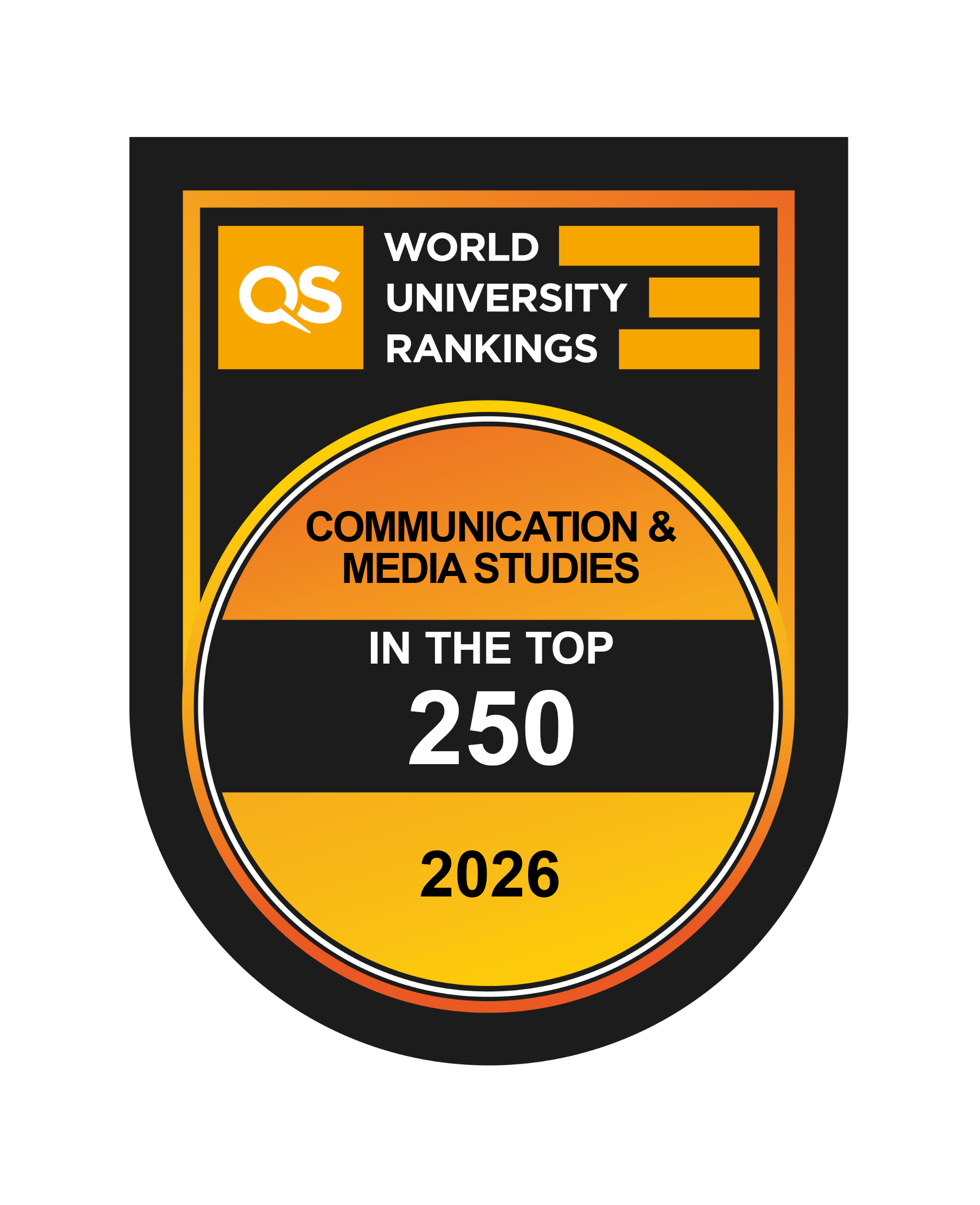
Our Communications and Media Studies subjects are ranked in the top 250 worldwide in the QS World University Rankings 2026.
The QS World University Rankings is an annual global publication that gives overall rankings and subject rankings for more than 1,500 universities worldwide.
Postgraduate study
If you do well in your degree, are interested in research, or wish to specialise further in a particular communications field, you could continue your studies at postgraduate level.
Study for the Master of Communication
To deepen you knowledge and prepare for senior communications roles, you can specialise in your niche area of communications with a Master of Communication.
This flexible Master’s degree gives you an advanced theoretical knowledge of the field and the practical skills to creatively apply these theories and approaches in your work.
You'll also develop communication research skills, or earn practical work experience with a relevant business or organisation—ideal preparation for your communications career.

Accommodation
Live in accommodation close to campus at one of our:
- catered halls of residence
- self-catered apartments or flats
- self-catered studios.
We provide care and support across our halls and flatting communities.

Get help to manage your finances
We can help you:
- budget your money
- manage your student loan or allowance
- work out your accommodation payment schedule.
And if you're ever having trouble with money, talk with us. You could be eligible for government or community support, and we have a hardship fund for financial emergencies.

Apply for a New Zealand study visa
You’ll need to apply for a study visa if you plan to study with us as an international student.
You should apply for your visa after you’ve received your Offer of Place, and before you come to New Zealand.

Wellington Global Exchange
If you're a current student at Victoria University of Wellington, you can complete part of your degree overseas. Choose from our 140 partner universities worldwide.

Study Abroad and Exchange Programme
If you're an overseas student, you can spend a trimester or a year at Victoria University of Wellington. You'll earn credits at your home university while you study here.